
Victorian Era Ornamentation
Walking past a historic neighborhood, you might notice houses that look like elaborate wedding cakes covered in intricate, wooden frosting. These homes display the unique style of the late nineteenth century, where builders prioritized decoration over simple, functional shapes.
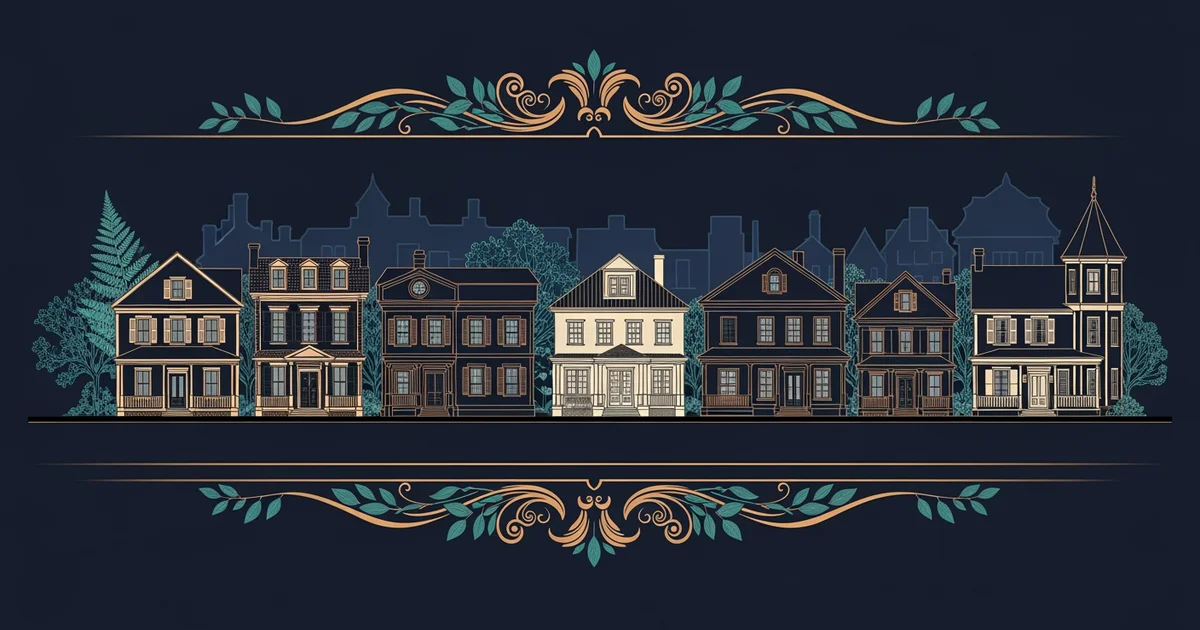
The Language of Victorian Ornamentation
Victorian architecture relies on a specific visual language that celebrates excess and detailed craftsmanship. This era moved away from the plain, boxy shapes of earlier colonial times to embrace complex, asymmetrical floor plans and steep rooflines. Homeowners during this period wanted their houses to serve as a public display of their personal success and artistic taste. Think of these decorative elements like the jewelry someone might wear to a formal event; the house itself acts as the outfit, while the trim, spindles, and brackets serve as the accessories that draw the eye. Without these ornate details, the structure would look like a simple, unadorned box that fails to tell a story about the owner.
Key term: Queen Anne — a popular Victorian style characterized by irregular roof shapes, wrap-around porches, and a wide variety of decorative textures.
Architects used these features to break up flat walls and create shadows that changed throughout the day. By adding depth to the facade, they ensured that the house looked different from every angle. This design choice turned a standard residence into a sculpture that invited viewers to walk around and appreciate the craftsmanship. Every corner offered a new surprise, from carved wooden gables to patterned shingles. This focus on variety meant that no two houses had to look exactly the same, which allowed builders to customize homes for specific clients. The goal was to create a sense of wonder and visual richness that reflected the optimism of the industrial age.
Identifying Queen Anne Design Features
To identify a home from this era, look for the specific elements that define the Queen Anne movement. These houses often feature a mix of materials, such as brick, stone, and wood, which provide different textures on a single exterior wall. You will also notice that the rooflines are rarely flat or symmetrical; they usually feature multiple gables, turrets, or towers that reach toward the sky. These vertical elements draw the eye upward and add a sense of grandeur to the building. The porch is another essential component, often wrapping around the front and side of the house to create a transition space between the interior and the street.
| Feature | Purpose | Visual Impact |
|---|---|---|
| Spindles | Decorative support | Adds light, airy texture |
| Gables | Roof termination | Creates dramatic triangular points |
| Turrets | Tower extension | Adds vertical height and mystery |
| Shingles | Surface texture | Provides varied patterns on walls |
These components work together to create the signature look of the era. The following list details the most common decorative elements found on these homes:
- Gingerbread trim involves intricate, scroll-cut wooden patterns placed along porch edges and eaves to soften the harsh lines of the roof.
- Bay windows project outward from the main wall to increase interior light while creating a distinct, angular shape on the exterior facade.
- Decorative brackets provide visual support under eaves and porches, acting as small sculptures that bridge the gap between wall and roof.
By layering these details, builders turned simple wood construction into a complex work of art. The variety of shapes and textures ensures that the eye never rests in one place for too long. These homes teach us that architecture can act as a form of communication, signaling the values of a society that prized both individual expression and collective artistic pride. We see this today in how we still value homes that possess unique character rather than identical, mass-produced designs.
Victorian ornamentation transforms basic structural forms into expressive works of art by layering diverse textures and complex geometries onto the exterior of a home.
The next Station introduces Craftsman and Bungalow roots, which simplify these complex decorative traditions into a more grounded, honest approach to residential construction.