
Historical Lighting Evolution
Imagine standing in a dark room and striking a single match to reveal the corners. This small flame represents the start of human efforts to conquer the night through design. Before electricity existed, people relied on fire to extend their productive hours long after the sun set. This ancient reliance on fire defined how we viewed interior spaces for thousands of years. Every flicker of a candle or oil lamp created a unique mood that dictated how people moved through their homes.
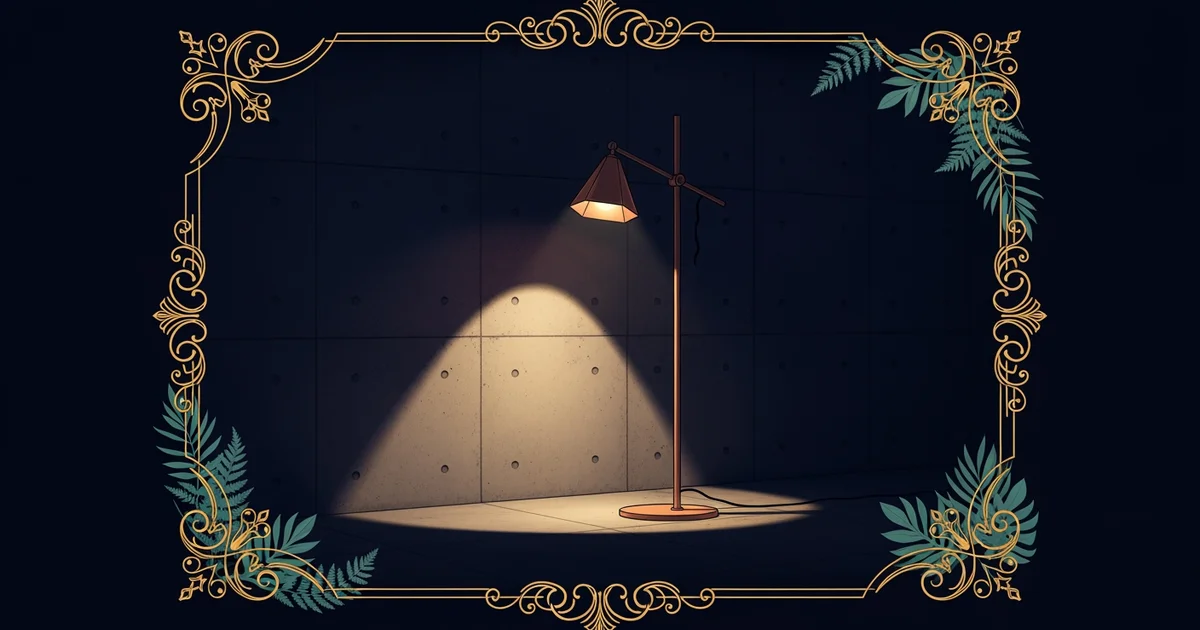
The Evolution of Flame-Based Illumination
Early lighting design focused on the simple struggle to maintain a consistent flame source indoors. People used oil lamps and candles to push back the shadows that dominated their evening environments. These tools were not just sources of light but were also essential design elements that shaped room layouts. Because fire required oxygen and created smoke, designers had to place lamps near ventilation points or open windows. This necessity dictated the placement of furniture and defined where people gathered after dark. Thinking about this today, one might compare these early flame sources to a modern battery-powered lantern that you must carefully position to get the best glow. Just as we move a lamp to read a book, ancient people moved their light sources to perform vital tasks. The limitation of the flame meant that light was always a precious, localized resource that required constant human management.
Key term: Photometry — the scientific measurement of light intensity as perceived by the human eye during daily tasks.
As time progressed, the desire for more reliable and stable light sources led to significant technical shifts. The invention of gas lighting transformed the way cities and homes operated on a massive scale. Gas pipes allowed for fixed lighting fixtures that did not require a person to carry a flame from room to room. This shift changed architecture because designers could finally place lights on ceilings and walls. It was a massive leap forward that allowed for larger, more complex interior spaces that were no longer tethered to portable candles.
The Transition to Modern Electrical Systems
When electricity finally arrived, it replaced the flickering gas flame with the steady glow of the incandescent bulb. This change allowed for a level of control that was previously impossible for any designer or architect. We no longer had to worry about open flames or the smell of burning oil in our living spaces. The bulb allowed for the creation of recessed lighting and hidden light sources that changed the aesthetic of modern rooms. Architects could now hide the light source entirely while letting the illumination wash over walls and surfaces. This transition was like moving from a single, expensive hand-drawn map to a digital navigation system that shows every street in real time. We gained precision, safety, and the ability to adjust brightness levels to suit specific human needs.
| Lighting Era | Primary Source | Control Level | Main Limitation |
|---|---|---|---|
| Ancient | Open Flame | Very Low | Fire Hazard |
| Industrial | Gas Pipes | Moderate | Air Quality |
| Modern | LED System | Very High | Complexity |
Today, we use LED technology to achieve incredible energy efficiency while maintaining perfect control over the color and intensity. These systems allow designers to mimic natural daylight cycles to support human health and productivity. We have moved from simply fighting the dark to actively designing the quality of our visual experience. This evolution shows that lighting is not just about seeing but about shaping the way we feel in a space.
Lighting design has evolved from managing small, dangerous flames to mastering precise, energy-efficient systems that enhance human comfort and interior aesthetics.
Understanding how these historical changes influence our current expectations will help us explore how the human eye perceives brightness in modern spaces.