
The Fundamentals of Light
Imagine walking through a dim hallway that suddenly bursts into bright, warm light as you enter. You feel an immediate change in your mood and your ability to navigate the space. This simple shift shows how light acts as the primary tool for shaping our human experience. Designers use light to guide our eyes, define our boundaries, and influence how we feel in any room. Understanding these basic properties helps you see how spaces work beyond their physical walls and furniture.
The Fundamental Nature of Light
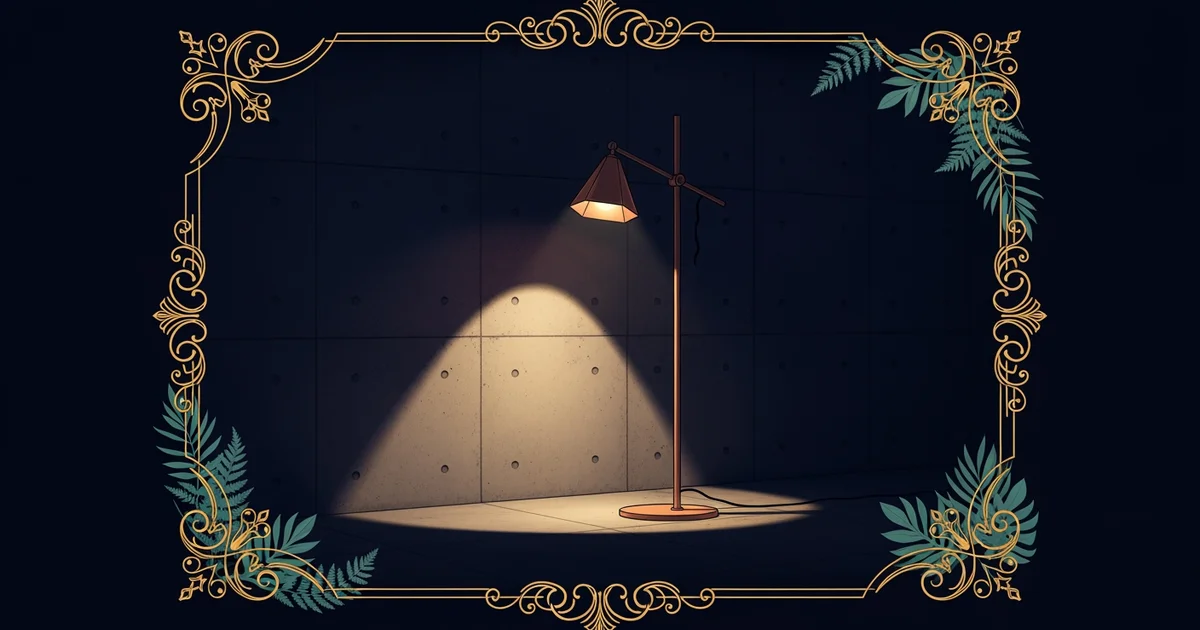
Light behaves like a silent partner in every room you enter throughout your daily life. It travels in straight lines until it hits an object, which then changes its path. Think of light like a stream of water flowing from a garden hose. If you place a board in front of the water, the stream hits the wood and bounces off. Light works in a similar way when it strikes walls, floors, or decorative objects. Architects study these paths to ensure that light reaches the spots where people need it most.
Key term: Reflection — the process where light bounces off a surface, allowing our eyes to perceive color and texture.
When light strikes a surface, it does not always bounce back in the same way. Some materials absorb light, while others let it pass through them entirely. This interaction determines the overall brightness and mood of a living space. A matte black wall absorbs almost all the light that hits it, making the area feel smaller. Conversely, a polished white surface sends light back into the room, creating a feeling of openness. Designers must balance these material choices to control how light fills a specific volume.
Interacting with Architectural Surfaces
Designers categorize how light interacts with materials to create specific visual effects for the people inside. These interactions dictate whether a space feels cozy, professional, or perhaps even cold and unwelcoming. Understanding these categories allows a designer to manipulate the environment using only light and surface textures. The following table highlights the three primary ways that light moves when it encounters different types of physical matter in a room.
| Interaction | Surface Type | Visual Result |
|---|---|---|
| Reflection | Smooth/Shiny | Bright, clear image |
| Absorption | Dark/Matte | Dim, soft shadows |
| Transmission | Clear/Glass | Transparent, light flow |
Every surface in your home acts as a filter for the light that hits it. If you have glass windows, light transmits through them to brighten the interior during the day. If you have heavy curtains, they absorb the light to create privacy and a darker atmosphere. You can see these principles in action by observing how shadows change throughout the day. A simple lamp can change its effect simply by being moved near a wall or a mirror.
- Specular reflection occurs when light hits a very smooth surface, like a mirror, sending the light back in one direction to create a crisp and sharp image of the source.
- Diffuse reflection happens when light hits a rough surface, like a painted wall, scattering the rays in many directions to create an even and soft glow across the room.
- Selective absorption takes place when a surface absorbs certain colors of light while reflecting others, which is the exact reason why we see specific colors on our walls.
These interactions are not just technical details, but the building blocks of how we perceive our daily reality. By mastering these basics, you gain the power to change any space to suit your needs. You now possess the foundation to explore how history and technology have shaped the way we light our world today.
Intentional lighting design transforms a simple physical space into an immersive experience by controlling how light bounces, absorbs, or passes through surfaces.
By mastering these fundamental properties, you will soon explore the historical evolution of lighting technology and its impact on modern design.