
Wide Angle Techniques
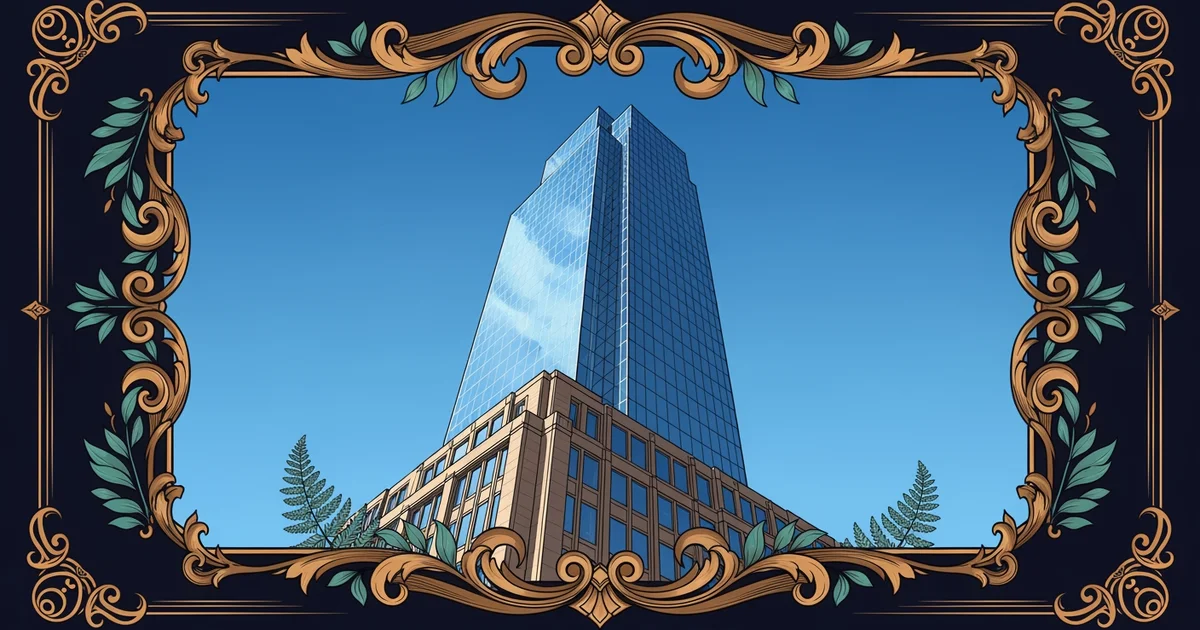
You stand before a towering skyscraper that stretches far above your narrow city street. Trying to fit the entire structure into your frame feels like trying to pour a gallon of water into a tiny cup.
Mastering the Wide Angle View
To capture large buildings in tight spaces, you must rely on a wide angle lens. This specific tool allows you to include more of the scene than a standard lens. Think of it like a pair of panoramic glasses that stretch your vision to the edges of the horizon. When you use this lens, you can stand close to a building and still see the roof and the base together. It acts like a real estate agent who wants to show the full potential of a room by making it appear much larger than it truly is. Without this tool, you would have to step back until you hit a wall or a busy street. The lens effectively solves the problem of limited physical space by expanding your field of view.
Key term: Wide angle lens — a camera lens with a short focal length that captures a broad field of view.
When you work with these lenses, you must be careful about how you tilt your camera. If you point the camera upward, the building will look like it is falling backward. This happens because the lens stretches the edges of the frame more than the center. You can fix this by keeping your camera perfectly level with the ground. This simple adjustment keeps the vertical lines of the building straight and professional. It creates a sense of balance that feels natural to the human eye. Most photographers use a tripod to ensure the camera stays perfectly flat during the shot. Taking your time here will save you from needing heavy edits later on your computer.
Techniques for Spatial Composition
Once you have your lens ready, you should think about how to frame your subject. You need to look for leading lines that guide the viewer toward the main structure. These lines might be the edge of a sidewalk or the pattern of a brick wall. Using these lines helps to ground the building within its busy urban environment. You can follow these steps to improve your composition in tight areas:
- Position your feet firmly to keep your camera body parallel to the building facade.
- Adjust your zoom to include just enough of the surrounding street to provide context.
- Check the edges of your frame for distracting elements like trash cans or signs.
- Wait for the light to hit the building at an angle to add depth to the shot.
By following these steps, you create a clean image that feels intentional rather than accidental. The goal is to show the soul of the structure through the lens.
| Feature | Standard Lens | Wide Angle Lens |
|---|---|---|
| Field of View | Narrow | Very Broad |
| Distortion | Minimal | Visible at edges |
| Best Use | Portraits | Architecture |
Using this table, you can see why the choice of gear changes the final result. A standard lens is great for faces, but it fails when you need to capture a whole skyscraper. The wide angle lens provides the reach you need to tell the full story of the design. Always consider your distance from the building before you press the shutter button. If you are too close, the distortion will ruin the clean lines of the design. If you are too far, you lose the power and scale of the architecture. Finding the right distance is the secret to great photos.
Capturing large structures requires matching your focal length to the space while keeping your camera perfectly level to avoid distortion.
The next Station introduces Interior Space Flow, which determines how wide angle techniques influence the perception of room scale.