
The Art of Seeing Structures
You walk past a tall office building every day, yet you rarely notice the way the light hits its glass corners. Imagine your camera is a magnifying glass that reveals the hidden geometry buried within those concrete and steel surfaces. Most people see a wall, but a photographer sees a canvas of lines, shadows, and textures waiting to be framed properly. Learning to see structures requires you to shift your focus from the purpose of the building to its raw visual components. This shift changes how you interact with the world around you, turning every walk into a creative exploration of shapes.
The Language of Structural Geometry
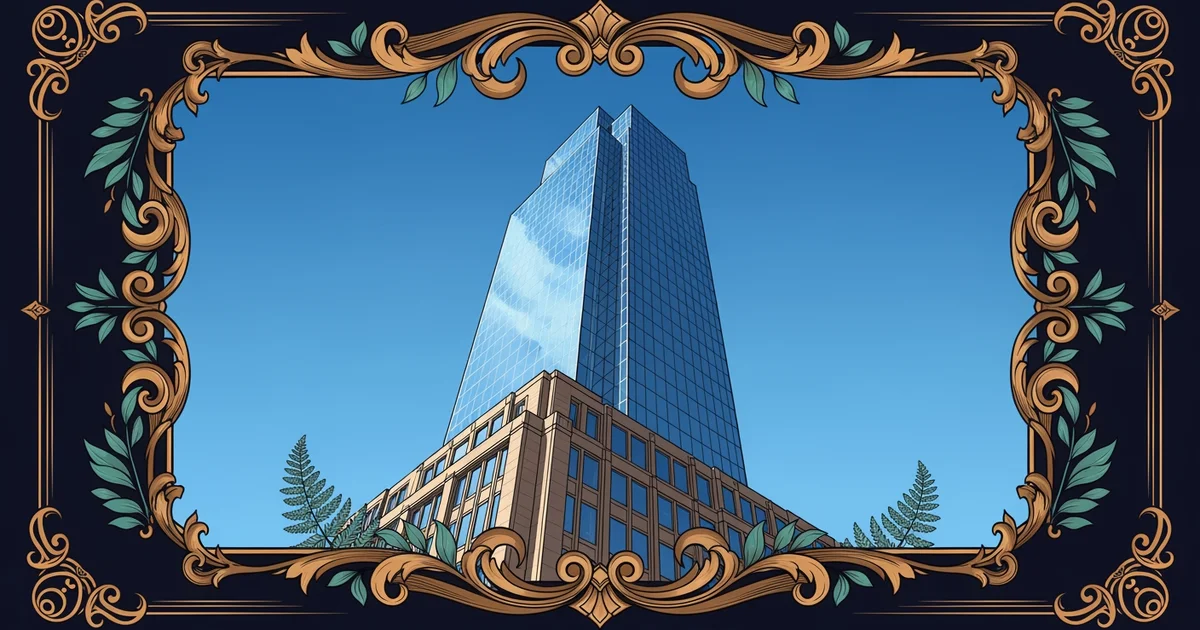
To capture a building, you must first learn to identify the repeating patterns that define its outer shell. Architects use basic geometric forms like squares, circles, and triangles to create rhythm across a facade. When you look at a skyscraper, try to ignore the windows and focus instead on the grid created by the frame. This grid acts like a musical beat, providing a steady pulse that guides the viewer's eye across the entire image. If you can isolate these rhythmic patterns, your photographs will feel more balanced and intentional rather than cluttered or confusing.
Key term: Composition — the deliberate arrangement of visual elements within a frame to create a sense of balance and focus.
Think of your camera lens as a filter that removes the noise of the city to reveal the underlying design. Just as a chef selects specific ingredients to balance a dish, you must select specific lines to balance your shot. If a building has too many competing shapes, the viewer will feel overwhelmed and struggle to find a focal point. You should look for the dominant shape that anchors the structure and build your entire photograph around that single, strong element. This practice simplifies complex scenes and helps you tell a clear story about the building's unique character.
Understanding Light and Texture
Once you identify the shapes, you must consider how light interacts with the surfaces of the structure. Light behaves like a chisel, carving out depth and revealing the texture of materials like brick, stone, or polished metal. If you shoot during the middle of the day, the sun creates harsh shadows that might hide important details of the design. Photographers often prefer the early morning or late afternoon when the light hits at an angle, highlighting the depth of every groove and corner. This technique turns a flat, boring wall into a rich landscape of light and dark.
| Material Type | Lighting Effect | Best Time to Shoot |
|---|---|---|
| Polished Glass | Reflects sky | Early morning |
| Rough Stone | Deep shadows | Late afternoon |
| Raw Concrete | Soft contrast | Overcast weather |
Using light effectively allows you to emphasize the weight or the lightness of a building. You can use this table to plan your next outing based on the materials you find in your urban environment. Each material reacts differently to the sun, so paying attention to these physical properties is essential for your growth. By observing how these surfaces change throughout the day, you develop a deeper intuition for timing your shots perfectly. This patience is the secret ingredient that separates a casual snapshot from a professional architectural study.
Beyond the light, you should look for the small details that give a building its personality. A single decorative arch or a unique window frame can provide a human element to a massive, cold structure. These details act like punctuation marks in a sentence, providing a place for the eye to rest. By combining your knowledge of geometry, light, and texture, you gain the ability to reveal the soul of any building you encounter. This foundation will serve as the bedrock for all your future creative work in this course.
Capturing the soul of a building requires you to look past its function and focus on the geometry, texture, and light that define its unique visual identity.
By mastering these foundational elements of sight, you will be prepared to select the right gear to document the structures you discover.