
Product Illumination
When a local bakery attempts to capture the perfect image of a glazed donut for their website, they often find the shiny icing creates distracting white spots that ruin the final photo. This issue happens because the light source reflects directly off the glossy surface, behaving like a mirror rather than a soft glow. You must control how light hits these surfaces to reveal texture and shape without these harsh reflections. This process of managing light on tricky materials is known as product illumination, which builds upon the lighting angles you learned in Station 11.
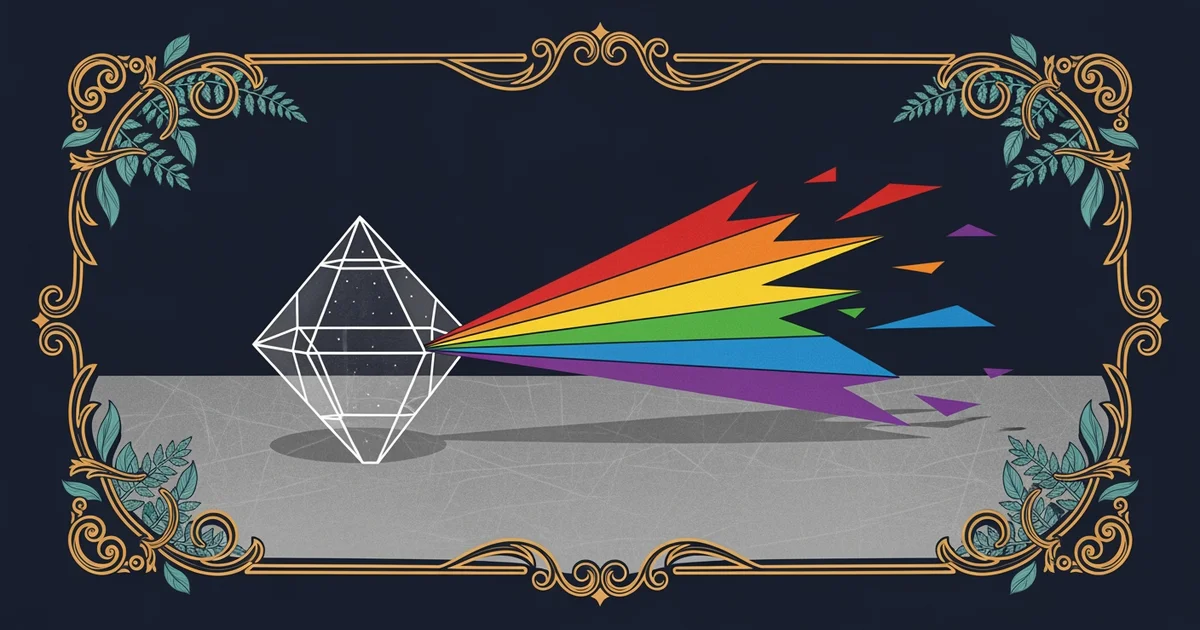
Mastering Reflective Surfaces
To capture professional images, you should treat the light as a liquid that flows around the object. You should avoid pointing lights directly at the item because that creates intense highlights that hide the details of the product. Instead, you should bounce your light off a large white surface or use a diffuser to soften the output. Think of the light as a gentle rain falling over a garden, where the diffuser acts as a canopy that spreads the light evenly across the leaves. This technique ensures the highlights remain subtle and elegant, which makes the product look high-quality and desirable to potential customers.
Key term: Diffusion — the process of scattering light rays through a translucent material to reduce harsh shadows and intense reflections.
When you arrange your lights, you must consider the angle of incidence to manage how light bounces toward your camera lens. If you place a light at a forty-five-degree angle from the side, you can highlight the depth of the object without creating a direct glare. You should also use black cards on the sides of your product to create clean, sharp edges against the background. These cards absorb stray light, which helps define the silhouette of the item and gives it a professional, grounded look in the frame. Using these tools allows you to sculpt the light until the product looks exactly as you intended.
Strategic Light Placement
Properly setting up your workspace requires careful planning to ensure every element receives the correct amount of light intensity. You can organize your gear by following these three essential steps to achieve a balanced look for your product photography:
- Position your main light behind a large diffusion panel to create a soft, even glow that covers the entire surface of the object.
- Place white foam boards on the opposite side of your light source to bounce soft illumination back into the darker shadows.
- Adjust the distance between your light and the diffuser to change the quality of the light from very soft to slightly punchy.
| Tool | Function | Best Use Case |
|---|---|---|
| Diffuser | Softens light | Shiny or metallic items |
| Foam Board | Bounces light | Filling in dark shadows |
| Black Card | Absorbs light | Creating sharp silhouettes |
By using these tools, you can transform how the viewer perceives the texture and material of your subject. The goal is to make the product look tangible, as if the customer could reach out and touch the item right through the screen. You should always check your camera's histogram to ensure the brightest parts of the image are not clipping, which would mean they have lost all detail. If the highlights are too bright, simply move the light further away or add another layer of diffusion to reduce the overall intensity of the beam.
This method of managing reflections is a critical skill for any photographer looking to create commercial content that stands out in a crowded market. You must practice adjusting your light angles until you see the texture of the material clearly without any distracting white spots or glare. When you master these small adjustments, you will find that even the most difficult reflective objects become easy to photograph with consistent, professional results every single time you set up your studio space.
Product illumination requires using diffusion and bounce surfaces to control how light interacts with reflective textures to reveal fine details.
But this model of static lighting becomes difficult to maintain when you need to isolate the product from a complex or distracting background.