
Depth Cues and Errors
Imagine you are standing on a long, straight road that seems to narrow into a single point. Your eyes tell your brain that the distant trees are tiny, even though you know they are quite large. This happens because your brain relies on visual shortcuts to interpret the complex three-dimensional world around you. When these shortcuts encounter conflicting data, your brain creates a visual error that we call an optical illusion. Understanding these errors reveals how your mind prioritizes speed over absolute accuracy when processing incoming light signals.
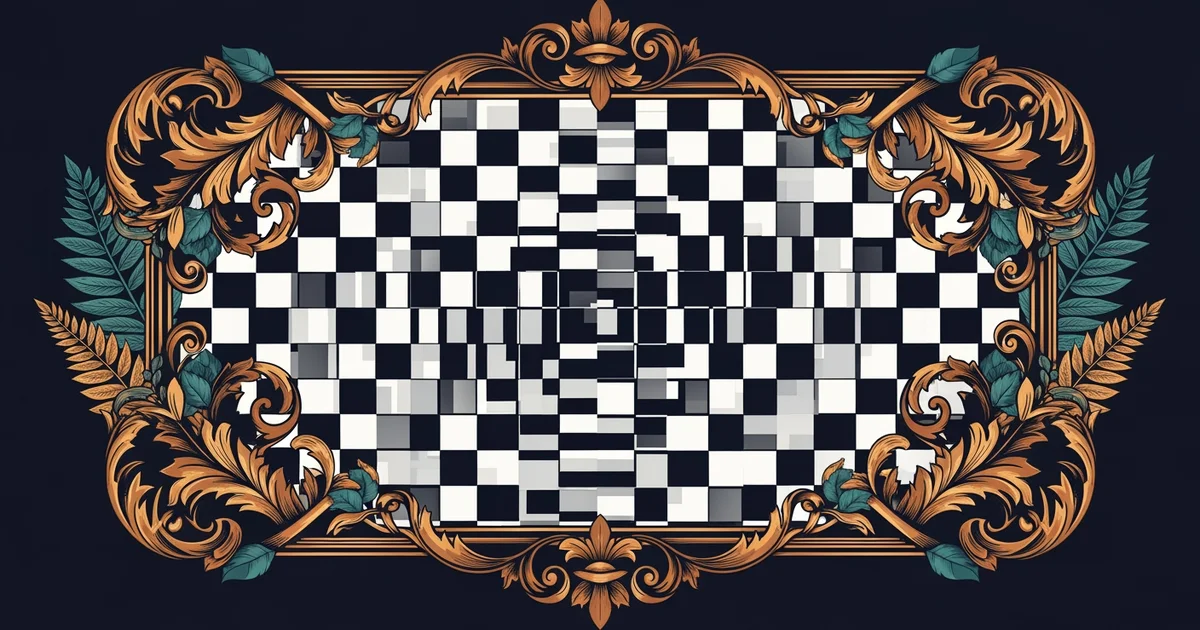
The Mechanism of Monocular Cues
Your eyes use monocular cues to estimate depth when you only have one eye open or when viewing a flat image. These cues include familiar size, where your brain assumes objects of a known type maintain a consistent physical scale. If a car looks smaller than a nearby house, your brain correctly assumes the car is further away. However, if you see a toy car placed very close to your eye, your brain might mistake it for a real vehicle in the distance. This error occurs because your brain lacks the extra information provided by two eyes working in tandem.
Key term: Monocular cues — visual indicators that allow a single eye to perceive depth and distance without needing binocular vision.
These cues serve as a mental shortcut, much like a budget spreadsheet helps a shopper estimate costs without counting every single penny. Just as the spreadsheet might fail if a price tag is intentionally misleading, your brain fails when the visual input contradicts established patterns. The brain prefers to maintain a stable environment, so it forces the objects into a logical distance hierarchy. When the physical reality does not match this internal logic, the brain creates a false sense of depth that feels entirely real.
Perspective and Visual Errors
When we observe the world, our brains use linear perspective to understand space through the convergence of parallel lines. Think of train tracks that appear to meet at the horizon; your brain knows they remain parallel, yet it processes the image as a receding path. This ability helps you navigate your surroundings without constantly measuring distances with a ruler. However, artists and illusionists exploit this by placing objects in ways that trick your brain into miscalculating their actual physical size or proximity.
To understand how these errors function, consider the following common depth cues that influence your perception:
- Relative Height: Objects placed higher in your visual field are perceived as being further away because the ground usually extends upward toward the horizon line.
- Texture Gradient: Surfaces that appear more detailed and sharp are interpreted as being closer, while blurred surfaces appear to be distant.
- Interposition: When one object partially blocks your view of another, your brain immediately assumes the blocked object is behind the first one.
These cues function as a rapid assessment system, allowing you to react to your environment without thinking about every detail. If you are walking through a crowded hallway, your brain uses these cues to avoid collisions before you even consciously notice the people nearby. When you look at an illusion, these same systems are still active, but they are processing a picture that lacks true depth. The brain tries to force the flat image into a three-dimensional model, resulting in the strange perception of depth where none exists.
Visual illusions emerge because the brain applies automatic depth shortcuts to flat images that lack the physical reality of three-dimensional space.
But what happens when we intentionally manipulate these perspective rules to create artistic illusions in photography and design?