
Portfolio Development
Imagine walking into a high-stakes gallery with a portfolio that shows only your messy, unfinished sketches. You might feel like a chef serving raw ingredients instead of a finished, delicious gourmet meal. A professional graphic novel portfolio is the final bridge between your creative passion and your future career as a visual storyteller. It proves that you can manage a project from start to finish. You must curate your work to show your best skills while removing anything that distracts from your unique artistic voice. This process turns your scattered ideas into a sharp, clear narrative that tells agents exactly who you are as an artist.
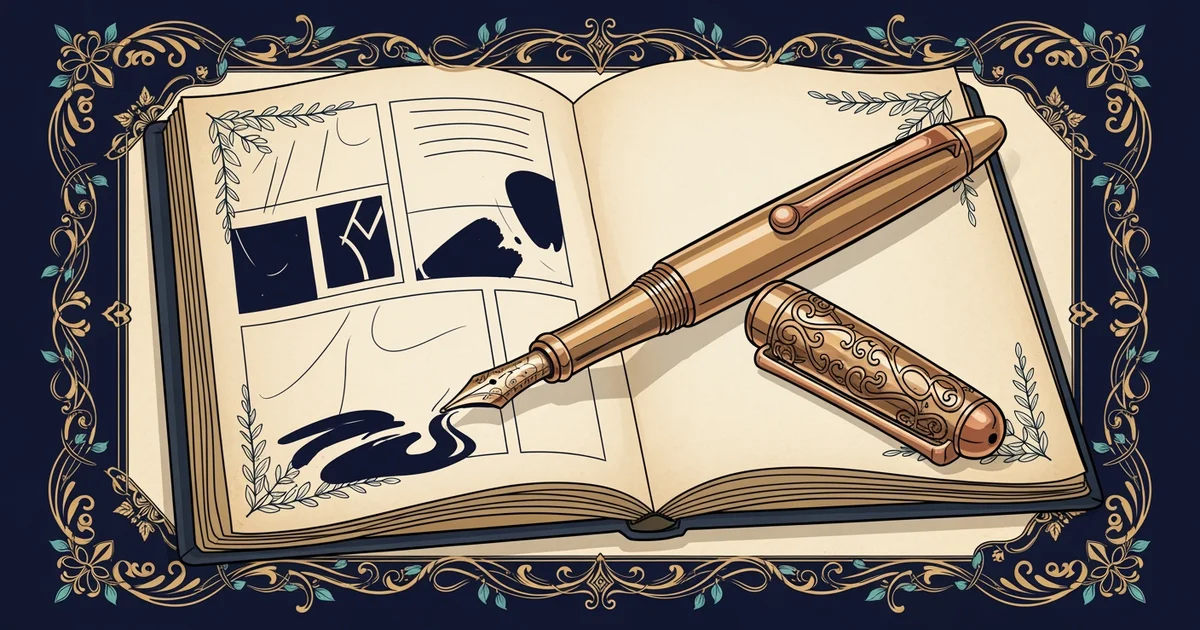
Curating Your Best Artistic Assets
Building a portfolio requires you to select only the strongest examples of your sequential art. Think of your portfolio like a curated store window that displays only your finest products to attract customers. You should choose pieces that highlight your mastery of character design, background detail, and panel pacing. If you include too many weak pages, your strongest work will lose its impact on the viewer. Focus on variety to show you can handle different moods, lighting styles, and complex action sequences. Every page you include must demonstrate a specific skill that a potential publisher or collaborator needs to see.
Key term: Curation — the selective process of choosing and organizing your best creative work to present a professional identity.
Once you have selected your pieces, you must arrange them to tell a story about your growth. You should start with a piece that grabs attention immediately and end with one that leaves a lasting impression. Do not just throw your drawings into a folder without any logical order or thought. Your portfolio should guide the viewer through your technical abilities and your creative process. Keep your layout clean and professional so the art remains the primary focus for anyone reviewing your work. This level of care shows that you respect your own craft enough to present it with total precision.
Refinement and Professional Presentation
Your portfolio serves as the final proof that you have mastered the visual storytelling techniques covered in this path. You have already learned how to structure pages and use visual cues to guide the reader through a scene. Now, you must combine those lessons into a cohesive package that reflects your maturity as a creator. The following table highlights the essential elements you should include to ensure your portfolio looks professional and ready for industry review.
| Element | Purpose | Benefit to Artist |
|---|---|---|
| Character Sheets | Shows consistency | Proves you can draw characters from any angle |
| Storyboard Samples | Shows planning | Demonstrates your ability to map out complex scenes |
| Finished Pages | Shows polish | Highlights your ability to complete a final product |
When you present your portfolio, you are selling your ability to solve visual problems for a publisher. You must be ready to explain your creative choices for every single page you show. If you cannot explain why you used a specific color or a certain panel angle, you have not finished your synthesis yet. Practice talking about your work with other artists to refine your pitch and gain confidence. Your ability to speak clearly about your art is just as important as the quality of the drawings themselves. Professionalism is the secret ingredient that turns a talented hobbyist into a working graphic novelist.
- Select your strongest work to ensure that every page demonstrates a high level of technical skill and artistic vision.
- Organize your pages logically to guide the viewer through your creative process and show your ability to handle long-form storytelling.
- Refine your presentation by keeping layouts clean and being ready to discuss your artistic choices during any professional review session.
By following these steps, you ensure your portfolio reflects your full potential as a professional storyteller. Your work is now ready to face the world and start your career in the graphic novel industry.
A professional portfolio acts as a curated window that transforms your individual sketches into a cohesive, market-ready narrative of your artistic identity.
Mastering the art of portfolio development is the final step to becoming a professional graphic novelist and sharing your stories with the world.