
Historical Context
Imagine you are walking through a stone temple and see a series of wall carvings telling a story. These ancient carvings act like a silent movie, guiding your eyes across the wall to understand a narrative. Before the modern era, humans used these sequential images to record history and share myths with others. You likely see this same logic today when you flip through a graphic novel or a comic strip. Visual storytelling is an old human tradition that relies on our natural ability to connect separate images into a single, flowing idea. By looking at how these early artists worked, you can better understand why modern panels feel so natural to your brain.
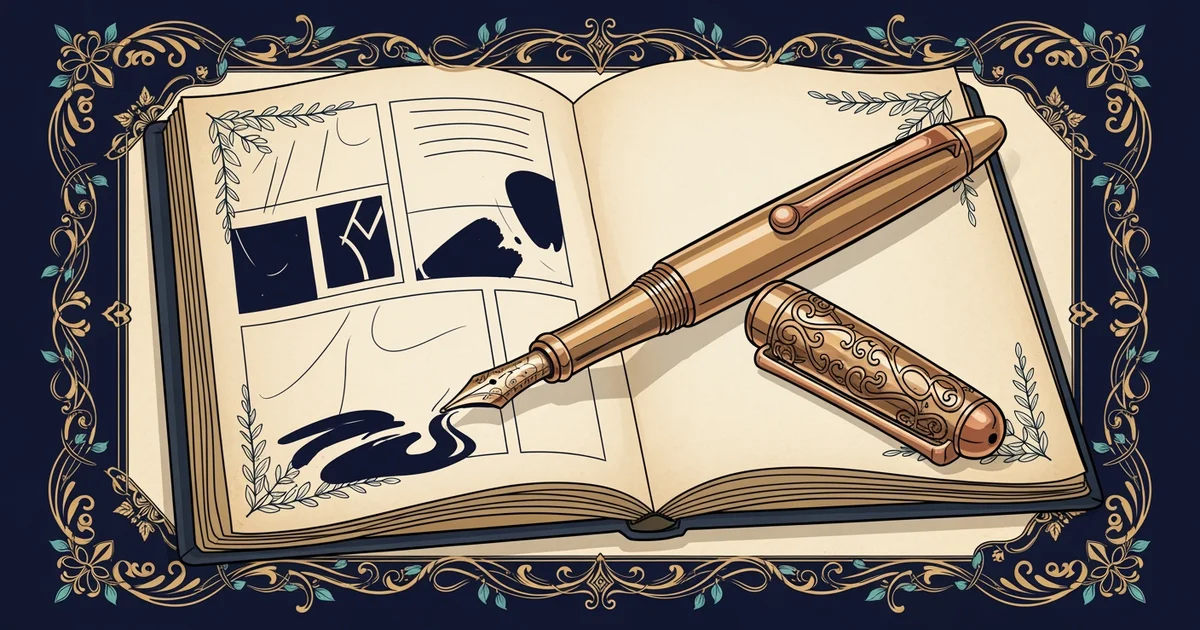
The Roots of Sequential Art
When early civilizations carved stories into stone, they were essentially building the first version of a graphic novel. These artists understood that a single image could not capture a complex series of events or a long journey. They created sequential art, which is the practice of arranging separate images in a specific order to convey a narrative. Think of this like a modern bank account transaction log that tracks your money flow over time. Just as you need a sequence of entries to see your balance change, you need a sequence of pictures to see a character grow or move through a plot. This method forces the viewer to fill in the gaps between images using their own imagination.
Key term: Sequential art — the use of multiple images arranged in a deliberate order to tell a story through visual progression.
These ancient traditions laid the groundwork for how we read visual stories today. Without these early experiments in layout and pacing, the complex graphic novels you enjoy now would not exist. Artists discovered that by controlling the size and placement of figures, they could dictate the speed of the story. A large, central carving might represent a slow, important moment, while smaller, clustered carvings might represent a rapid battle. This deliberate control over the reader's focus is a skill that modern writers still use to build tension and excitement in their own books.
Evolution of Visual Traditions
As time passed, these traditions moved from stone walls to scrolls, tapestries, and eventually printed pages. People realized that stories were easier to remember when they were accompanied by clear, descriptive pictures. This shift allowed artists to experiment with more detailed expressions and dynamic poses that were hard to carve in stone. The transition to paper meant that stories could travel further and reach more people than ever before. This expansion of reach forced artists to refine their techniques, leading to the development of early visual languages that we still recognize in modern art.
We can compare the importance of these early developments to the way modern digital interfaces organize information. Just as a website uses a menu to help you find what you need, these early artists used visual cues to guide the reader through the narrative. The following table outlines how different historical mediums influenced the way we view modern graphic novels today:
| Medium | Visual Focus | Narrative Purpose | Influence on Today |
|---|---|---|---|
| Stone Carvings | Static movement | Religious myths | Use of panel boundaries |
| Painted Scrolls | Continuous flow | Historical events | Pacing and timing |
| Printed Prints | Social satire | Current events | Use of speech bubbles |
These historical methods were not just artistic choices, but necessary tools for communication in a world without film. By studying these traditions, you learn that the "graphic" part of a graphic novel is as important as the words. Every line, shape, and shadow serves a purpose that has been tested for centuries. When you create your own stories, you are participating in a long line of visual storytellers who have always known that pictures speak louder than words alone. Your ability to read these visual cues is a skill that has been refined by thousands of years of human practice.
Understanding the history of sequential images reveals that modern graphic novels are the latest evolution of a deep-seated human need to organize narratives visually.
By mastering these historical foundations, you will be prepared to explore how modern artists use panel layouts to control the reader's experience.