
Future Global Challenges
Digital empires now compete for dominance by controlling the unseen flow of information across borders. While traditional states once measured power by land and steel, modern influence relies on the speed of data and the sophistication of automated systems. This shift creates a new landscape where national security depends on code as much as it depends on armies. When we consider why nations act the way they do, we must look at how digital tools change the rules of the game. A country with superior software can influence foreign elections or disrupt supply chains without ever firing a single shot. This invisible power creates a tension between the desire for global connectivity and the need for local safety.
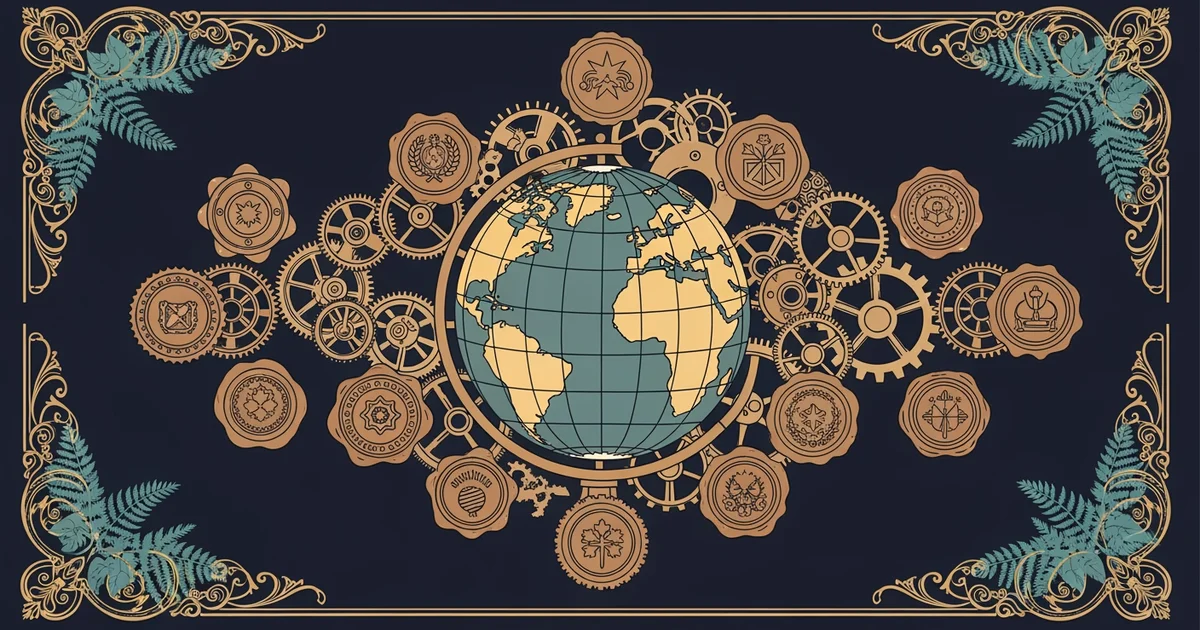
The Rise of Algorithmic Governance
Artificial intelligence now acts as the central nervous system for many modern government operations and decision-making processes. By processing vast amounts of data, these systems identify patterns that human analysts might miss during complex international negotiations. Think of this like a high-stakes chess match where the board changes every second based on millions of player moves. If one player uses a computer to calculate every possible outcome, they gain a massive advantage over someone relying on intuition alone. This creates a power imbalance where nations with advanced computing resources dictate the terms of global trade and diplomacy. Smaller nations must navigate this reality by forming digital alliances to protect their interests against larger technological giants.
Key term: Algorithmic Governance — the use of automated data systems and machine learning to manage public policy and international relations.
As these systems mature, they begin to influence the internal stability of states by shaping how citizens perceive their own governments. When algorithms control the flow of news, they can amplify division or foster cooperation depending on their design goals. This capability forces us to rethink the concept of sovereignty in an age where digital borders are easily bypassed. The challenge for future leaders involves maintaining control over domestic affairs while participating in an interconnected global digital economy. We see this tension play out in debates over internet regulation and the ethics of automated decision-making in military contexts.
Strategic Shifts in Global Power
Future global challenges require us to synthesize the lessons from human rights advocacy and international political theory into a new framework. We must understand how emerging technologies interact with existing systems of power to create new types of inequality. The following table highlights how traditional power sources compare to modern digital alternatives in the current international landscape:
| Power Source | Traditional Manifestation | Modern Digital Equivalent |
|---|---|---|
| Economic | Trade of physical goods | Algorithmic high-frequency trade |
| Military | Standing army deployment | Cyber warfare and automated drones |
| Diplomatic | Formal treaty negotiations | Data-driven influence operations |
These shifts suggest that a nation's ability to innovate is now its most critical asset for long-term survival. If a country cannot master the tools of the digital age, it risks becoming a passive participant in a system designed by others. This reality forces even the most powerful nations to constantly update their strategies to avoid falling behind in the global hierarchy. We must ask whether these digital tools will ultimately bring us closer together or drive us further apart as societies. The answer depends on how we choose to regulate these technologies before they become too powerful to manage.
- States invest in high-speed data infrastructure to ensure they remain competitive in global markets.
- Governments adopt machine learning tools to predict and respond to international crises before they escalate.
- International bodies attempt to create shared standards to prevent the misuse of automated weapons systems.
These actions show that nations are trying to balance the benefits of speed with the risks of total dependency. By integrating these tools, leaders hope to secure their borders while promoting growth, yet the risk of system failure remains high. If a single glitch can disrupt a nation's energy grid or financial system, the cost of being advanced is also the risk of being fragile. We are witnessing a fundamental change in how power is projected across the world stage today.
Future stability requires balancing the rapid growth of autonomous digital systems with the enduring need for human oversight and ethical governance.
Building upon our understanding of digital power, we will now explore the specific diplomatic frameworks required to maintain global stability in the coming decades.