
The Balance of Power
Imagine two neighbors who build tall fences to ensure neither one gains an unfair advantage. If one neighbor adds a second story to their home, the other quickly adds a balcony to maintain their view of the street. This cycle of building prevents either person from dominating the shared neighborhood space. In the world of international politics, nations operate under a similar logic to prevent one country from seizing total control. This pursuit of a balance of power serves as the foundation for how states maintain their independence while living alongside other competing global actors.
The Mechanics of State Interaction
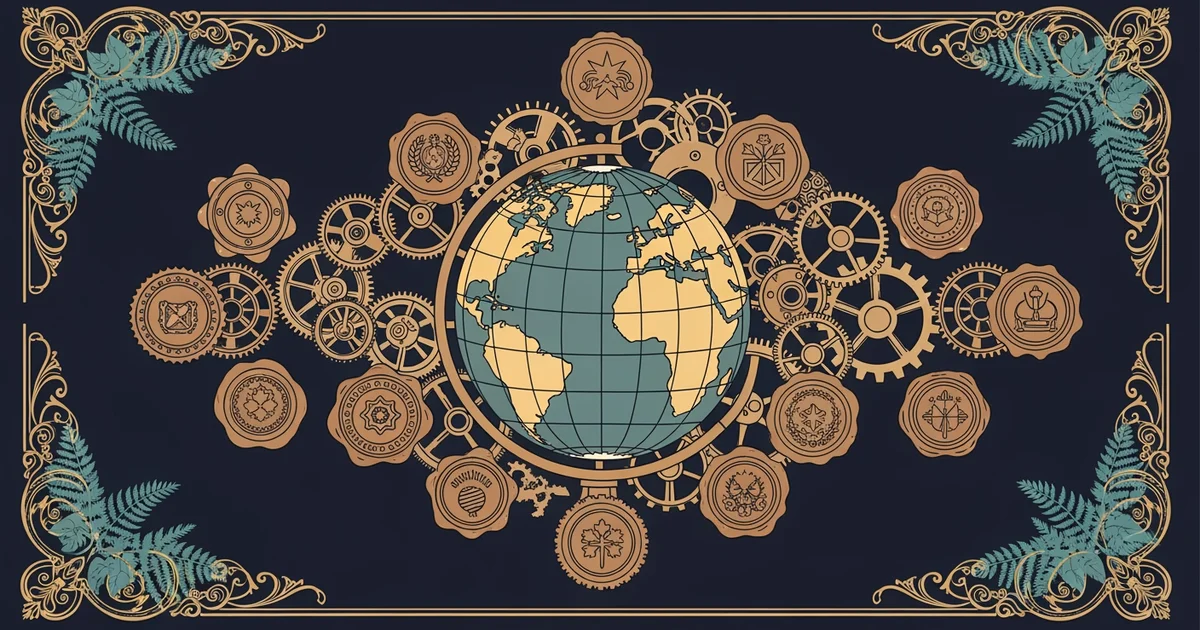
When nations interact, they prioritize their own survival above all other international goals. Because no central global authority exists to enforce rules, each country must rely on its own strength to ensure safety. This creates a competitive environment where states constantly monitor the military and economic growth of their neighbors. When one nation begins to grow too strong, other states naturally feel threatened by this shift in the local landscape. They respond by pooling their resources to form alliances that counter the rising threat. This process forces the dominant state to pause its expansion because it knows that further growth will trigger a unified response from its rivals.
Key term: Balance of power — a system where states form alliances or increase their own strength to prevent any single nation from dominating the international arena.
This system functions much like a scale that requires constant adjustment to remain perfectly level. If one side of the scale gets too heavy, the other side must add weight to keep the balance stable. If the weights remain equal, the system stays quiet and peaceful for a long period. If the weights shift too quickly, the system becomes unstable and may lead to intense conflict between the competing parties. Nations understand that total dominance by one player would destroy the independence of all other players in the system. Therefore, they act as active stabilizers to ensure that no single country ever gains the ability to dictate terms to the entire world.
Strategic Alliances and Global Stability
Alliances represent the primary tool that states use to maintain this delicate equilibrium of global influence. By linking their military and economic fates, smaller nations can collectively rival the power of a much larger adversary. These partnerships do not always stem from deep friendship or shared cultural values between the participating countries. Instead, they arise from the cold necessity of preventing an opponent from becoming too powerful to manage alone. This pragmatic approach allows nations with very different internal systems to work together toward the singular goal of maintaining the status quo.
| Strategy | Primary Goal | Expected Outcome |
|---|---|---|
| Internal Balancing | Increase own military | Self-reliance for safety |
| External Balancing | Form new alliances | Collective strength gain |
| Hegemonic War | Seize total control | Systemic power shift |
When states engage in external balancing, they signal to the world that they will not accept a single leader. This signaling behavior prevents misunderstandings that could lead to unnecessary wars between nations. If a country knows that its neighbors will fight back, it is far less likely to attempt a risky expansion. The threat of a collective response acts as a deterrent that keeps the global system functioning smoothly. Even when tensions run high, the desire to maintain this balance keeps the international system from collapsing into total chaos or absolute tyranny.
The balance of power acts as a self-correcting mechanism where nations form alliances to ensure that no single country can dominate the global landscape.
But what happens when these nations decide to stop relying on themselves and start building formal institutions to manage their shared interests?