
The Anarchic World Order
Imagine two neighbors living in a remote area without any local police or legal courts. If one neighbor steals from the other, there is no higher authority to settle the dispute fairly. Each person must guard their own property because they cannot rely on a neutral third party for safety. This situation creates a constant state of worry where every action depends on individual strength and vigilance. In the world of nations, this exact scenario describes the fundamental condition that shapes how countries interact with one another.
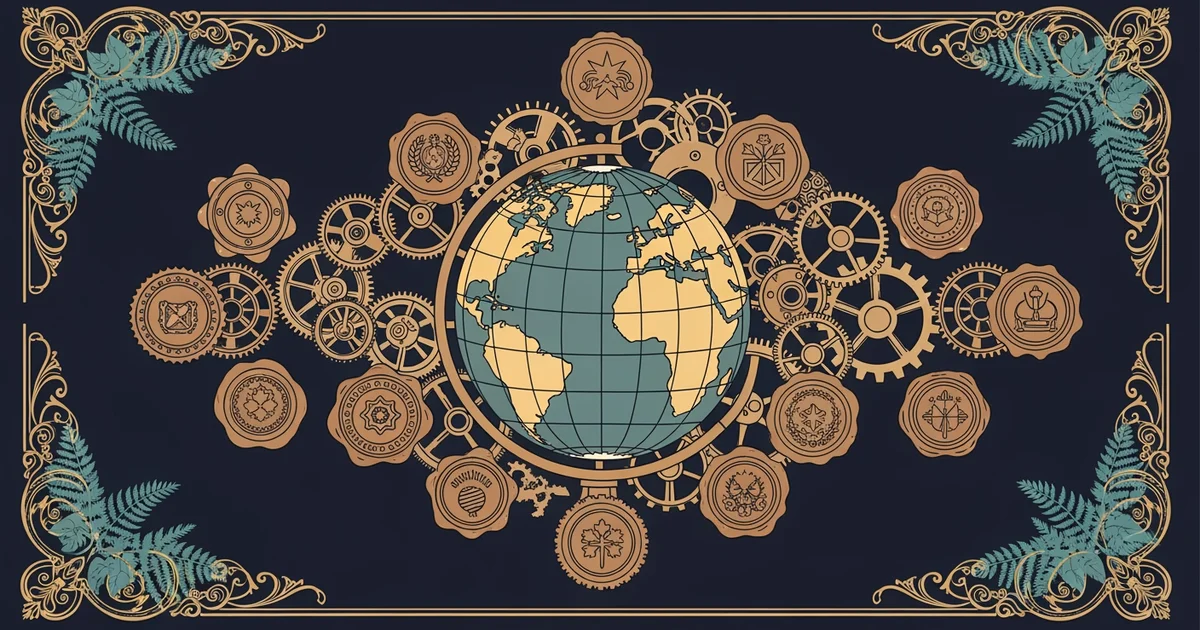
The Meaning of Global Anarchy
When political scientists speak of international anarchy, they do not mean total chaos or violent disorder. Instead, they refer to a structure where no single government holds power over all sovereign nations. Because every state is theoretically equal in its independence, there is no global police force to enforce laws or settle border disputes. Governments must provide for their own security because the international system lacks a central executive body to guarantee peace. This creates a self-help system where nations prioritize their own survival above all other goals.
Key term: International anarchy — a political condition where no central global government exists to maintain order or enforce laws between independent nations.
This lack of a central authority forces every country to act as its own protector in a competitive environment. If a nation feels threatened by a neighbor, it cannot file a lawsuit or appeal to a global judge to stop the aggression. Instead, it must build its own military or form alliances to deter potential attacks from rivals. This necessity drives the behavior of states as they navigate a world without a supreme leader to dictate rules. Every decision is a calculation of how to maintain safety when no one else is responsible for your protection.
Survival in a Self-Help System
Nations operate within this environment by constantly weighing the risks of their neighbors against their own national interests. Because they cannot trust others to act in their best interest, they often assume the worst about the intentions of other states. This leads to a cycle of suspicion where even defensive actions look like threats to someone else. The following list outlines how states manage their security in this environment:
- Building defensive military capabilities serves as a deterrent to discourage other nations from considering an act of aggression against the state.
- Forming strategic alliances allows smaller nations to pool their resources and provide a collective defense against larger, more powerful regional threats.
- Maintaining economic independence ensures that a nation does not become overly reliant on rivals for essential goods like food or fuel.
- Engaging in diplomatic talks helps clarify intentions between states, which reduces the chance of accidental conflict caused by simple misunderstandings.
| Strategy | Primary Goal | Risk Involved |
|---|---|---|
| Armament | Deterrence | High cost |
| Alliances | Protection | Loss of autonomy |
| Diplomacy | Clarity | Slow progress |
This table illustrates the trade-offs that leaders face when trying to survive in an anarchic world. Choosing to build a massive military protects the state, but it consumes resources that could support the domestic economy. Forming an alliance secures the border, but it forces the nation to support its partners during their own conflicts. No strategy is perfect, and each carries long-term consequences for the nation as it tries to navigate the pressures of international politics. Leaders must choose their path carefully because the absence of a central authority means that the consequences of a bad decision fall entirely on the state itself.
Because the system provides no safety net, states are always sensitive to shifts in the balance of power. If one nation grows too strong, others naturally feel vulnerable and begin to adjust their own strategies to compensate. This is not necessarily due to malice but rather a logical response to a world where you are the only one truly looking out for your own interests. The structure of the system dictates the behavior of the participants more than the individual personalities of the leaders involved in the process. Understanding this structural reality is the first step toward grasping why global politics remains so complex and difficult to manage.
The absence of a central world government forces every sovereign nation to act as its own primary guardian in a competitive global landscape.
Now that we understand why nations act alone, we will explore the historical thinkers who first identified these patterns of global behavior.
Go Deeper · Amazon
Keep going with Political Science
Browse Political Science on Amazon ↗As an Amazon Associate we earn from qualifying purchases. #ad