
Introduction to Electron Spin
Understanding Electron Spin
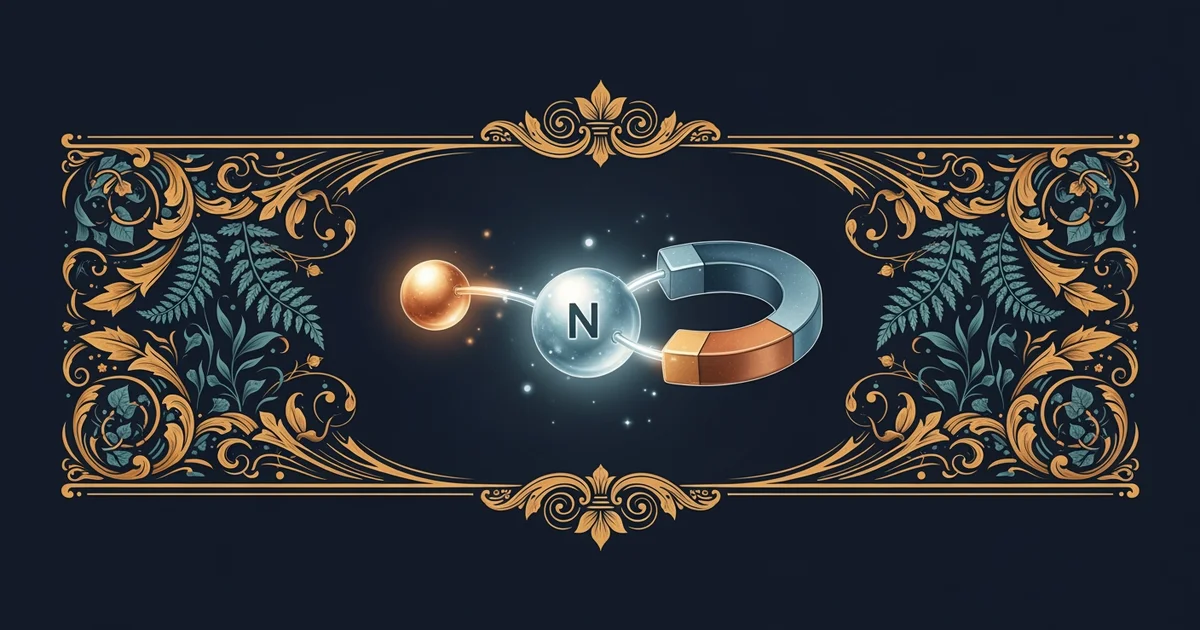
When we look at the world of physics, we often think about particles as tiny balls of matter. These particles move through space, and they carry an electric charge that powers our devices. However, electrons have another special property that scientists call spin. This property does not mean the electron is physically rotating like a miniature planet. Instead, spin is an intrinsic form of angular momentum that exists at the quantum level. It is a fundamental characteristic of the electron, much like its mass or its negative electric charge.
Because electrons possess this spin, they behave like tiny magnets with a north and south pole. In a normal piece of metal, these spins point in many different directions at once. This random orientation means that the magnetic effects cancel out, leaving the material without a net magnetic field. If we can force these spins to align in the same direction, we can create a magnetic current. This process is the core idea behind the field known as spintronics. By controlling spin, we can manipulate information in ways that traditional electronics cannot.
The Limit of Current Electronics
Modern computers rely on the movement of electric charge to store and process our digital information. We use transistors to turn this flow of charge on or off to represent the binary code of zeros and ones. While this technology has served us well for decades, it is hitting a physical wall. As transistors get smaller, they generate more heat and consume more power. This heat limits how fast we can run our processors and how small we can make our devices.
If we continue to shrink these charge-based transistors, the electrons will eventually leak out through the barriers meant to contain them. This leakage causes errors and forces us to look for a better way to handle data. Spintronics offers a promising solution because it relies on the orientation of spin rather than just the flow of charge. Moving spin information requires much less energy than moving a stream of electrons. This efficiency could lead to computers that stay cool and perform tasks much faster than today.
Visualizing Spin States
To understand how this works, consider the following representation of a spin state. In a simple quantum system, we often denote the two possible spin orientations as 'up' and 'down'.
Spin Up:   |↑⟩
Spin Down: |↓⟩
When we manipulate these states, we are essentially changing the magnetic orientation of the electron. In a computer memory device, we could assign the 'up' state to represent a binary one. Conversely, we could assign the 'down' state to represent a binary zero. Because this state is magnetic, it does not disappear when the power is turned off. This feature is a major advantage for creating memory that keeps your data safe without needing constant power.
The Promise of Spin
As we move deeper into this field, we will see how these tiny magnetic moments can be used to build logic gates. These gates are the building blocks of all computer processors. By using the spin of electrons, we can create devices that are both faster and more energy-efficient. This technology is not just a theoretical dream, as researchers have already begun building prototypes. These early devices show that we can indeed control spin at room temperature. This is a critical step for bringing spintronics into our daily lives and our everyday electronics.
As you progress through this learning path, you will explore the mechanics behind these systems. You will learn how we inject spin into materials and how we read that information back out. You will also discover the challenges that engineers face when trying to keep these spins stable over long distances. The path ahead is full of fascinating physics that will change your view of modern technology. We are moving from an age of charge to an age of spin.