
Observing Natural Symmetry
Look closely at the petals of a wild daisy or the veins of a fallen leaf. You will notice a repeating pattern that seems to hold everything in place. These shapes are not random accidents of growth but follow a specific, hidden logic.
The Architecture of Natural Growth
Nature uses symmetry as a primary tool for building living things that are both strong and efficient. When an organism grows in a balanced way, it distributes its weight evenly across its entire frame. Think of this like a bridge designer who balances a structure to ensure it does not collapse under heavy winds. By repeating the same geometric units, plants and animals save energy while maximizing their structural integrity. This repetition allows a sunflower to pack hundreds of seeds into a small space without crowding. Every petal and every seed follows a blueprint that ensures the plant reaches its maximum potential for survival.
Key term: Symmetry — the quality of being made of exactly similar parts facing each other or around an axis.
Biological structures often rely on specific types of balance to thrive in their unique environments. You can see these patterns in many common living things around you every single day. The following list highlights how different organisms utilize these geometric arrangements to maintain their shape and function:
- Radial symmetry allows sea anemones to sense danger from all directions by spreading their tentacles in a perfect circle around a central mouth.
- Bilateral symmetry helps animals like deer move forward quickly by having a mirror-image left and right side that coordinates muscle movement.
- Spiral symmetry enables succulent plants to grow in tight clusters, which helps them store water while exposing every leaf to enough sunlight.
Identifying Geometric Patterns in Nature
Identifying these patterns helps us understand how the world creates order from what appears to be chaos. When you look at a pinecone, you see scales that spiral outward from the center in a predictable path. This is not just a pretty design; it is a way to protect the seeds inside from harsh weather. Nature uses these repeating shapes to solve complex problems like water drainage, light absorption, and physical protection. If you compare the structure of a snowflake to a flower, you will find that both use geometric rules to create beauty. The table below compares how different natural elements use geometry to organize their physical forms for better survival.
| Natural Element | Primary Symmetry Type | Functional Benefit |
|---|---|---|
| Starfish | Radial | Detecting prey from any angle |
| Butterfly | Bilateral | Enabling balanced, efficient flight |
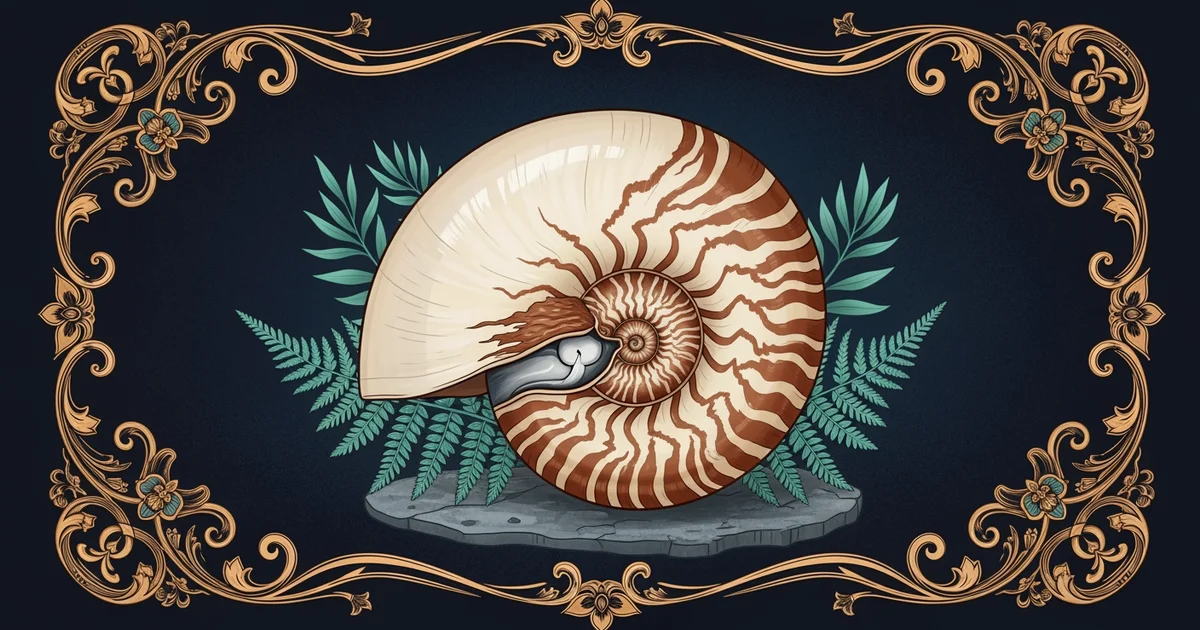
| Nautilus Shell | Logarithmic Spiral | Maintaining structural strength as it grows |
By observing these shapes, we start to see that biology is essentially a branch of applied geometry. The way a tree branches out to catch light is mathematically similar to how a river splits into smaller streams. Both systems aim to cover the most area with the least amount of material. This efficiency is the secret behind the success of life on our planet. When you learn to spot these patterns, you stop seeing random trees and flowers and start seeing a complex, orderly system. You realize that the beauty of the woods is actually the result of deep, underlying mathematical rules that govern every living thing. This foundation of order is what allows such diverse life to coexist in a stable way.
Natural symmetry is a functional design strategy that optimizes energy use and structural stability for living organisms.
By understanding these basic geometric patterns, we can now explore how they scale into the more complex, infinite shapes known as fractals.