
Visualizing Number Patterns
Imagine you are organizing a shelf of items into perfect squares to save space. You notice that some quantities fit perfectly into a square shape while others leave empty gaps. This simple observation reveals that numbers possess hidden geometric shapes which define their core nature. By looking at these patterns, we can understand how digital data is structured and stored within modern computer systems.
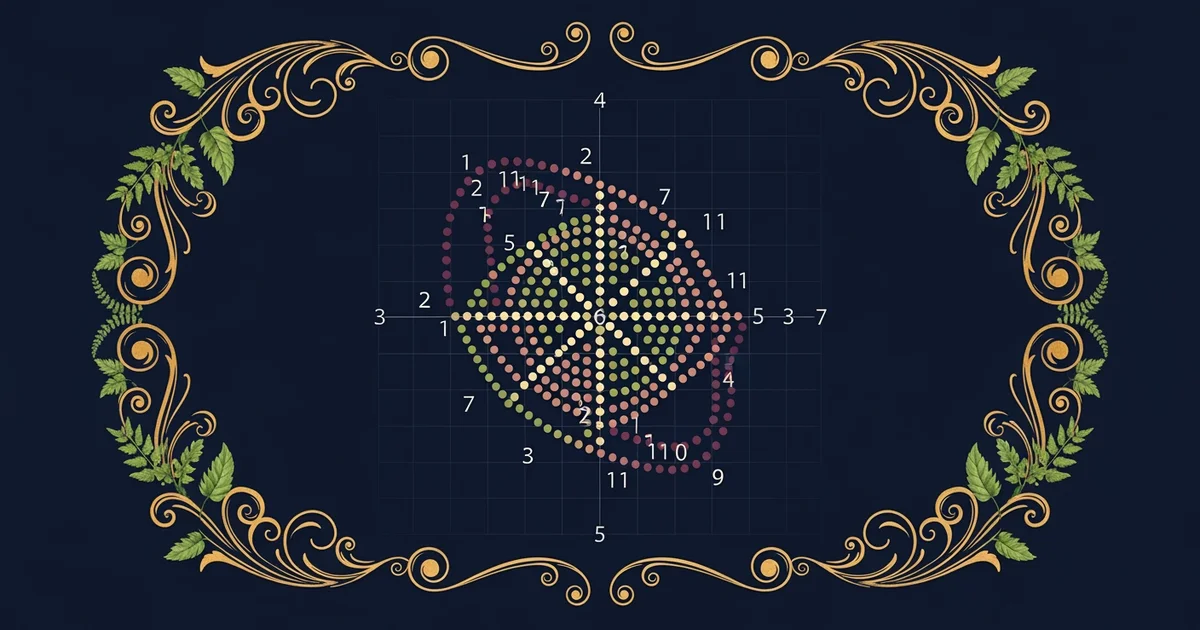
Visualizing Geometric Progressions
When we represent numbers as dots arranged in rows and columns, we discover the beauty of figurate numbers. These are numbers that form specific geometric shapes when laid out on a flat surface. A square number is a value that creates a perfect square grid where the length and width are identical. For example, the number four forms a two-by-two square, while the number nine forms a three-by-three square. This visual approach helps us see why certain numbers behave differently than others during basic mathematical operations. Just as a merchant organizes inventory into neat stacks to count items quickly, we use these shapes to simplify complex numerical relationships.
Key term: Figurate numbers — values that can be represented as dots arranged in distinct geometric shapes like squares or triangles.
Thinking about this in terms of space, consider how a builder arranges bricks to create a stable foundation. If you have a pile of bricks, you can only create a solid square if the total count matches a specific sequence. If your count is seven, you will always have extra bricks or an incomplete side. This limitation shows that numbers have inherent structures that dictate how they can be combined or divided. By visualizing these patterns, we move beyond simple counting and start to see the underlying geometry of the number system itself.
Identifying Sequence Patterns
When we look at the progression of these shapes, we find that each new square is created by adding an odd number of dots. To move from a one-by-one square to a two-by-two square, you must add three more dots to the existing shape. To move from a two-by-two square to a three-by-three square, you add five more dots to the perimeter. This pattern of adding consecutive odd numbers is a reliable rule that governs the growth of all square numbers. Recognizing these sequences allows us to predict the next value without needing to draw the entire shape from scratch every single time.
We can organize these relationships into a table to compare how different dimensions produce distinct square values:
| Side Length | Total Dots | Added Dots | Total Sequence |
|---|---|---|---|
| 1 | 1 | 0 | 1 |
| 2 | 4 | 3 | 1 + 3 |
| 3 | 9 | 5 | 1 + 3 + 5 |
| 4 | 16 | 7 | 1 + 3 + 5 + 7 |
This table demonstrates that the total value is simply the sum of all odd numbers up to that point. By seeing this connection, we understand that multiplication is actually a form of geometric expansion. When we square a number, we are essentially building a larger shape by layering new sections onto the previous structure. This concept is vital for understanding how digital encryption keys use large prime numbers to create complex geometric barriers that are difficult to break. If we understand the shape, we can better secure the information stored within the digital grid.
Visualizing numbers as geometric shapes reveals the hidden rules that govern how values grow and interact within our counting system.
Next, we will explore how the process of division helps us break these shapes apart to find their basic building blocks.