
The Dawn of Secret Writing
Imagine you are writing a secret note to a friend during a crowded class. You want to ensure that no one else can read your private message if it gets intercepted. Humans have felt this exact same need for thousands of years to keep their private thoughts safe. Protecting information is a fundamental part of human history that still influences our modern digital security systems today.
The Roots of Hidden Communication
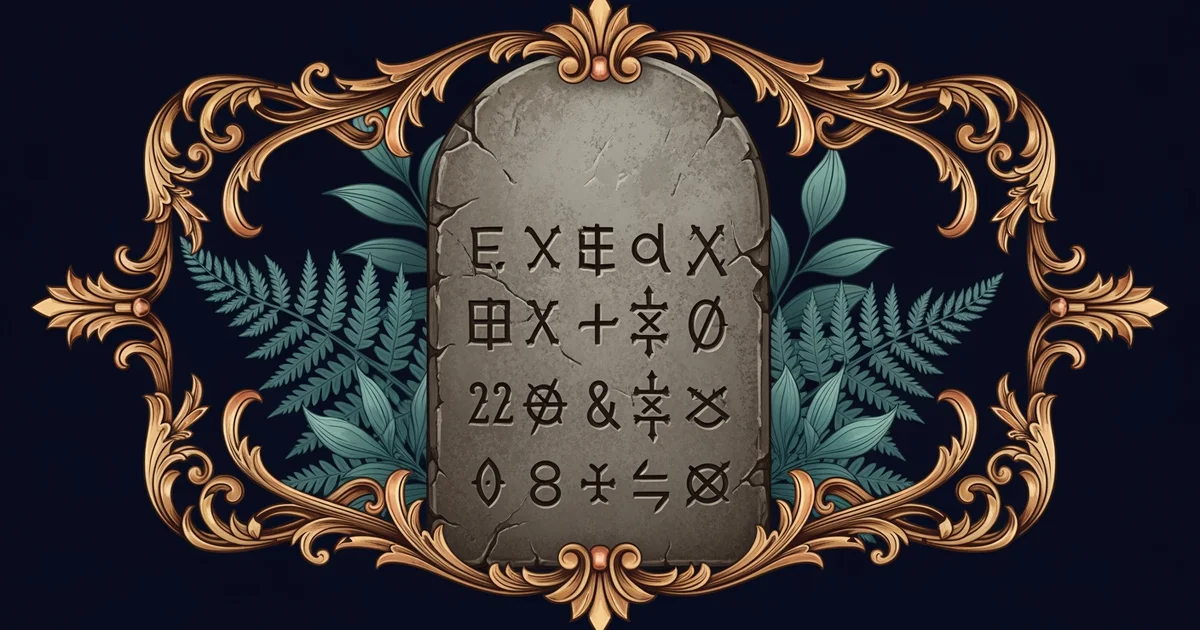
Ancient civilizations often needed to send sensitive information across long distances without letting enemies understand the contents. They developed cryptography as a way to hide the meaning of a message while keeping the message itself visible to others. Think of this process like using a locked mailbox for your physical letters. The mailbox is visible to everyone on the street, but only the person with the correct key can access the contents inside. By changing the way information looked, ancient leaders could ensure that even if a messenger was captured, the enemy could not read the secret plans or military orders.
Key term: Cryptography — the practice of writing or solving codes to protect information from being read by unauthorized people.
Early methods of secret writing relied on simple techniques that did not require complex machines or advanced computers. People often used physical objects or clever linguistic tricks to obscure their meaning from prying eyes. These early efforts laid the groundwork for the more advanced digital encryption methods we use in our daily lives right now. Without these initial experiments in hiding data, the complex security protocols that protect our bank accounts and private messages would likely not exist in their current form.
Understanding Basic Substitution
One of the most common early techniques involved a process known as substitution to change the text. This method requires replacing each letter of a message with a different letter based on a specific rule. If you decide that every letter A becomes a letter D, the word CAT becomes FDW. This simple shift makes the message look like nonsense to anyone who does not know the secret rule you used to write it. The receiver only needs the rule to reverse the process and turn the scrambled letters back into a readable message.
| Method Type | Primary Action | Main Goal |
|---|---|---|
| Substitution | Replacing letters | Obscure meaning |
| Transposition | Moving letters | Change order |
| Steganography | Hiding messages | Conceal existence |
Using a substitution rule is like having a secret language that only you and your friend understand. If you tell your friend that every letter is shifted forward by three spots, you have created a simple system for protection. While this method is very easy to break today, it was a revolutionary idea for people living in the ancient world. It proved that information could be protected by logic rather than just physical force or hiding the message in a secret place.
- First, choose a consistent shift or replacement rule for your alphabet.
- Second, rewrite your message by replacing every original letter with its new counterpart.
- Third, send the scrambled text to your intended recipient through a secure or public channel.
- Finally, the recipient applies the reverse rule to reveal the original hidden message content.
These steps demonstrate that the core goal of secret writing is to maintain confidentiality through structured rules. As you progress through this path, you will learn how these simple concepts evolved into the powerful mathematical tools that protect global communications. By the end of this journey, you will understand how the human need to hide secrets shaped our modern digital world.
The human need for privacy drives the creation of complex systems that transform readable information into secure, hidden data.
You will now explore how ancient societies used physical tools like the scytale to secure their most vital military communications.