
The Voting Rights Act
Imagine you try to enter a store, but the guard blocks your path because of your shoes. You have the money to buy items, but the rules prevent you from ever reaching the counter to pay. This unfair barrier stops you from participating in the economy, much like historical laws stopped specific citizens from casting their ballots. The Voting Rights Act of 1965 serves as a federal shield against such discriminatory barriers in the American electoral system.
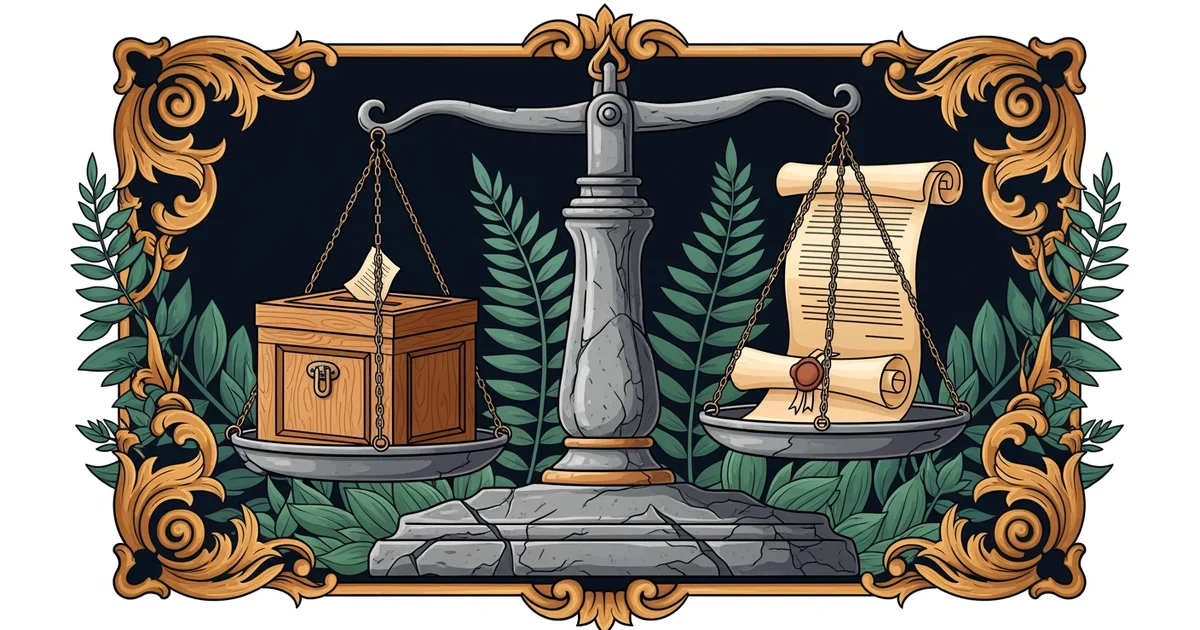
Protecting the Right to Vote
Before this law passed, many states used clever tricks to keep people from voting in local and federal elections. Officials often required literacy tests that were nearly impossible to pass, even for highly educated people. They also used poll taxes, which forced citizens to pay money just to exercise their fundamental right. These practices created a system where the government handpicked its own voters based on race or background. The 1965 legislation changed this landscape by banning these unfair tests and taxes across the entire country. It ensured that the power to choose leaders remained with the people rather than with those who held local office. By setting these national standards, the law created a baseline of fairness that states could not ignore or bypass.
Key term: Voting Rights Act — a landmark federal law designed to remove legal barriers that prevented citizens from exercising their right to vote.
When you think about this law, consider the analogy of a public park with a locked gate. If the park owners only let certain people inside, the public nature of the space becomes a lie. The 1965 law acts like a master key that forces the gates open for every single citizen. It removes the locks that local officials installed to keep specific groups of people out of the process. Without this federal key, the park remains exclusive and serves only a small group of powerful interests. The law forces the gate to stay open so that every person can walk in and participate in the community.
Oversight and Federal Enforcement
Because some areas had a long history of ignoring voting rights, the law created a system of federal oversight. This oversight required certain jurisdictions to get approval before changing any of their local election rules. This process, known as preclearance, prevented states from creating new hurdles just as old ones were removed. It functioned like a safety inspection for new laws to ensure they did not harm protected groups. If a new rule seemed likely to reduce voter access, the federal government could block it immediately.
| Feature | Purpose | Impact on Voters |
|---|---|---|
| Literacy Tests | Banned | Removed unfair barriers |
| Poll Taxes | Prohibited | Stopped economic exclusion |
| Preclearance | Monitored | Prevented new discriminatory laws |
This table shows how the law tackled different types of exclusion to protect the integrity of the ballot box. By requiring proof that new rules were fair, the government shifted the burden of proof onto the officials. This change made it much harder for local leaders to hide their intent behind complex legal language. The law effectively turned the tide against decades of systematic voter suppression in many parts of the country.
Federal enforcement remains a core pillar of the electoral system under United States law today. It ensures that the promise of equality is not just a concept but a reality. When the federal government steps in to protect the vote, it upholds the democratic principle that every voice counts. This balance between state and federal power is essential for maintaining a fair and open election process. By limiting local control over voting, the law keeps the democratic system healthy and inclusive for all citizens. It reminds us that rights are only as strong as the laws that defend them from interference.
The Voting Rights Act establishes federal authority to dismantle discriminatory barriers that prevent citizens from participating in the democratic process.
The next Station introduces Constitutional Amendments, which determine how the framework of our government changes over time.
This content is educational only and does not constitute legal advice. Laws vary by jurisdiction. Consult a qualified legal professional for advice specific to your situation.