
Federal Versus State Power
Imagine you show up to vote in a local election only to find that the rules for registering have changed since the last time you visited the polls. You might wonder why your neighbor in another state faces different requirements to cast their ballot on election day. This confusion highlights the complex division of power between the national government and individual states within the American system. Understanding this split explains why election procedures vary so much across the country while still maintaining a unified national purpose.
The Constitutional Framework of Election Authority
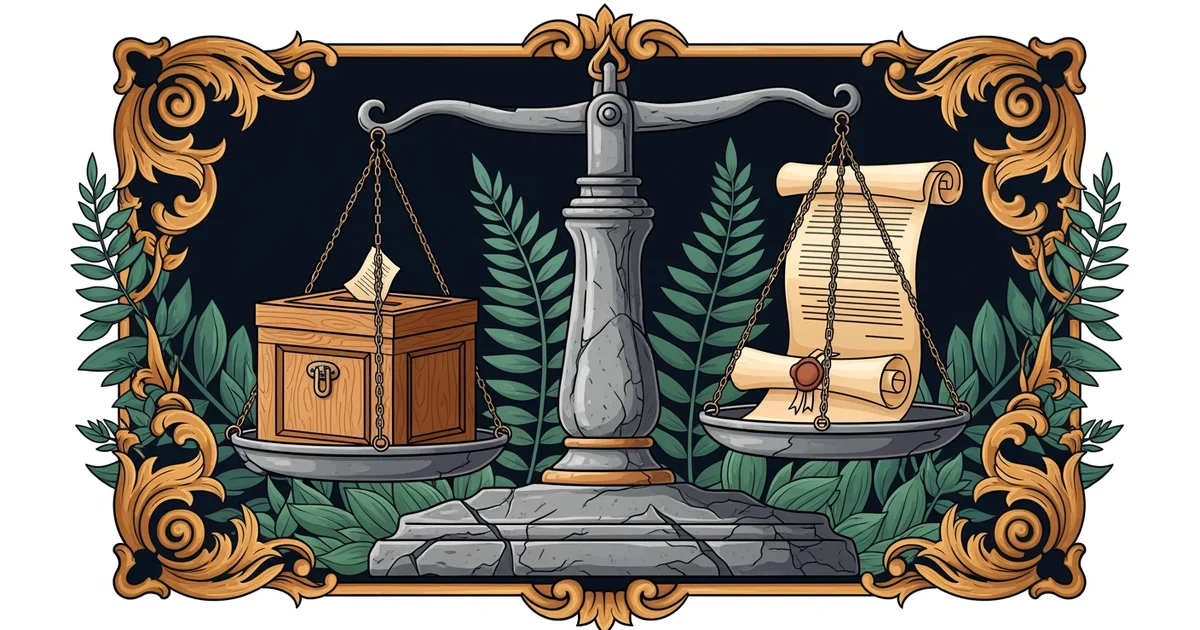
Under the structure of the United States Constitution, the power to manage elections is shared between two different levels of government. The federal government holds the authority to set broad standards for national elections like those for the President or members of Congress. Meanwhile, the states retain the primary responsibility for the administration of these contests within their own borders. Think of this relationship like a national franchise restaurant chain that sets the main menu items while allowing local managers to decide the daily specials and store hours. This balance ensures that the federal government protects basic rights while states handle the practical details of running the voting process.
Key term: Federalism — the system of government where power is divided between a central national authority and smaller political units like states.
States manage the day-to-day work of elections including the design of ballots and the selection of voting machines. They also determine the specific hours that polling places remain open for the public to cast their ballots. By keeping this power at the state level, the system allows for local innovation and adaptation to the needs of different communities. However, this flexibility can sometimes lead to differences in how citizens experience the democratic process depending on their physical location. The federal government steps in only when it needs to enforce constitutional protections or ensure that every citizen has a fair chance to participate in the political system.
Balancing Local Control and National Standards
State governments exercise significant influence by establishing the rules for voter registration and the certification of results. They decide which forms of identification are necessary at the polls and how early voting periods are structured for the population. This autonomy allows states to experiment with different ways of increasing turnout or improving the security of the ballot box. If a state finds a successful method for processing votes, other regions might choose to copy that approach in future election cycles. This competitive environment encourages states to refine their systems over time to better serve the needs of their specific residents.
| Level of Government | Primary Election Responsibility | Scope of Authority |
|---|---|---|
| Federal Government | Setting constitutional standards | National elections |
| State Government | Administering local procedures | State and local polls |
| Local Jurisdictions | Operating polling locations | Community logistics |
Despite this state-level control, the federal government maintains a vital role in protecting the integrity of the democratic process. It enforces laws that prevent discrimination and ensures that states do not violate the core rights of voters. When federal laws conflict with state practices, the supremacy of the national government usually takes precedence to protect the rights of all citizens. This tension between local control and national oversight creates a dynamic system that changes as the country evolves. Learning how these two layers of power interact is essential for understanding how your vote eventually influences the direction of the country.
The division of election power between federal and state levels balances local administrative control with the necessity of maintaining consistent national civil rights protections.
The next step involves examining how federal legislation specifically intervenes to protect voting rights when state laws fail to provide equal access to the polls.
This content is educational only and does not constitute legal advice. Laws vary by jurisdiction. Consult a qualified legal professional for advice specific to your situation.