
Data Ethics and Fairness
Imagine a bank uses a computer program to decide who gets a small business loan. If the program learns from past data that favors one group, it will deny others unfairly. This creates a cycle where past human mistakes become the new rules for the future. You must understand that data is not just numbers; it is a mirror of our history. When that history contains bias, the computer inherits those same prejudices without ever realizing it is doing so. Fairness in digital systems requires us to look closely at the information we feed into them. If we ignore the source of our data, we risk building machines that automate inequality rather than solving it.
Identifying Algorithmic Bias
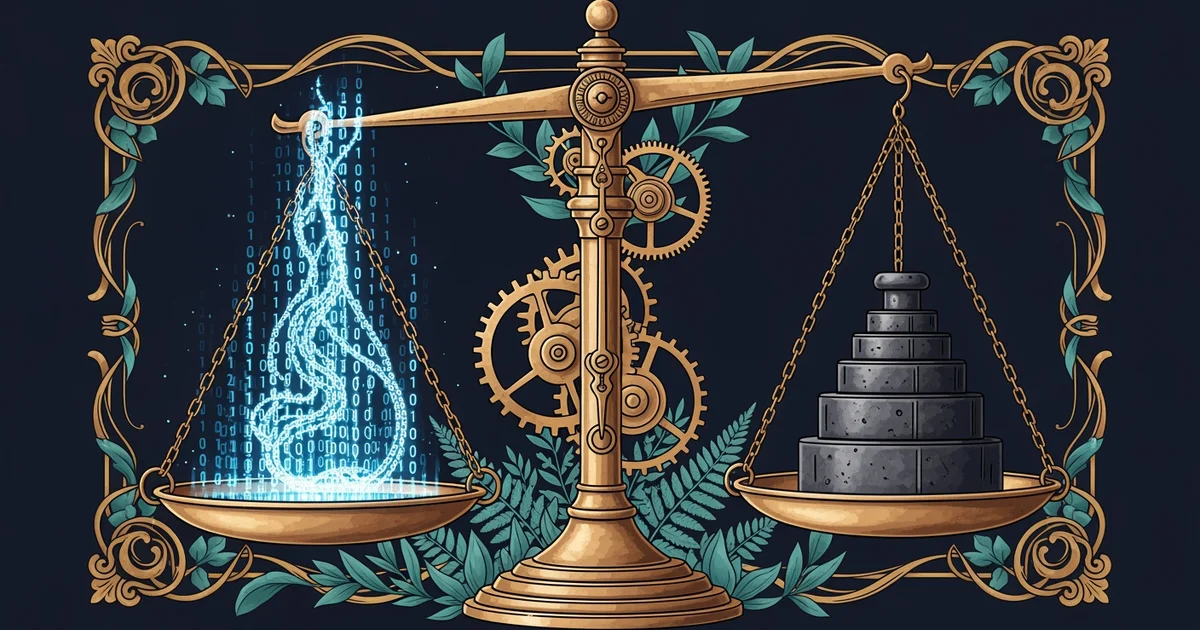
To see how this works, consider a chef who always adds too much salt to a soup. If a new cook learns only by watching that chef, they will repeat the same mistake every time. This is exactly how algorithmic bias functions in modern software systems. The software learns from historical records that may reflect old social preferences or outdated trends. If a dataset shows that certain people received more loans in the past, the model assumes this was correct. It does not know that past choices were based on unfair social standards rather than actual risk. By training on this skewed information, the system adopts these bad habits as if they were objective truths. The model then applies these patterns to every new person who applies for a loan. This creates a technical barrier that feels like an objective decision but is actually just a digital echo of old human errors.
Key term: Algorithmic bias — the systematic and repeatable errors in a computer system that create unfair outcomes for specific groups.
We can evaluate datasets for fairness by checking for underrepresented groups or skewed samples. If a dataset lacks information about diverse neighborhoods, the final model will be less accurate for those people. This is a common failure in predictive modeling that developers must actively work to prevent. You should always ask if the data truly represents the population it will eventually serve. If the data is narrow, the predictions will be narrow as well. This leads to a situation where the software works perfectly for some while failing others entirely. We must audit our data before we build the model to avoid these hidden traps.
Strategies for Ethical Data Auditing
When we audit data for fairness, we look for specific signs that the information might be tainted. These signs often appear as patterns that do not make sense in a fair, neutral world. For example, if a model consistently flags one demographic group as high risk without clear evidence, the training data is likely biased. We must compare the outcome rates across different groups to find these hidden discrepancies. This process of fairness auditing allows us to detect problems before the software goes live. It is much easier to fix a dataset than it is to fix a broken reputation after a system causes harm.
We can use a structured approach to verify if our data is ready for use:
- Representative sampling ensures that every demographic group has enough data points to be understood by the model without errors.
- Sensitivity testing involves changing specific variables in the dataset to see if the model reacts in a way that suggests hidden bias.
- Historical context review requires researchers to check if the data reflects past legal or social policies that were inherently discriminatory.
By following these steps, we can ensure that our models are built on a foundation of equity. This work is essential for maintaining public trust in automated decision-making systems. Without these checks, we are simply coding the mistakes of the past into the infrastructure of our future.
Fairness in data ethics requires us to actively identify and correct the historical biases hidden within the information used to train our predictive models.
The next Station introduces legal frameworks for AI, which determine how these fairness standards become enforceable rules.
This content is educational only and does not constitute legal advice. Laws vary by jurisdiction. Consult a qualified legal professional for advice specific to your situation.