
Legacy and Future Preservation
Imagine finding a crumbling map that leads to a hidden vault filled with your family history. You would likely feel a strong urge to protect those fragile pages from fading away forever. Cultural heritage sites act as this map for our collective human story, providing physical evidence of how past societies thrived, struggled, and eventually faded into the sands of time. Preserving these locations is not merely about keeping old stones upright; it is about maintaining a tangible connection to the lessons learned by those who walked the earth before us.
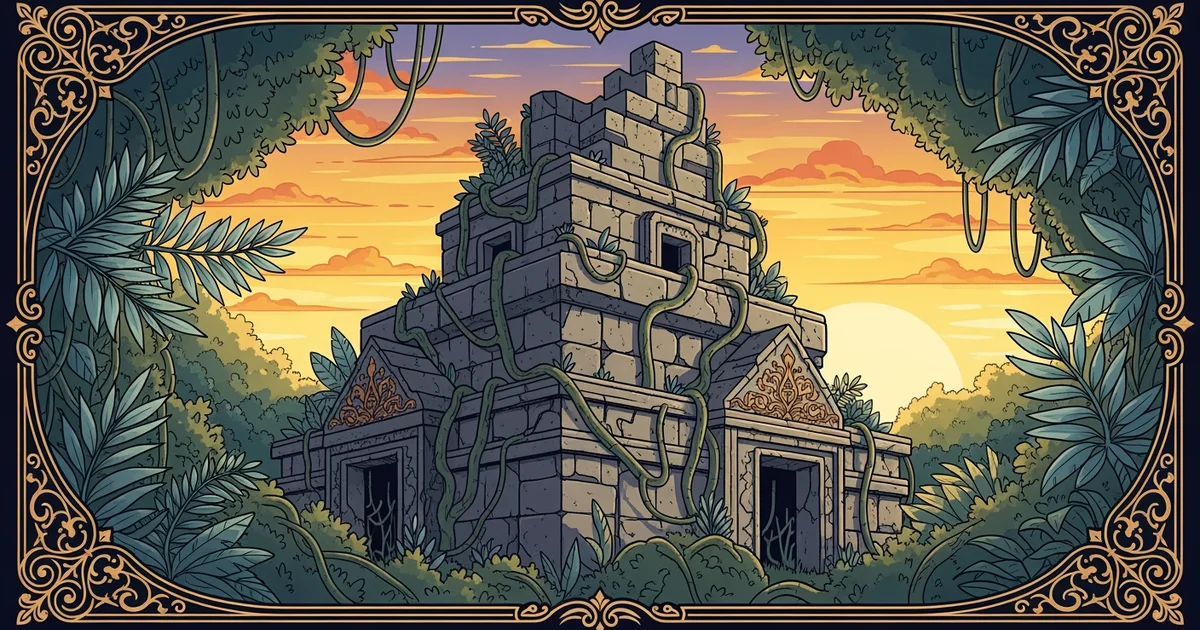
The Value of Tangible History
When we protect ancient structures, we are essentially investing in a global insurance policy against the erasure of human wisdom. Much like a business owner maintains a ledger to track past profits and losses, humanity uses historical sites to account for our shared successes and failures. These sites offer a unique perspective that textbooks cannot replicate, as they allow us to see the scale of past architectural feats and daily living spaces. By visiting these areas, we gain a deeper appreciation for the ingenuity required to build civilizations without the modern tools we take for granted today. This physical presence forces us to confront the reality that even the most powerful empires are not immune to the slow march of decay. Understanding this vulnerability encourages us to think more critically about the sustainability of our own modern structures and social systems.
Key term: Cultural Heritage — the legacy of physical artifacts and intangible attributes of a society that are inherited from past generations.
Maintaining these sites requires a delicate balance between public access and long-term site stability. If we open every ruin to mass tourism, the constant foot traffic and environmental exposure will inevitably accelerate the destruction of the very features we wish to study. We must implement strict conservation protocols, which function like a bank vault that limits withdrawals to ensure the principal remains intact for future interest. This strategy ensures that future researchers will have the same opportunity to analyze these sites as we do today. Without these protective measures, we risk losing the most valuable evidence of human resilience, leaving future generations with only fragmented stories instead of concrete proof of our ancestors' achievements.
Strategies for Future Preservation
To ensure these sites survive, we must adopt a multi-layered approach that combines traditional craftsmanship with modern technology. We can categorize our preservation efforts by focusing on three distinct pillars that address both physical decay and digital accessibility for the public:
- Structural Stabilization involves using modern engineering techniques to reinforce ancient foundations without altering the original historical character of the site.
- Environmental Monitoring utilizes sensor networks to track humidity, temperature, and pollution levels, allowing experts to intervene before permanent damage occurs to delicate surfaces.
- Digital Archiving captures high-resolution 3D scans of monuments, creating a perfect virtual replica that remains accessible even if the physical site suffers an unavoidable disaster.
By integrating these methods, we create a robust framework that defends against both natural erosion and human interference. This approach demonstrates that we value the past enough to utilize our best tools for its protection, ensuring that the lessons of human resilience remain visible for centuries to come.
| Preservation Method | Primary Goal | Technology Used |
|---|---|---|
| Stabilization | Prevent collapse | Steel reinforcement |
| Monitoring | Halt decay | Sensor arrays |
| Archiving | Digital backup | Laser scanning |
These methods allow us to bridge the gap between ancient stone and modern data, creating a living archive that evolves with our changing world. By valuing these sites, we acknowledge that our present civilization is just one chapter in a much larger, ongoing story of human development. We have a responsibility to act as stewards of this history, ensuring that the path we have traveled remains clear for those who follow in our footsteps.
Protecting cultural heritage sites is a vital investment that secures our collective memory and provides essential insights into the long-term patterns of human success and decline.
Preserving history ensures that the lessons learned by past civilizations remain available to guide our own future decisions.