
Defining Lost Civilizations
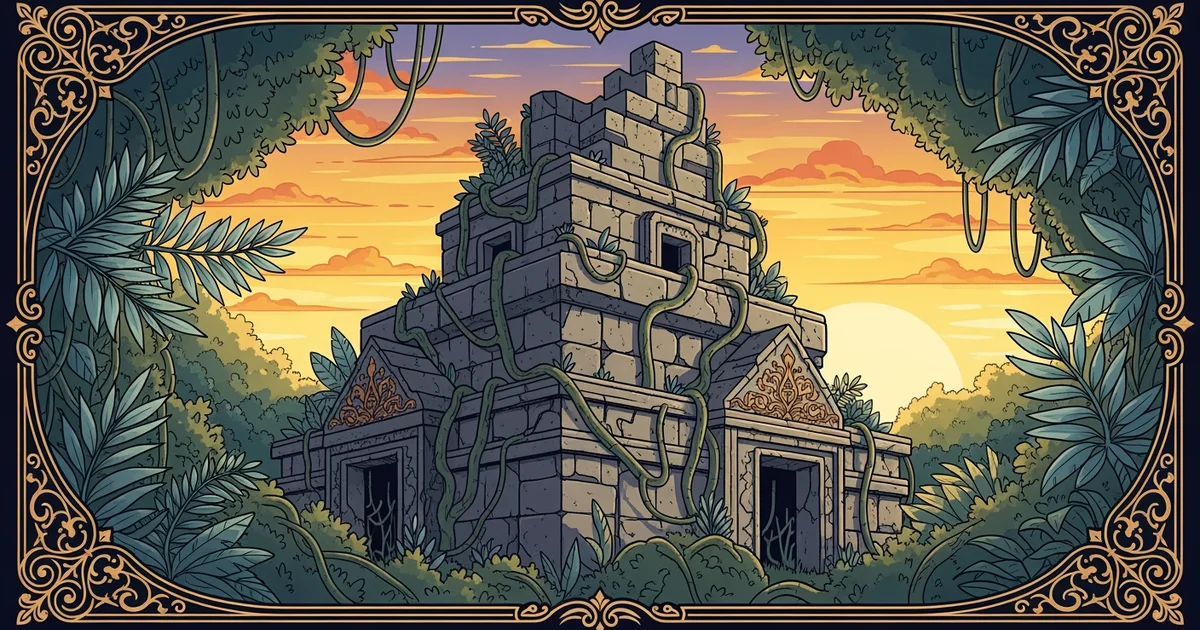
Imagine you are walking through a dense forest and suddenly stumble upon a massive, carved stone wall half-buried in the dirt. This structure clearly shows that people lived here long ago, but no one today knows their names, their language, or why they eventually left their homes behind. We call these groups lost civilizations, and they represent societies that thrived for centuries before vanishing from the active historical record. Defining these groups is not about finding hidden treasure, but about understanding how human systems rise and fail over time.
The Criteria for Defining Ancient Societies
To label a group as a formal civilization, archaeologists look for specific signs of advanced social organization that go beyond small, wandering tribes. A civilization usually requires a stable food supply, which allows people to settle in one place and build permanent cities. This surplus of food acts like a bank account for a society, giving them the extra resources needed to support workers who do not farm, such as builders, leaders, or artists. Without this foundation, a group remains a nomadic band rather than a complex society.
Key term: Civilization — a complex human society characterized by urban development, social stratification, and symbolic systems of communication.
When we describe a civilization as lost, we are really saying that its primary social structure has completely collapsed and its cultural memory has faded. It is similar to a large company that goes bankrupt and shuts its doors, leaving behind only empty office buildings and scattered files. The people did not necessarily vanish into thin air, but the way they lived and worked together effectively ended. Historians look for these specific indicators to identify a lost society:
- Urban centers: These are large, planned settlements that show evidence of infrastructure like roads, water systems, or religious gathering places.
- Social hierarchy: This involves clear divisions between different groups of people, often shown through burial sites or differences in housing quality.
- Specialized roles: A society needs distinct groups, such as farmers, soldiers, and administrators, to maintain the complex systems required for city life.
Why Civilizations Become Lost
Understanding why these groups disappear helps us grasp the fragility of our own modern world. A civilization often becomes lost because its core systems, such as trade routes or farming methods, stop functioning correctly due to outside pressure or internal decay. If a society cannot adapt to a changing environment, its influence wanes until the physical remains are all that persist. We study these sites to learn how resilience works and why some cultures survive while others fade into the background of history.
| Feature | Nomadic Group | Lost Civilization |
|---|---|---|
| Housing | Temporary | Permanent |
| Economy | Hunting/Gathering | Agriculture/Trade |
| Records | Oral Tradition | Written/Symbolic |
By examining the physical evidence left behind, we can reconstruct the daily lives of people who shaped the landscape thousands of years ago. These civilizations teach us that no system is immune to change if the environment or social order shifts too quickly. This path will provide you with a full framework for analyzing how societies interact with their geography and why they eventually face the challenges of total collapse.
Lost civilizations are defined by the total breakdown of their complex social structures, leaving behind physical remnants that reveal how human groups adapt to or fail within their environments.
This path will guide you through the complex geography of collapse to show how environmental shifts and human decisions lead to the decline of great societies.