
Future Model Architectures
Robots currently struggle when they encounter objects that look different from their training data. Imagine trying to bake a cake in a kitchen where every single tool has a completely new shape. You would need to learn the purpose of each item before you could ever start mixing the batter. This is the central hurdle for modern robotics as we move toward machines that can function in any messy human space. Our foundation question asks how one central brain can teach robots to handle any physical object in our world. Future architectures aim to solve this by moving beyond simple visual matching to true physical reasoning.
Moving Toward Universal Representations
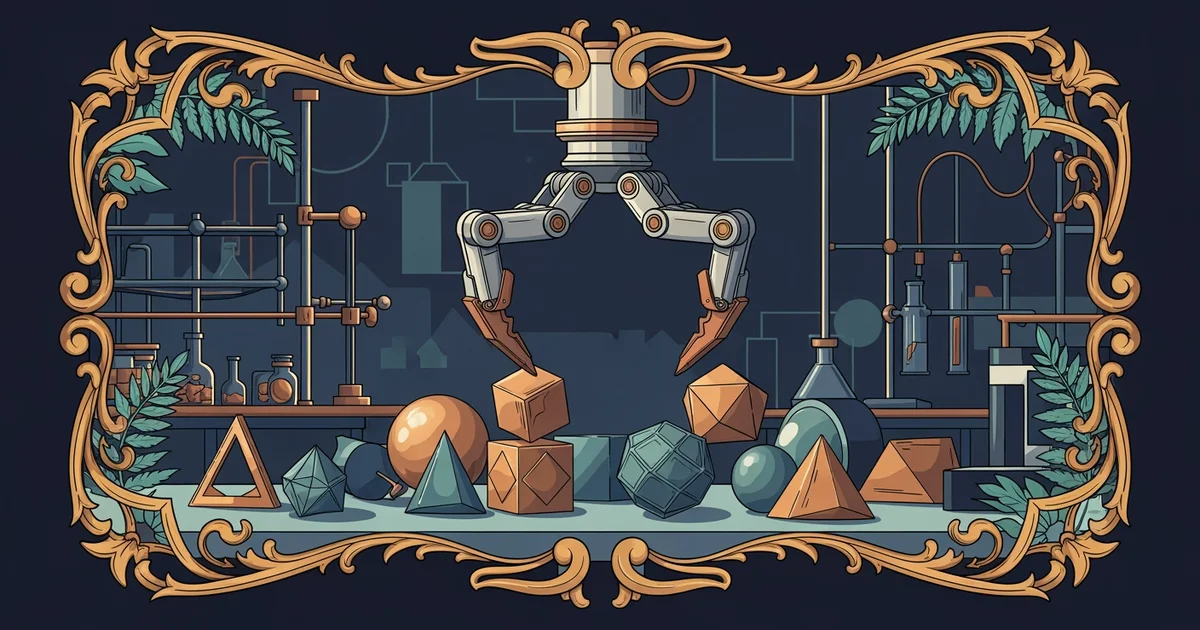
Researchers now focus on creating Generalizable Representations that allow robots to understand the physics of an object regardless of its appearance. Current models often treat a cup and a bowl as distinct entities based on their visual features alone. Future systems will instead map these objects to a shared space based on their functional properties like weight or grip points. Think of this process like learning the concept of a container rather than memorizing every specific brand of mug. Once the robot understands the concept of containment, it can handle a new, strange-looking bowl with ease because it recognizes the underlying physical utility.
Key term: Generalizable Representations — a method where artificial intelligence maps diverse physical objects to a shared set of functional properties for universal handling.
This shift mimics how humans categorize the world through experience rather than just through visual templates. We do not need to see every possible type of chair to know that we can sit on one. By building models that prioritize function over form, we allow the robot to transfer skills between tasks. This approach bridges the gap between the rigid safety protocols discussed in our previous station and the need for fluid, real-time movement. When a robot understands that a heavy metal pot acts like a light plastic bucket, it can adjust its grip force instantly to prevent damage.
Architectures for Adaptive Learning
Future model architectures will likely rely on Multimodal Integration to combine visual, tactile, and force data into a single decision loop. Most current robots rely too heavily on cameras, which fails when lighting is poor or objects are hidden. A truly robust system must integrate touch and pressure sensors to verify what the eyes perceive. We can compare this to a person walking through a dark room who uses their hands to feel for furniture. By combining these different sensory streams, the robot gains a much deeper understanding of its immediate environment and the tasks at hand.
| Sensor Type | Primary Data Input | Role in Decision Making |
|---|---|---|
| Visual | Light and depth | Identifying object location |
| Tactile | Pressure and texture | Verifying object stability |
| Proprioception | Joint angles and force | Adjusting motor movement |
These integrated systems will use advanced feedback loops to refine their actions while they are in motion. This creates a cycle where the robot constantly updates its internal model of the world based on the resistance it feels. The following steps outline how these next-generation systems will process new physical tasks:
- The robot observes a new object and maps its visual features to a known functional category.
- It initiates a light touch to confirm the physical properties like surface friction and material density.
- The central brain updates the internal model to account for any differences between the prediction and the reality.
- The system executes the final action using the refined data to ensure the task succeeds without error.
This process allows the robot to learn from its mistakes in real-time rather than requiring a massive database of pre-recorded movements. By focusing on these adaptive architectures, we move closer to a world where robots can assist us in any home or workspace without needing constant human oversight. We must continue to ask how these systems can maintain safety while gaining this new level of physical freedom. This tension between flexibility and control remains the most significant open question for the next decade of engineering research.
Future robotic systems will prioritize functional understanding over visual recognition to interact safely with any object in the physical world.
The next phase of our journey will focus on final systems integration to ensure these models work reliably in real-world environments.