
Capstone: System Design
Imagine a package arriving at your doorstep just minutes after your order is processed by a local warehouse. This speed creates a new standard for how companies manage their inventory and delivery routes in busy cities.
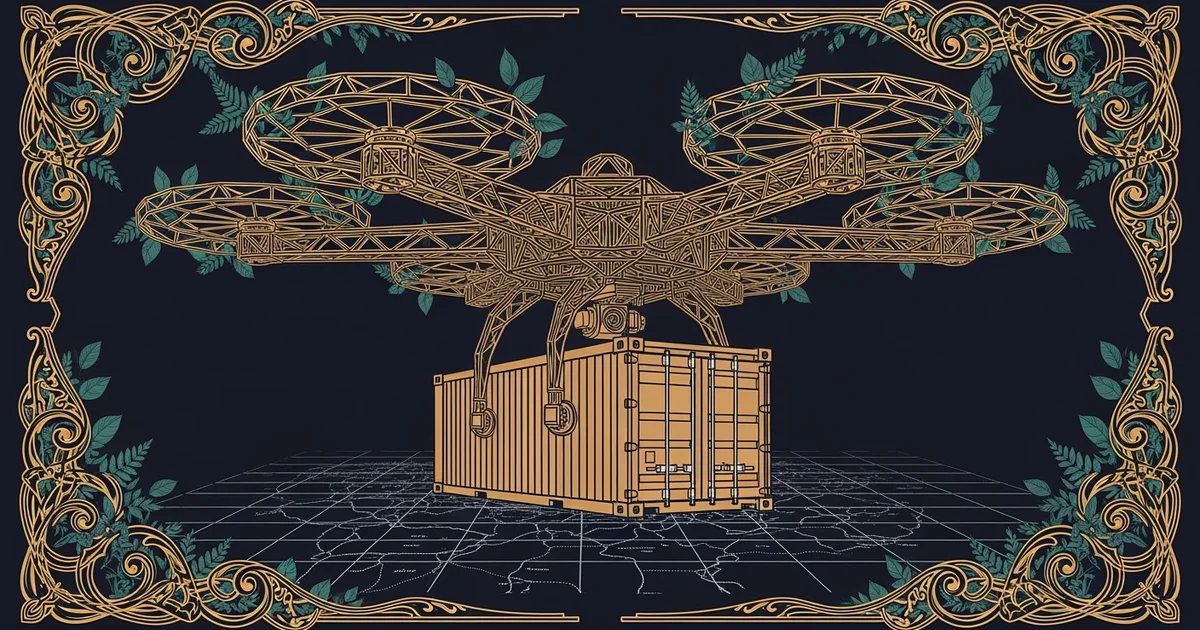
Designing the Drone Infrastructure
To build an effective drone fleet, engineers must consider the entire life cycle of a delivery mission. The System Design phase requires balancing weight, flight time, and the physical constraints of urban environments. Much like a relay race where every runner must hand off the baton perfectly, a drone system relies on seamless transitions between charging stations and delivery hubs. If one part of the chain fails, the entire logistics network slows down significantly. Designers often use modular hardware to ensure that if a motor breaks, the drone stays in service with a quick swap.
Key term: System Design — the comprehensive planning process that integrates hardware, software, and operational logic to create a functional drone logistics network.
When we look at the flow of goods, we must account for the power limitations of modern batteries. A drone cannot fly forever, so the network needs strategic locations for rapid battery swapping or charging. Think of these stations like gas stations for cars, but they must be fully automated to maintain high efficiency. By placing these hubs in high-density areas, companies reduce the distance drones travel, which saves energy and increases the total number of deliveries per hour. This spatial planning remains the most difficult part of scaling drone operations today.
Integrating Logistics and Robotics
Building a reliable fleet involves more than just selecting the right drones for the job. You must integrate complex software that manages traffic, weather patterns, and customer demand in real time. This Autonomous Coordination allows multiple drones to navigate the same airspace without human intervention. By using sensors and predictive algorithms, the drones avoid obstacles and adjust their paths if the wind changes suddenly. This level of automation is essential for keeping costs low while maintaining a high volume of daily deliveries.
| Component | Primary Function | Operational Requirement |
|---|---|---|
| Power Hub | Battery management | Rapid charging cycles |
| Flight Controller | Path navigation | Real-time sensor input |
| Delivery Module | Package security | Automated release system |
To manage this complexity, engineers often categorize the fleet requirements into three distinct layers that must work together:
- The physical layer involves the drone frame and propulsion systems, which must be durable enough to withstand daily wear and tear in various weather conditions.
- The network layer handles the communication between drones and ground stations, ensuring that every unit receives updated flight data and emergency alerts instantly.
- The software layer runs the decision-making logic, which processes sensor data to ensure safe landings and accurate package placement at every destination site.
These layers create a robust framework that allows the system to scale as demand grows. When a new order enters the system, the software automatically calculates the best drone, the fastest route, and the nearest charging station to complete the task. This interconnected approach ensures that the logistics chain remains fluid and responsive to changes in demand. Even with advanced planning, the industry still faces the challenge of managing airspace in crowded cities where many companies operate their own fleets simultaneously. This tension between efficiency and safety remains a major hurdle for future development in the field of autonomous robotics.
A successful drone logistics system balances hardware durability, efficient energy management, and intelligent software to move goods quickly.
Understanding these core principles of system design allows you to build and optimize any autonomous delivery network effectively.