
The Rise of Aerial Logistics
Imagine waiting for an urgent package that is currently stuck in a massive traffic jam across town. Traditional delivery trucks struggle with city congestion, narrow streets, and the constant need for human drivers to navigate complex urban environments. Aerial logistics changes this picture by taking the delivery process into the open sky where paths are direct and clear. This shift represents a major change in how companies move goods from warehouses to your front door.
The Drivers of Aerial Efficiency
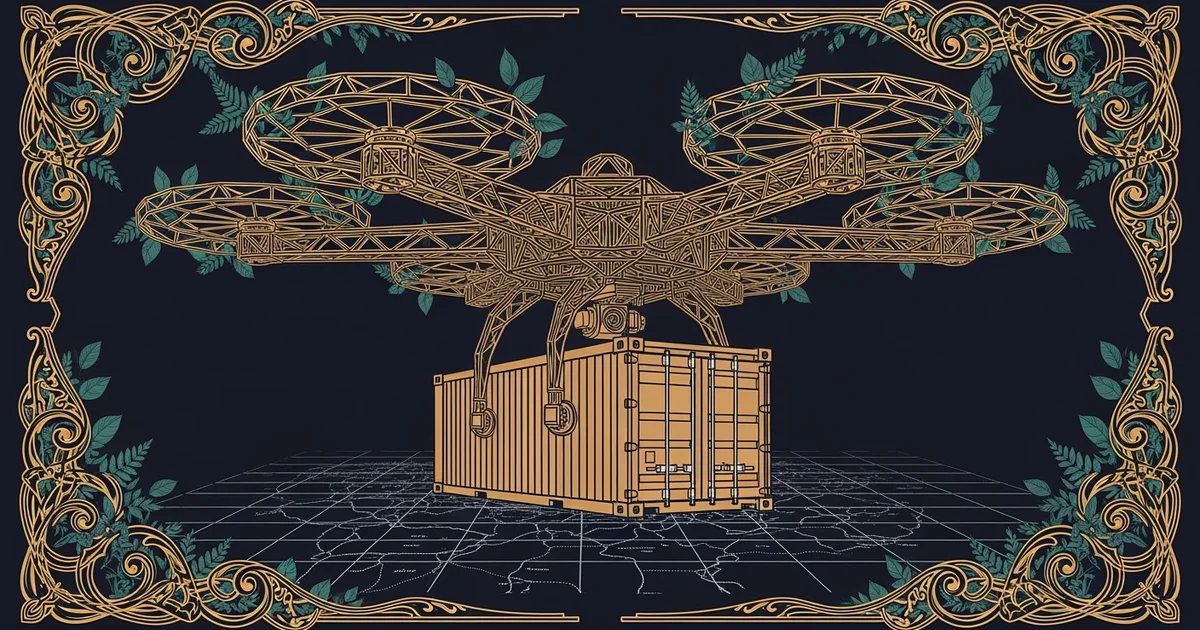
Companies choose to integrate drone technology because it solves the persistent problem of the last mile. The last mile refers to the final step of the delivery process where a package moves from a local hub to the customer. This stage is often the most expensive and time-consuming part of the entire supply chain journey. Drones bypass surface traffic entirely, allowing them to fly in straight lines rather than following winding road networks. By removing the vehicle from the road, businesses save significant fuel costs and reduce the time spent idling in gridlock. Think of this like a bird flying over a crowded maze while a person on the ground must walk through every path to find the exit. The bird reaches the destination much faster because it does not follow the constraints of the maze walls.
Key term: Autonomous logistics — the process of using self-operating machines to manage the movement of goods without requiring constant human intervention or manual control.
Beyond speed, these systems offer a way to reach remote areas that are difficult for standard trucks to access. A delivery drone does not require paved roads or heavy infrastructure to land or drop off a package. This capability allows businesses to serve customers in rural locations or dense city centers with equal ease. The flexibility of flight means that delivery schedules can become more dynamic and responsive to immediate customer needs. Companies are now testing these systems to see how they fit into existing logistics networks alongside traditional delivery methods.
Transforming Supply Chain Dynamics
Integrating aerial technology requires a rethink of how warehouses function and where they are located. Instead of relying on a few massive distribution centers far from cities, companies might use smaller, distributed hubs. These smaller hubs act as launch points for drones to cover specific neighborhoods quickly and efficiently. This structural change reduces the distance a package travels, which further lowers the cost of operation for the business. The following table highlights the core differences between traditional truck delivery and modern aerial delivery systems for logistics managers.
| Feature | Traditional Trucking | Aerial Drone Delivery |
|---|---|---|
| Route Path | Follows complex roads | Direct point to point |
| Traffic Impact | High delay potential | Zero traffic interference |
| Infrastructure | Requires paved roads | Minimal landing space |
| Delivery Speed | Dependent on congestion | Consistent and rapid |
Operational success depends on how well these drones integrate with existing digital inventory systems. When a customer places an order, the system must instantly calculate the best flight path based on weather and battery life. This requires advanced software that can manage thousands of flights simultaneously without human guidance. The goal is to create a seamless flow where goods move from shelves to the sky in minutes. This transition is not just about replacing trucks, but about creating a faster, more reliable network for everyone involved in the global trade process.
By moving away from road-bound vehicles, businesses aim to lower the carbon footprint of their shipping operations. Electric drones produce fewer emissions compared to large diesel trucks that run all day. As battery technology improves, the range and weight capacity of these drones will continue to expand. This progress will eventually allow for the delivery of a wider variety of goods beyond small parcels. The future of logistics relies on this marriage of robotics, software, and efficient energy usage to meet modern demands.
Autonomous drones reshape global supply chains by replacing slow, road-based transport with direct, high-speed aerial routes that bypass urban congestion.
This path will guide you through the hardware components and software logic that make these advanced aerial delivery systems possible.