
Future Logistics Trends
A single delivery drone buzzing over your house might seem like a futuristic novelty today. Imagine instead a sky filled with thousands of autonomous machines moving goods across your city. This shift represents the final frontier of logistics where speed meets total machine autonomy. We must now look at how these systems will evolve beyond simple package delivery.
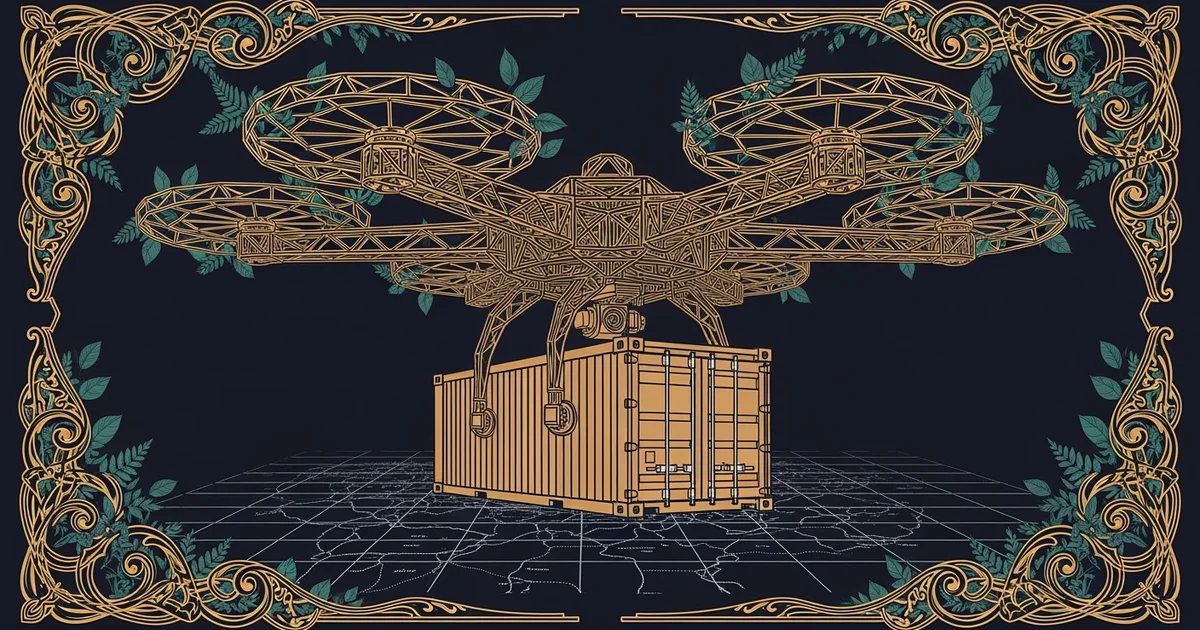
The Evolution of Autonomous Logistics Networks
Future logistics will move away from human-led transport toward fully integrated, self-healing swarm intelligence systems. Just as a colony of ants works together to move large objects, future drone fleets will communicate in real-time to optimize routes. This collective decision-making replaces the rigid, human-planned schedules of modern shipping companies. When one drone encounters a storm or technical delay, the entire network adjusts its path instantly to maintain delivery times. This flexibility allows companies to handle massive spikes in demand without needing to hire more human drivers. The system functions like a living organism that constantly adapts to its environment to ensure the survival of the delivery flow.
Key term: Swarm intelligence — the collective behavior of decentralized, self-organized systems that work together to solve complex logistical problems.
To understand why this is necessary, we must consider the limitations of our current, human-centric supply chain models. Current logistics rely on central hubs that create massive bottlenecks whenever volume exceeds expected capacity. By moving to decentralized drone networks, we remove the need for these physical hubs in every neighborhood. Drones will instead operate from mobile launch stations that move based on predicted demand patterns. This reduces the distance between the warehouse and your doorstep, which drastically lowers energy consumption. These systems also bridge the gap between rural and urban areas by providing reliable access to goods regardless of location.
Integrating Advanced Robotic Infrastructure
As these networks mature, they will incorporate sophisticated predictive analytics to anticipate what you need before you even order it. These systems analyze historical data and local events to place inventory in drones that are already in flight. This process turns the supply chain into a proactive service rather than a reactive one. While earlier stations focused on basic navigation, this phase requires drones to understand complex environmental data. They will need to process weather patterns, traffic flow, and energy availability to make split-second operational decisions. This level of autonomy creates a seamless link between the warehouse floor and the final customer.
| Feature | Current Logistics | Future Autonomous Logistics |
|---|---|---|
| Planning | Human-led manual | AI-driven swarm |
| Hubs | Fixed central sites | Mobile decentralized nodes |
| Response | Reactive shipping | Proactive predictive delivery |
This table highlights the transition from human-heavy processes to fully automated systems that prioritize speed and efficiency. The shift is not just about replacing trucks with drones, but about rethinking how goods move through our world. We see tension between these new systems and existing privacy regulations discussed in previous stations. How can we maintain public safety while allowing drones to operate with the speed required for global efficiency? This remains the most significant hurdle for researchers and engineers today. The path forward requires a balance between technological progress and the social needs of the communities these drones serve. As we look ahead, the integration of these systems will redefine our expectations for how quickly we receive items.
Future logistics will rely on decentralized swarm intelligence to transform reactive supply chains into proactive, self-optimizing delivery networks.
The upcoming capstone project will apply these principles to design a comprehensive, secure, and efficient autonomous transport system.