
Bridge Structural Mechanics
Imagine standing atop a swaying bridge while cars rush past you at high speeds. You might notice the structure feels alive, shifting slightly under the weight of the traffic. This movement is not a flaw in the design but a deliberate engineering feature. Engineers use specific mechanics to ensure the bridge remains safe despite heavy loads. By spreading force across many points, they prevent any single part from taking too much stress. Understanding these hidden forces helps us appreciate how massive structures stay standing for decades.
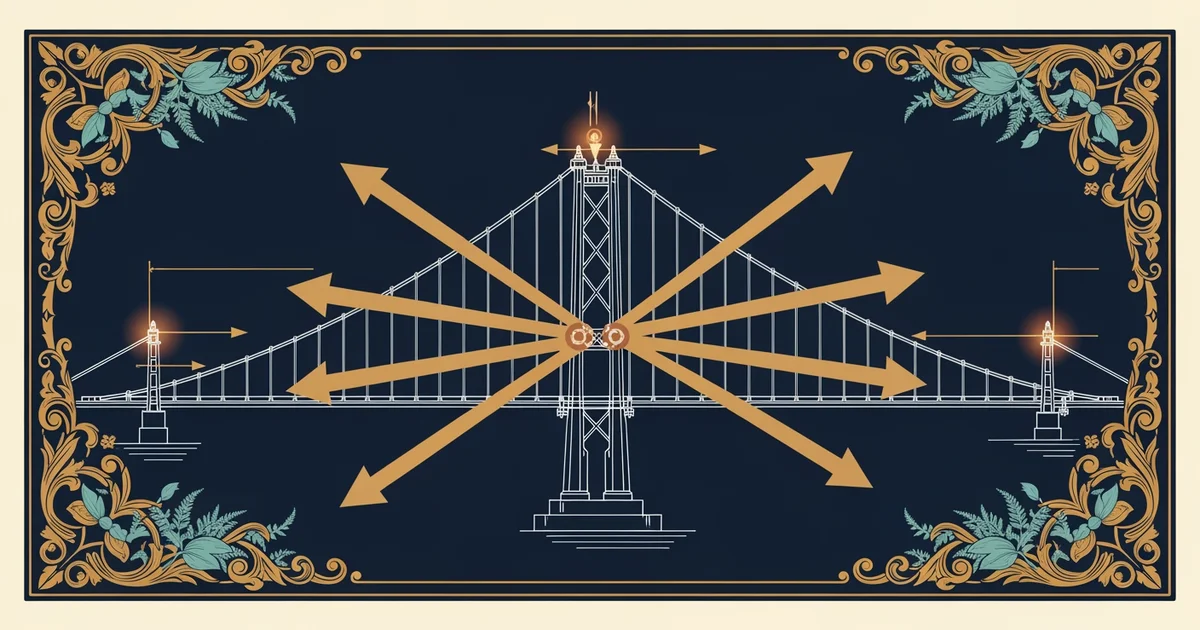
Forces Acting on Suspension Systems
When we look at a suspension bridge, we see a complex dance of two main forces. Gravity constantly pulls the entire bridge structure toward the earth below the water line. To counter this, the bridge uses tension to pull against the downward force of gravity. Think of this like a tug-of-war game where the rope must remain tight to hold its shape. The main cables carry the weight of the deck through vertical suspender ropes attached to it. If these cables were not under constant tension, the entire bridge deck would collapse into the river.
Key term: Tension — the internal force that pulls outward on a structural member, resisting the tendency of the load to stretch it apart.
This system works because the cables are flexible yet incredibly strong under pulling pressure. The towers act as anchors that hold the cables high above the water surface. Because the towers are rigid, they transfer the weight from the cables into the ground. This creates a stable path for cars while allowing the bridge to flex slightly. If the bridge were perfectly rigid, it would likely crack under the pressure of wind or heavy traffic. Flexibility allows the bridge to absorb energy rather than resisting it until failure occurs.
Distributing Weight Across the Span
Engineers must ensure that no single point on the bridge experiences too much stress. They use a specific distribution method to keep the deck level and secure during travel. The following mechanisms help manage the heavy weight of vehicles and the bridge itself:
- Main cables support the deck by transferring weight to the towers through tension.
- Vertical suspenders connect the deck to the main cables to spread the load evenly.
- Anchorages hold the main cables firmly into the ground to prevent them from slipping.
- Stiffening girders prevent the deck from twisting or bending under the force of wind.
These components work together to turn a heavy load into a manageable force. By dividing the total weight across thousands of steel wires, the stress on any single wire remains low. This is similar to how a snowshoe distributes your body weight over a large area. Because the weight covers a larger surface, you do not sink into the soft snow. Bridges use this same logic to keep the deck from sinking into the air.
| Component | Primary Function | Mechanical Action |
|---|---|---|
| Main Cable | Load support | High tension |
| Tower | Weight transfer | Compression |
| Anchorage | Secure fixation | Resistance |
Each part of the bridge plays a vital role in maintaining this structural balance. The towers experience compression because the weight of the bridge pushes down on them. While the cables pull, the towers push back against the earth to keep the structure stable. This combination of pulling and pushing creates a state of equilibrium. Without this balance, the bridge would either buckle or snap under the constant weight of traffic. Engineers calculate these forces precisely to guarantee that the structure remains safe for everyone using it daily.
Structural stability relies on the careful balance between tension in the cables and compression within the towers.
But what happens when we apply these principles to buildings that reach into the clouds?
Want this with sources you can check?
Premium Learning Paths for Engineering & Robotics are researched against open-access libraries — PubMed, arXiv, government databases, and more — with their distinctive claims cited to real sources and independently checked.
See what Premium includes