
Erosion and Weathering
Imagine you are holding a jagged piece of stone that feels perfectly smooth after years in a rushing river. This simple transformation happens because nature constantly works to reshape the solid surface of our planet. While mountains seem permanent and unchanging to our human perspective, they are actually engaged in a slow, relentless battle against the elements. This process of breaking down and moving rock is the primary sculptor of the landscapes we see today. Without these forces, our world would lack the valleys, canyons, and coastlines that define our global geography.
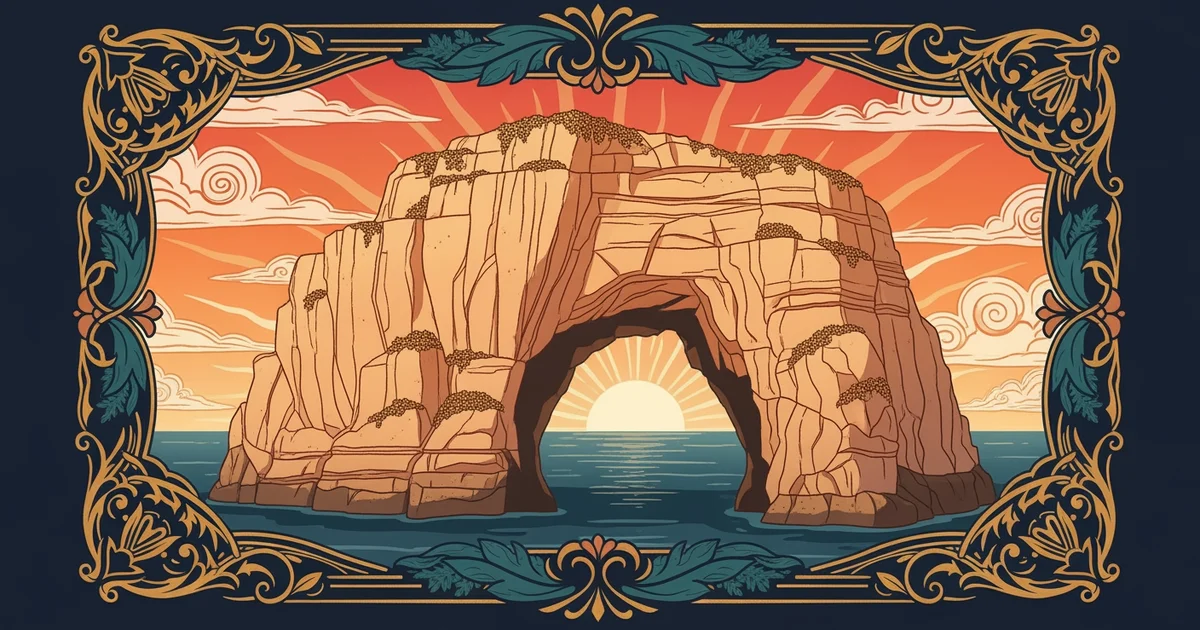
The Mechanics of Natural Sculpting
When we look at how the Earth changes, we must distinguish between two related but distinct processes. Weathering is the initial breakdown of rock into smaller pieces while it remains in place. This happens through physical forces like ice expanding in cracks or chemical reactions from acidic rainwater. Think of this like a sculptor using a chisel to break off large chunks of marble from a solid block. The rock does not move away yet, but it loses its structural integrity. Once the rock fragments become loose, the next phase begins to move them across the landscape.
Key term: Erosion — the natural process where wind, water, or ice picks up and transports weathered rock particles to new locations.
This movement is much like how a budget works in a household economy. Just as money must be earned and then spent to keep an economy moving, rock material must be loosened by weathering before it can be transported by erosion. If weathering stops, the supply of loose material dries up and erosion slows down. If erosion is too fast, the surface is stripped bare before new material can form. This delicate balance determines whether a landscape remains rugged or becomes flat over time.
Forces That Reshape the Surface
Water serves as the most powerful agent of change on the planet because it possesses both volume and speed. As rivers flow downhill, they carry sediment that acts like sandpaper against the riverbed. This friction carves deep canyons over millions of years through constant physical abrasion. Wind also plays a major role in dry environments by picking up fine sand grains. These grains blast against rock surfaces, slowly polishing them into strange and beautiful shapes. The following table highlights how different agents transport material across the Earth's surface.
| Agent | Primary Action | Transport Method | Landscape Impact |
|---|---|---|---|
| River | Hydraulic force | Suspended load | Deep V-shaped valleys |
| Wind | Particle impact | Saltation/bounce | Sculpted rock arches |
| Glacier | Massive weight | Sliding ice sheet | Wide U-shaped basins |
Glaciers represent a unique form of erosion because they act like massive conveyor belts. As these frozen rivers move slowly, they grind down entire mountainsides and push heavy boulders for miles. This mechanical action leaves behind distinct marks on the bedrock that tell us exactly where the ice traveled. Whether it is a tiny stream or a massive glacier, the principle remains the same. Nature constantly moves material from higher elevations to lower ones to reach a state of equilibrium.
When you observe a cliff or a mountain, you are seeing a snapshot of a long, ongoing story. The rock is not just a static object but a participant in a cycle of destruction and creation. Every grain of sand on a beach was once part of a towering mountain peak far away. By understanding these mechanical processes, we gain a deeper appreciation for the physical history of our planet. We recognize that the earth beneath our feet is always in motion, even if that motion is too slow for us to notice in our daily lives.
The continuous cycle of weathering and erosion acts as a global sculptor that breaks down solid mountains into the fine sediment that shapes our valleys and coastlines.
The next Station introduces Tectonic Plate Dynamics, which determines how these surface features are pushed upward to start the cycle all over again.