
Industrial Site Selection
When a large power plant in Wyoming seeks to bury carbon emissions, engineers must locate the perfect underground vault. Selecting a site requires more than just finding a hole in the ground because the geology must ensure permanent safety. This process mirrors choosing a location for a bank vault, where security and structural integrity matter more than the cost of the land itself. Engineers treat the earth like a layered cake, looking for specific rock types that can hold carbon dioxide without leaking it back into the surface environment.
Geological Requirements for Storage
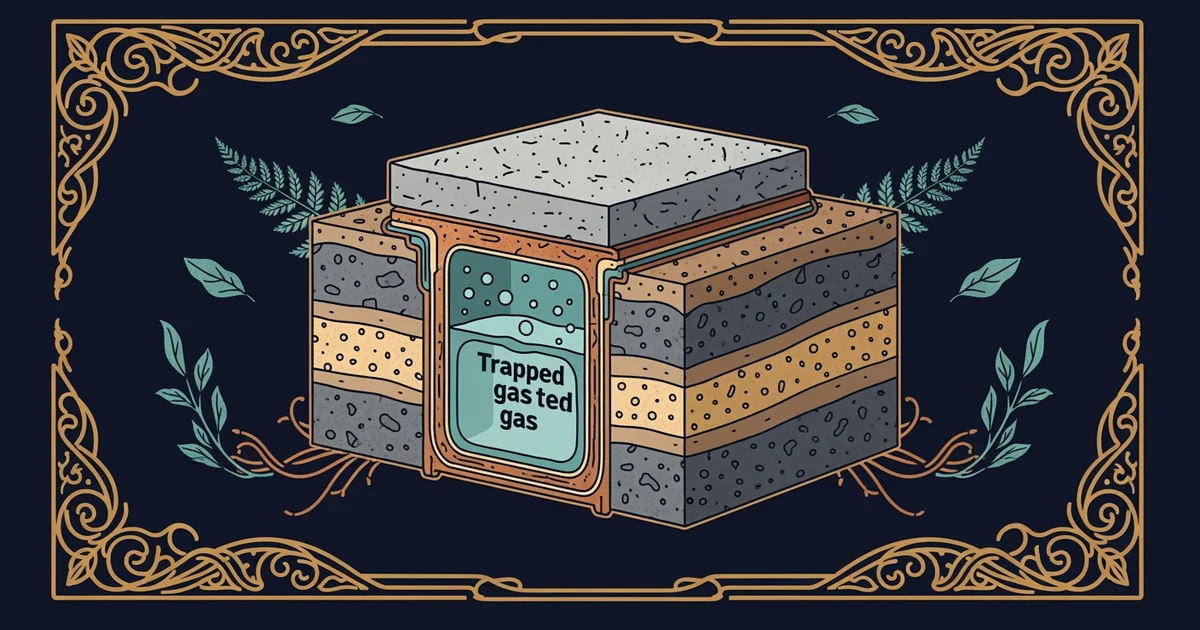
To store carbon dioxide, geologists look for sedimentary basins which are large areas of layered rock that formed over millions of years. These basins contain porous rock, like sandstone, which acts like a giant sponge to soak up the gas. The rock must have enough space between its grains to hold large volumes of compressed carbon dioxide. If the rock is too tight, the gas cannot move into the storage zone, making the site useless for industrial purposes. Geologists test these formations by drilling small wells to measure how easily fluids travel through the stone.
Key term: Caprock — a dense, impermeable layer of rock that sits above the storage reservoir to prevent gas from escaping.
Once they find a porous layer, they must ensure a strong caprock exists directly above the storage zone. This layer acts as a lid on a jar, stopping the gas from rising toward the surface where it could pollute the air or water. The caprock must be thick, continuous, and free of cracks to provide a reliable seal. If the caprock has faults or fractures, the gas might find a path to escape, which would defeat the entire purpose of the carbon capture project.
Evaluating Site Stability and Safety
After confirming the presence of a reservoir and a caprock, engineers evaluate the long-term stability of the surrounding area. They look for regions with low seismic activity, as earthquakes could damage the caprock and allow gas to leak. The site must be far from active fault lines to prevent sudden shifts in the earth from breaching the storage seal. This stability is essential for projects meant to hold carbon for thousands of years, as even tiny leaks could accumulate over time and create environmental risks.
| Feature | Role in Storage | Importance Level |
|---|---|---|
| Porous Sandstone | Holds the gas | High |
| Dense Caprock | Seals the gas | Critical |
| Tectonic Stability | Prevents leaks | High |
| Depth of Basin | Keeps gas liquid | Medium |
Selecting a site involves balancing these geological factors with the proximity to industrial sources of carbon. If a site is too far from a factory, the cost of building long pipelines becomes too high for the project to remain profitable. Engineers must find the sweet spot where the geology is safe and the transport distance is short enough to be economically viable. This decision-making process ensures that carbon sequestration remains a practical solution for reducing emissions while keeping the local environment secure from potential hazards.
Successful carbon sequestration relies on finding deep, porous rock formations protected by an impermeable seal that prevents gas from migrating to the surface.
But this geological selection process becomes significantly more complex when we must design the pipeline networks required to move carbon from the factory to the storage site.