
Leafy Greens and Stems
You notice your spinach wilts into a tiny heap while your kale stays tough and chewy. This difference in texture happens because plant anatomy dictates how heat changes the structure of every leaf. When you cook vegetables, you are essentially managing a complex system of internal plumbing and support beams. Understanding these hidden structures allows you to control the final texture of your meal with precision.
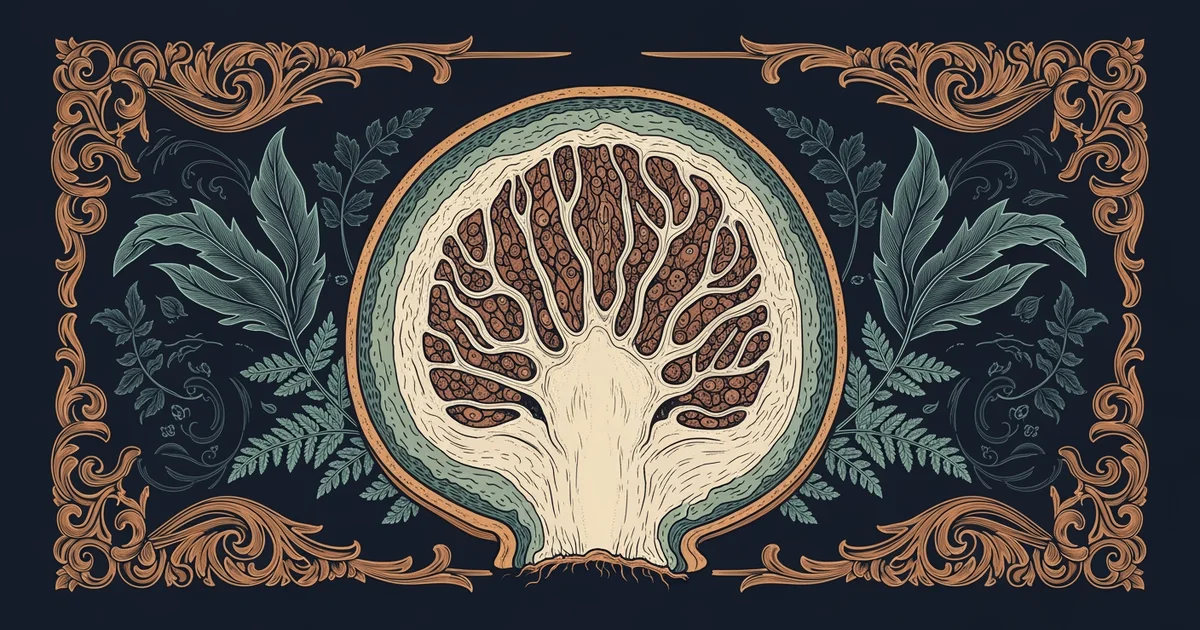
Vascular Tissue and Structural Support
Plants rely on vascular tissue to transport water and nutrients from the soil to the leaves. This system acts like a network of pipes that provides both hydration and physical strength to the plant. In leafy greens, these pipes are bundled together to create veins that run throughout the leaf blade. You can think of these veins like the metal frame inside a tall skyscraper. Without that frame, the building would collapse under its own weight when the wind blows hard. Similarly, the veins provide the structural integrity that allows leaves to stand tall and reach toward the sunlight. When you cook these greens, the heat softens the cell walls, but the vascular bundles often remain firm. This is why some greens require longer cooking times to become tender enough for comfortable eating.
Key term: Vascular tissue — the specialized internal plumbing system that moves water and nutrients throughout the entire plant.
Heat Treatment and Leaf Density
Different leafy greens possess varying levels of structural density based on their growth habits and environment. You can categorize these greens by how their vascular systems handle heat over time. Tender greens like spinach have thin cell walls and minimal vascular support, so they collapse almost instantly when exposed to heat. In contrast, hearty greens like kale or collards have thick, fibrous stems and dense vein networks that resist softening. You must adjust your cooking technique to match the structural density of the specific plant you choose. If you apply high heat to tender leaves for too long, they turn into a mushy paste. If you apply low heat to dense stems, they remain unpleasantly chewy and tough to digest. Managing this balance ensures your final dish has the perfect texture.
When you prepare various greens, you should follow these general guidelines for the best results:
- Tender greens like spinach or arugula require only brief flashes of heat because their delicate cell walls break down very quickly.
- Medium greens like chard have moderate vascular density, meaning they benefit from a short sauté to soften the stems while keeping the leaves bright.
- Hardy greens like kale or mustard greens need longer cooking times or acidic liquid to help dissolve their thick, fibrous support structures.
The Role of Stems in Culinary Preparation
Cooking stems involves a different set of rules compared to the thin blades of the leaves themselves. Stems contain a higher concentration of structural support cells, which makes them much tougher than the leafy parts. If you cook the stem and the leaf together, the leaf will often disintegrate before the stem becomes tender. You can solve this problem by cutting the stems into smaller pieces or by cooking them separately from the leaves. This technique allows you to apply more intense heat to the stems while protecting the delicate leaf tissue. By treating these two parts as separate ingredients, you gain total control over the consistency of your finished plate. This approach turns a simple vegetable into a well-balanced component of your meal.
| Vegetable Type | Structural Density | Recommended Heat | Cooking Goal |
|---|---|---|---|
| Tender Leaf | Very Low | Flash Steam | Wilting |
| Medium Leaf | Moderate | Sauté | Softening |
| Hardy Stem | High | Braise/Boil | Tenderizing |
This table shows how different greens respond to heat based on their anatomy. By selecting the right method for each type, you avoid common mistakes like overcooking or leaving stems too tough. Mastering these physical properties is the secret to professional results in your home kitchen.
The structural arrangement of vascular bundles and cell walls determines how heat transforms the texture of edible greens.
The next Station introduces fruit development science, which determines how sugar and acid levels change as plant structures ripen.