
Transition to Animal Power
Imagine a single person pushing a heavy grinding stone for hours to make enough flour for one loaf of bread. This slow process limits how much food a family can store for the long winter months ahead. When ancient societies needed more grain to feed growing cities, they looked beyond human muscle power for help. By using animals, they turned a slow daily chore into a much faster and more efficient system.
The Shift to Animal Labor
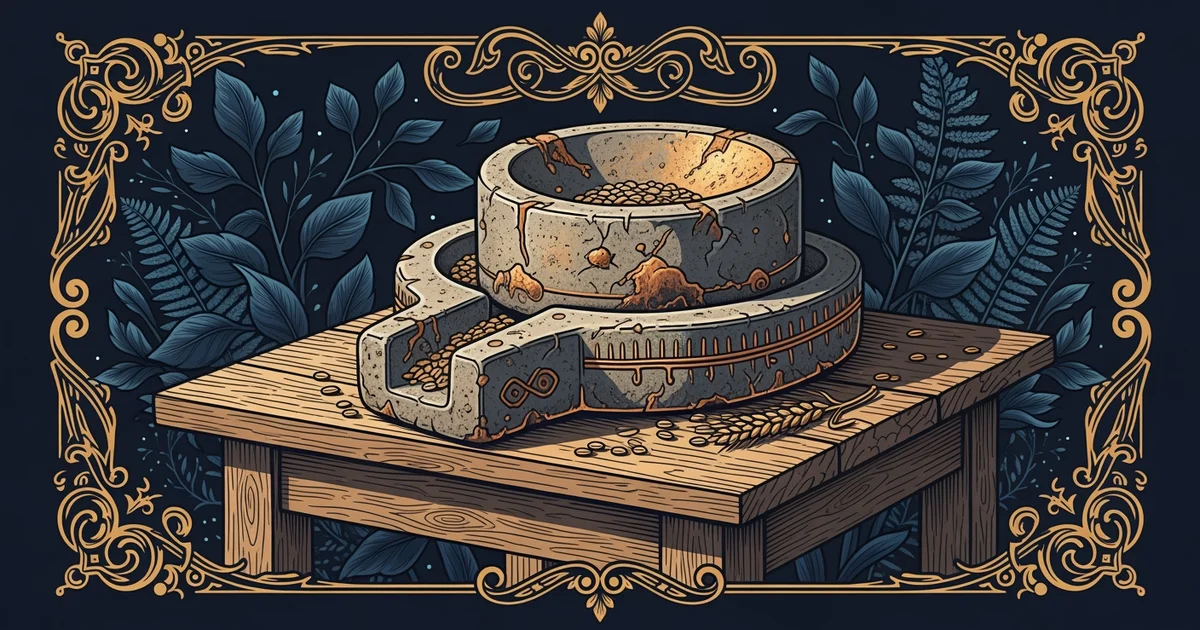
Transitioning to animal power changed the way societies managed their food supplies forever. Farmers realized that oxen or donkeys could pull heavy stone wheels much longer than any human could. This shift acted like a modern engine upgrade for a car that previously relied on pedals. The animals provided steady, constant force that allowed the mill to run for many hours without needing a break. Because the animals walked in a large circle, they turned the top millstone continuously against the stationary base stone. This mechanical setup, known as an animal mill, allowed for a massive increase in the daily output of ground grain. While humans still had to guide the animals, the physical strain of turning the heavy stone fell entirely on the livestock. This allowed the community to process enough grain to support larger populations than ever before.
Key term: Animal mill — a mechanical system where domesticated livestock provide the rotational energy needed to grind grain into flour.
Using animals for milling created a new need for specialized equipment to manage the workload. The animals required a harness system to connect them to the rotating beam of the mill. This beam acted as a lever that transferred the animal's walking motion into the circular motion required for grinding. If the animal stopped walking, the grinding process stopped instantly, which meant the human operator had to keep the pace steady. This required a high level of coordination between the handler and the beast to ensure the grain feed rate remained consistent. When the grain feed was too fast, the stones would clog, but a slow feed resulted in wasted energy and coarse flour. Achieving the perfect balance meant that the miller had to observe the texture of the output constantly.
Measuring Throughput and Efficiency
Calculating the efficiency of these systems reveals why they became the standard for centuries of human history. Throughput, or the amount of grain processed per hour, increased by a factor of ten when animals replaced human labor. To understand this gain, we look at the total energy output of an average ox compared to a human worker. An ox can maintain a much higher level of force over a long workday without tiring as quickly as a person. This sustained energy meant that the mill could operate from sunrise to sunset without stopping for long rests. The table below compares the typical energy usage and output of different milling methods used during this period of history.
| Power Source | Daily Hours | Grain Output | Physical Effort |
|---|---|---|---|
| Human Hand | 2-3 Hours | Very Low | Extreme |
| Animal Power | 8-10 Hours | High | Moderate |
| Water Power | 24 Hours | Very High | Low |
By looking at these numbers, we see that animal power was the vital middle step between hand tools and early machines. The increase in output allowed for the creation of surplus grain stores that prevented starvation during bad harvest years. This surplus was the foundation of stable economies where people could focus on tasks other than just finding their next meal. Even though water mills eventually replaced most animal mills, the lessons learned about rotational force were essential for later engineering. The transition to animal power proved that humans could outsource physical labor to achieve goals that were previously impossible to reach alone. This change in mechanics paved the way for the complex milling systems that define our food production today.
Moving from human effort to animal labor created a massive surplus in grain production that allowed early civilizations to expand and thrive.
But what does it look like in practice when we replace animals with the natural flow of moving water?
Want this with sources you can check?
Premium Learning Paths for Culinary Arts & Gastronomy are researched against open-access libraries — PubMed, arXiv, government databases, and more — with their distinctive claims cited to real sources and independently checked.
See what Premium includes