
Cultural Significance of Bread
Imagine you are holding a simple loaf of bread while standing in a busy city square. You might see this item as a basic food, but history tells a much deeper story about human progress. Bread acted as the true anchor for early civilizations because it provided a reliable source of energy that people could store for months. Before humans learned to process grain into flour, they relied on hunting or gathering fresh plants that spoiled quickly. This change allowed groups to stop wandering and build permanent homes near their grain fields. The transition to bread changed how humans interacted with their environment and with each other in profound ways.
The Social Architecture of Grain
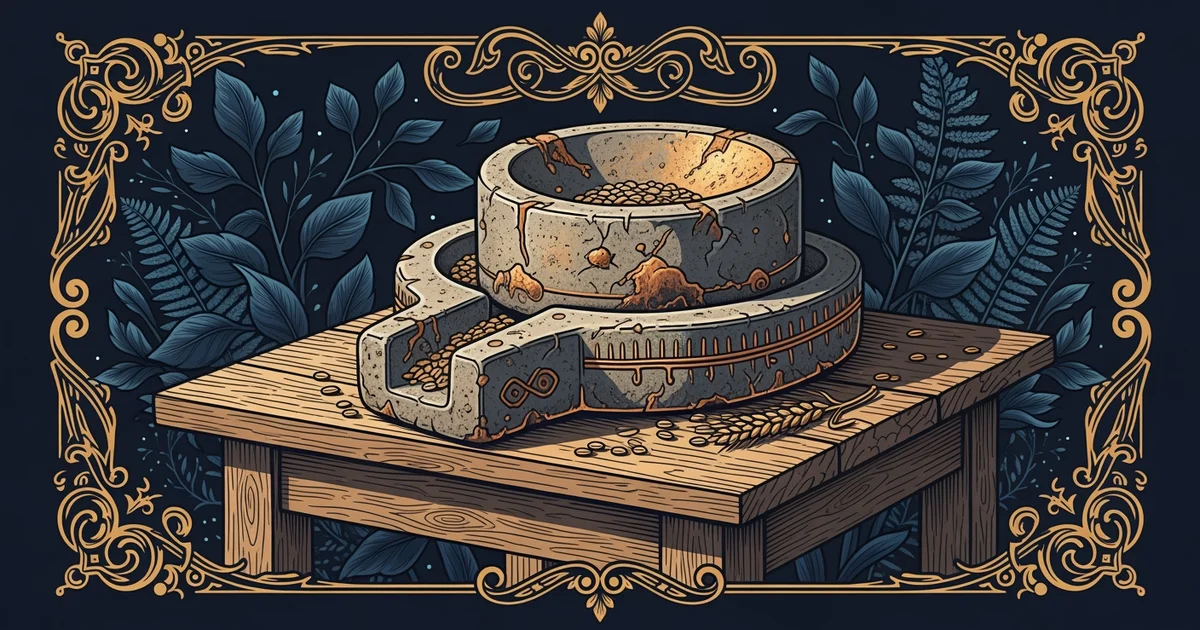
When early societies began to cultivate wheat and barley, they faced the challenge of turning hard seeds into edible food. They developed stone tools to grind these grains, which required significant labor and time from every member of the tribe. Because this process was so demanding, it forced people to organize their daily tasks with great care and precision. They created systems where some members farmed while others focused entirely on the milling process. This division of labor served as the foundation for the complex social structures that define our modern world today. Think of this like a modern supply chain where different teams focus on one specific part of a larger project.
Key term: Milling — the process of grinding raw cereal grains into fine particles like flour to make them digestible and easier to store for long periods.
As the efficiency of these tools improved, communities could produce more food than they needed for immediate survival. This surplus allowed some people to stop farming and pursue other roles like building, art, or government leadership. The ability to store bread meant that cities could grow even during seasons when nothing grew in the fields. This stability changed the way people viewed their land and their neighbors forever. It created a society where wealth was often measured by the amount of grain a person could store in their private granaries.
Bread as a Cultural Catalyst
Bread soon became more than just a source of calories for the growing population. It became a central part of religious ceremonies and daily social gatherings in every corner of the ancient world. The act of sharing a loaf helped strangers form bonds and established trust between different groups of people. Leaders often used bread as a form of currency to pay workers who helped build massive public structures. This practice reinforced the idea that grain processing was the engine driving all forms of human advancement and urban development.
| Feature | Impact on Growth | Role in Society |
|---|---|---|
| Storage | Enabled survival | Economic asset |
| Milling | Created jobs | Labor division |
| Baking | Built community | Social ritual |
These patterns show that bread was the primary driver for the first large cities in human history. Without the ability to turn grain into long-lasting food, these early urban areas would have failed within a single season. The following list highlights how this process changed the daily lives of ancient people in three distinct ways:
- Specialized labor roles emerged because milling required constant attention and physical effort from skilled workers who understood the stone tools.
- Centralized granaries became the heart of town life, serving as both a bank for wealth and a safety net against future famine.
- Trade networks expanded as cities exchanged their surplus bread for materials like metal or stone that they could not produce locally.
The development of efficient grain processing allowed early human societies to shift from nomadic wandering to the creation of stable, permanent urban centers.
The next Station introduces animal power, which determines how early milling systems evolved to produce food for much larger populations.