
Introduction to Graph Structures
Imagine a vast city where every person is a point on a map and every friendship acts as a physical bridge connecting them. This complex web of connections represents the fundamental way that computers now map out the hidden patterns of our digital world. By organizing information into these structures, machines can finally understand how individual pieces of data relate to one another in meaningful ways. This approach allows software to navigate massive networks, such as social platforms or global supply chains, with incredible speed and accuracy.
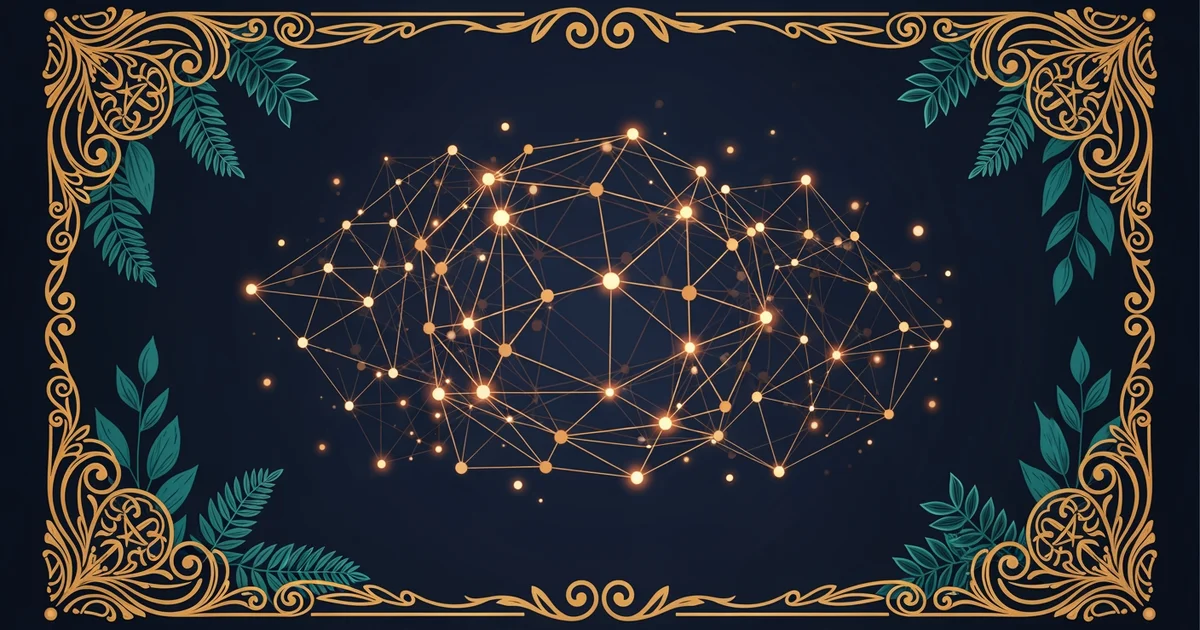
Understanding Nodes and Edges
At the heart of any network structure lies the node, which acts as a single point of data. Think of a node as a house within a large neighborhood or a single user profile on a social media site. Each node holds its own information, but it remains isolated until it connects to another part of the system. These connections, known as edges, represent the specific relationship between two different nodes. Without these edges, the data would simply be a collection of disconnected points with no context or shared meaning.
Key term: Graph — a mathematical structure consisting of nodes connected by edges that model relationships between objects.
To see how this works in practice, consider a delivery service that must track thousands of packages across a country. The warehouses and customer homes serve as the nodes in this system, while the roads connecting them act as the edges. If a road closes due to weather, the edge is removed, forcing the system to find a new path through other nodes. This simple model helps computers calculate the fastest delivery routes by analyzing the strength and availability of every single edge in the network.
Analyzing Network Connections
When we look at how these structures function, we can categorize the types of relationships that exist between different points. Some connections are one-way streets where information only flows in a single direction, while others allow for a two-way exchange of data. By examining the density of these connections, computers can identify clusters where many nodes share a high number of edges. This process is essential for spotting trends, detecting fraud, or recommending content that matches a user's specific interests.
| Feature | Role in Network | Example Application |
|---|---|---|
| Node | Stores individual data | A user profile |
| Edge | Defines a relationship | A friend request |
| Graph | Manages the structure | A social network |
We can summarize the core components of these systems using the following list:
- Nodes represent the distinct entities within a network, such as individual computers in a server farm or specific locations on a logistics map — they act as the primary storage units for information.
- Edges represent the functional links between these entities, such as the data cables connecting servers or the transport routes between cities — they define how data moves through the system.
- Graphs organize these elements into a cohesive framework, allowing algorithms to traverse the entire structure efficiently — they provide the necessary context for complex data analysis tasks.
By mastering the interaction between nodes and edges, you will gain the skills needed to build powerful artificial intelligence models that interpret the world's most difficult problems. This foundation provides the essential tools to explore how machines learn from the complex webs of information that define our modern lives.
Nodes and edges form the essential building blocks that allow computers to map and analyze complex relationships within large datasets.
By understanding these basic structures, you are now prepared to explore how neural networks process this information to make intelligent predictions.