
Mordant Chemistry
Imagine you have a piece of cotton fabric that refuses to hold a vibrant dye color. The fabric acts like a slippery surface that lets water and pigment slide right off its fibers. To fix this common textile problem, makers use a special chemical agent that acts as a permanent anchor. This anchor allows the dye to grip the fabric and stay there for years without fading. Without this vital bridge, most natural dyes would simply wash away in the very first rinse cycle. You have likely seen this process in action when wearing deep indigo denim or rich botanical colors.
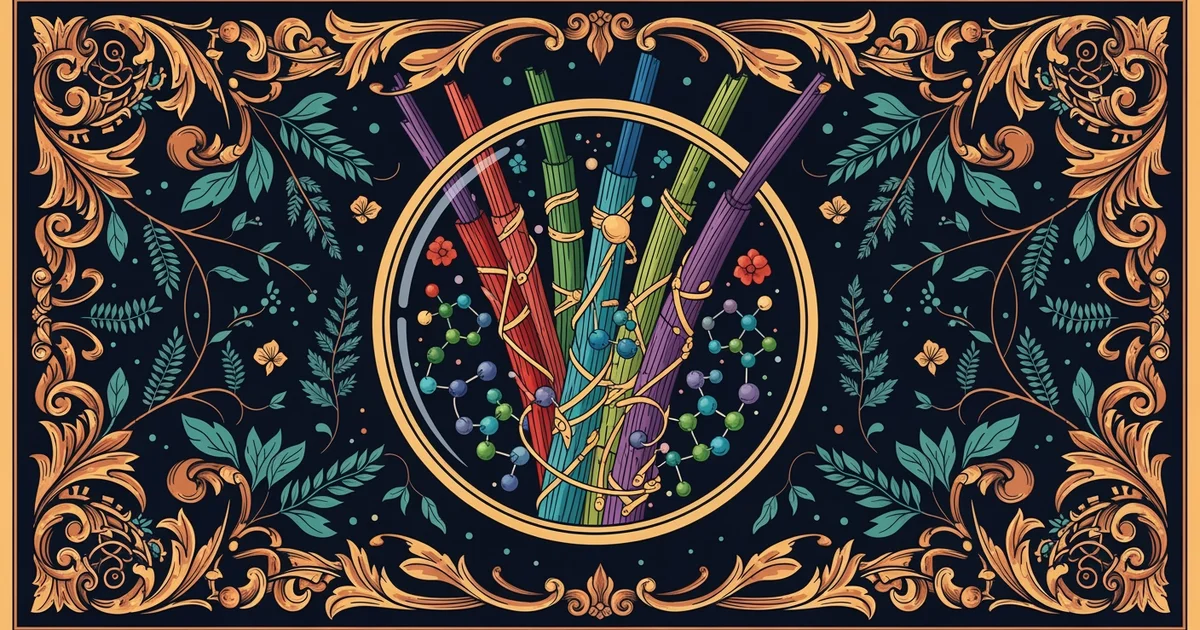
The Function of Metallic Anchors
When we look at the chemistry of dyeing, we must consider how molecules interact at the atomic level. Many natural dyes are unable to form strong bonds with fiber surfaces on their own. Scientists use a mordant to solve this problem by introducing metal ions into the solution. These ions function like a chemical bridge between the dye molecule and the fiber surface. The metal ion forms a coordinate bond with the dye on one side and the fiber on the other. This creates a stable complex that is far more resistant to washing than the dye alone. Think of the mordant as a double-sided piece of tape that holds two different materials together firmly.
Key term: Mordant — a metallic salt that creates a chemical bridge between dye molecules and fabric fibers to ensure color fastness.
Understanding the Chemical Bridge
To understand why this works, we must look at how the ions behave in a water bath. When you dissolve a metal salt, it breaks apart into positive metal ions in the water. These ions are attracted to the negative sites on the fabric surface like magnets. Once they attach to the fabric, they provide a landing spot for the dye molecules. The dye then attaches to the metal ion, which is already locked onto the fiber. This creates a chain of connections that prevents the dye from drifting away during the laundering process. You can see how different metals change the final color of the same dye by altering the bond.
| Metal Salt | Typical Effect | Color Change |
|---|---|---|
| Alum | Brightens | Enhances light shades |
| Iron | Darkens | Shifts to gray or black |
| Copper | Deepens | Adds green or brown tones |
This table shows how the choice of metal salt changes the final appearance of the textile. By selecting a different metallic ion, a dyer can shift the hue of a single plant extract. The process is a precise game of molecular geometry that requires careful control of the bath. If you add too much metal, the fabric might become brittle or change texture. If you add too little, the color will appear weak and wash out quickly. This balance is the secret to professional textile work.
The Molecular Connection
Beyond the simple attachment, the mordant changes the internal structure of the dye molecule itself. By coordinating with the oxygen or nitrogen atoms in the dye, the metal alters the light absorption. This is why a yellow dye might turn a rich olive green when treated with iron. The metal ion essentially opens up new ways for the dye to interact with light. Because the bond is strong, the color remains stable under sunlight and repeated washing cycles. This process ensures that the vibrant colors you see in high-quality textiles remain locked in place. The chemistry of the bond determines the longevity and the final look of the finished fabric.
Metallic mordants act as essential chemical bridges that lock dye molecules onto fibers to ensure permanent, vibrant color results.
The next Station introduces synthetic dye evolution, which changes how we create colors without relying on these traditional metal bridges.