
Speciation Processes
Imagine a single population of birds living on a large, connected forest landscape. When a massive canyon forms, it splits the forest into two completely separate pieces. This physical barrier prevents the birds from crossing to find new mates or food. Over many generations, the separated groups begin to change in response to their unique environments. This process shows how physical distance drives the emergence of entirely new biological groups.
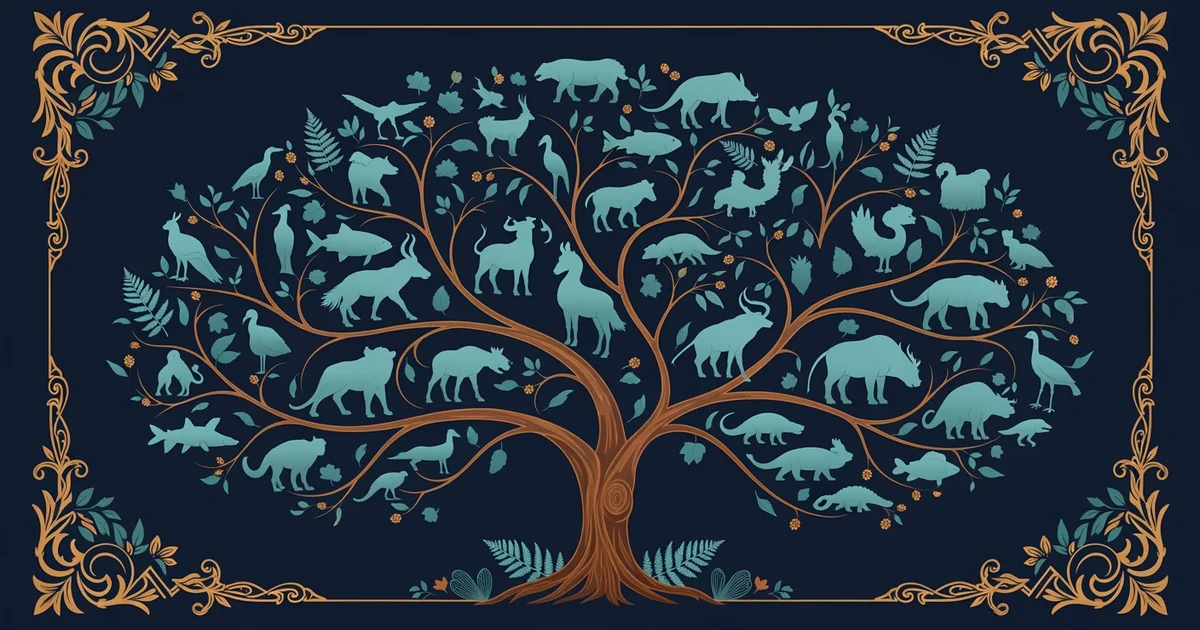
The Mechanics of Geographic Isolation
When a population splits, the individuals in each group stop sharing their genetic material. This event is known as allopatric speciation, where physical barriers create distinct evolutionary paths for isolated groups. Imagine a company that opens two separate offices in different cities with no way to communicate. Each office develops its own unique culture, internal rules, and work habits over several years. Similarly, the birds on one side of the canyon might face colder weather than those on the other side. They adapt to these conditions through small shifts in their physical traits or behaviors. Because they cannot interbreed, these changes accumulate without being diluted by the genes of the other group.
Over time, these differences become so significant that the two groups can no longer reproduce together. Even if the canyon were bridged, the birds might not recognize each other as potential mates. This reproductive barrier marks the final step in the formation of a new species. The process relies on the fact that genetic changes are locked into each group by the barrier. Without the barrier, the birds would continue to mix, keeping the population uniform and preventing new species from forming. This is how nature ensures that life can branch out into diverse forms across different habitats.
Drivers of Reproductive Divergence
Once groups are isolated, they face different pressures that force them to change in specific directions. Natural selection favors traits that help individuals survive and reproduce within their specific, local environment. If one group lives near a lake, they might evolve better swimming skills to catch fish. The other group, living in a dry forest, might evolve stronger beaks to crack hard seeds. These adaptations are not just surface-level changes; they are reflected in the underlying genetic code of each group. As these traits become standard, the groups move further apart on an evolutionary scale.
Several key factors influence how quickly these groups drift away from their original common ancestor:
- Environmental variation forces groups to adapt to unique challenges like temperature, food sources, or predators that exist only in their specific territory.
- Genetic drift occurs when random changes in the gene pool become permanent in a small population simply because there are fewer individuals to pass on traits.
- Sexual selection changes how mates are chosen, as groups may develop different courtship songs, colors, or dances that only members of their own group recognize.
These factors work together to build a wall of incompatibility between the two groups. It is not just about where they live, but how they have changed to survive there. Eventually, the differences in their biology make it impossible for them to produce fertile offspring. This is the point where we officially classify them as two separate species. The process is slow, but it is the primary engine behind the incredible variety of life we see today.
New species emerge when physical barriers prevent populations from interbreeding, allowing them to accumulate unique genetic changes that eventually make reproduction between them impossible.
But what happens when two species evolve together while interacting in the same environment?
Want this with sources you can check?
Premium Learning Paths for Biological Sciences are researched against open-access libraries — PubMed, arXiv, government databases, and more — with their distinctive claims cited to real sources and independently checked.
See what Premium includes