
Case Study: The Axolotl Paradox
Case Study: The Axolotl Paradox
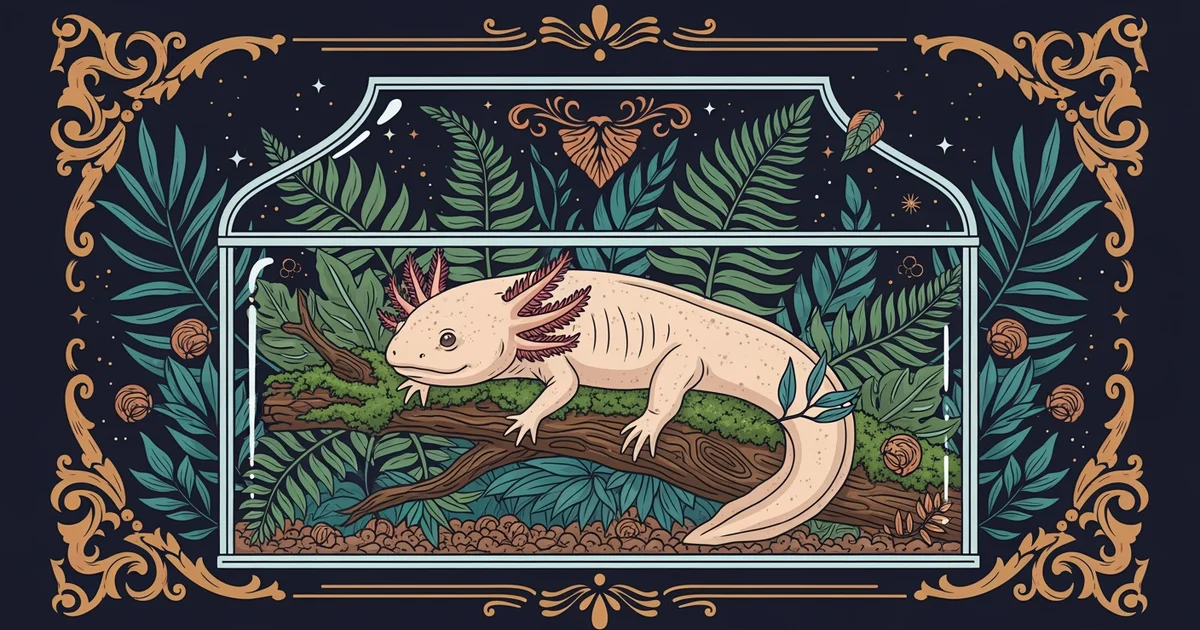
The axolotl (Ambystoma mexicanum) represents one of the most perplexing case studies in modern conservation biology and the exotic pet trade ecosystem. Walk into almost any exotic pet store, browse online amphibian enthusiast forums, or visit a university developmental biology laboratory, and you will find axolotls in abundance. They are beloved for their alien appearance, their regenerative capabilities, and their relatively simple husbandry requirements. Yet, this global ubiquity masks a grim ecological reality: the axolotl is critically endangered, hovering on the brink of functional extinction in its native habitat. This stark contrast between captive abundance and wild eradication is known as the "Axolotl Paradox."
The Biological Mechanism of Amphibian Neoteny
To understand the axolotl's unique position in both science and the pet trade, we must first examine the biological mechanism that defines it: neoteny. Neoteny is a specific form of paedomorphosis, an evolutionary phenomenon where adults of a species retain morphological traits previously seen only in the juvenile stages of their ancestors.
In typical amphibians, such as frogs or the closely related tiger salamander, the transition from an aquatic, gill-breathing larva to a terrestrial, lung-breathing adult is driven by the Hypothalamus-Pituitary-Thyroid (HPT) axis. Environmental and developmental cues trigger the hypothalamus to release thyrotropin-releasing hormone (TRH). This stimulates the pituitary gland to release thyroid-stimulating hormone (TSH), which in turn prompts the thyroid gland to produce and release the hormones thyroxine (T4) and triiodothyronine (T3). A massive surge of these thyroid hormones floods the amphibian's tissues, triggering cellular apoptosis (programmed cell death) in the gills and tail fin, while simultaneously stimulating the development of lungs, eyelids, and thicker skin.
In the axolotl, this metamorphic pathway is genetically interrupted. Axolotls possess a functional thyroid gland capable of producing thyroxine, but they experience a localized failure within the HPT axis. Specifically, they lack the necessary surge of TSH to trigger the release of thyroxine into the bloodstream, and their peripheral tissues exhibit a blunted sensitivity to the hormone even when it is present. As a result, the morphological transition is halted. The axolotl reaches sexual maturity and reproduces while permanently retaining its larval features: feathery external gills, a dorsal fin extending from the back of the head to the tail, and a fully aquatic lifestyle.
Interestingly, metamorphosis can be artificially induced in captive axolotls by injecting them with synthetic thyroxine or exposing them to high levels of environmental iodine. However, this forced transition is highly stressful, often resulting in a significantly shortened lifespan and severe physiological complications, highlighting that neoteny is not merely a delayed stage, but the axolotl's optimal biological state.
The Captive Breeding Explosion and Genetic Bottlenecks
While their neotenic biology makes them fascinating, their history in captivity makes them a genetic anomaly. The global population of captive axolotls is estimated to be in the millions, supported by a massive commercial pet trade. However, this vast population suffers from a severe genetic bottleneck.
In 1864, a French expedition shipped 34 axolotls from Lake Xochimilco in Mexico to the National Museum of Natural History in Paris. The renowned zoologist Auguste Duméril successfully bred them, and the vast majority of captive axolotls worldwide today trace their lineage back to just six of these original founding individuals. In population genetics, a bottleneck of this magnitude drastically reduces heterozygosity—the genetic variation within a population. This lack of diversity makes captive axolotls highly susceptible to inbreeding depression, characterized by weakened immune systems, developmental deformities, and a reduced capacity to adapt to environmental stressors.
Introgression and the Exotic Pet Trade
The genetic landscape of the captive axolotl was further complicated by the exotic pet trade's relentless demand for novel phenotypes. In the mid-20th century, researchers and hobbyists desired albino axolotls. Because the albino mutation was not present in the captive A. mexicanum gene pool, scientists deliberately crossed axolotls with naturally albino tiger salamanders (Ambystoma tigrinum).
Through successive backcrossing—mating the hybrid offspring back with pure axolotls over multiple generations—they successfully isolated the albino gene while retaining the neotenic axolotl body plan. This process, known as introgression, fundamentally altered the captive gene pool. Today, genetic analyses reveal that almost all pet-trade axolotls, regardless of their color morph, carry a significant percentage of tiger salamander DNA. They are, from a strict taxonomic standpoint, introgressed hybrids rather than pure Ambystoma mexicanum.
Conservation via Captive Breeding: Can Pets Save the Wild?
This brings us to the core of the Axolotl Paradox. In their native habitat of Lake Xochimilco—a high-altitude network of canals in Mexico City—wild axolotl populations have plummeted from an estimated 6,000 per square kilometer in 1998 to fewer than 35 per square kilometer today. They face immense pressure from rapid urbanization, agricultural pesticide runoff, and the introduction of invasive fish species like African tilapia and Asian carp, which aggressively consume axolotl eggs and outcompete them for resources.
A logical question frequently arises among exotic pet enthusiasts: Can we use the millions of captive pet axolotls to repopulate Lake Xochimilco? The answer, dictated by the principles of conservation biology, is a resounding no.
Reintroducing captive-bred exotic pets into the wild presents insurmountable biological and ecological risks:
- Genetic Pollution: Because pet axolotls are introgressed hybrids with tiger salamander DNA, releasing them would introduce alien genes into the fragile wild gene pool. This could trigger outbreeding depression, further reducing the fitness and survival rate of the remaining wild population.
- Disease Transmission: Captive environments and the global amphibian trade are notorious vectors for pathogens. The most critical threat is Batrachochytrium dendrobatidis (Bd), the chytrid fungus responsible for catastrophic amphibian extinctions worldwide. Releasing a seemingly healthy, yet carrier-status pet axolotl could unleash a devastating plague on the Xochimilco ecosystem.
- Behavioral Deficits: Generations of captive breeding have selected for docility and habituation to artificial diets (like commercial pellets or hand-fed earthworms). Captive axolotls lack the necessary foraging instincts and predator-avoidance behaviors required to survive in a hostile, invasive-dominated wild environment.
Conclusion
The axolotl serves as a vital educational tool, a marvel of developmental biology, and a stark warning about the limitations of captive breeding. It demonstrates that the mere existence of an animal in the pet trade does not equate to the conservation of the species. True conservation requires preserving not just the animal's physical form, but its genetic integrity, its evolutionary potential, and its complex role within its native ecosystem. For the axolotl, salvation will not come from the pet store, but from intensive habitat restoration and highly controlled, genetically pure conservation breeding programs in Mexico.
Sources
- Voss, S. R., et al. (2015). The axolotl genome and the evolution of amphibian development. Developmental Dynamics, 244(7), 894-904.
- Zambrano, L., et al. (2007). A history of the decline of the axolotl in Lake Xochimilco. Herpetological Conservation and Biology, 2(2), 79-86.
- Johnson, N. A., et al. (2019). Genetic introgression and the captive history of the axolotl. Journal of Heredity, 110(4), 432-441.
⚠ Citations are AI-suggested references. Always verify independently.