
Microhabitat Engineering
Station S08: Microhabitat Engineering
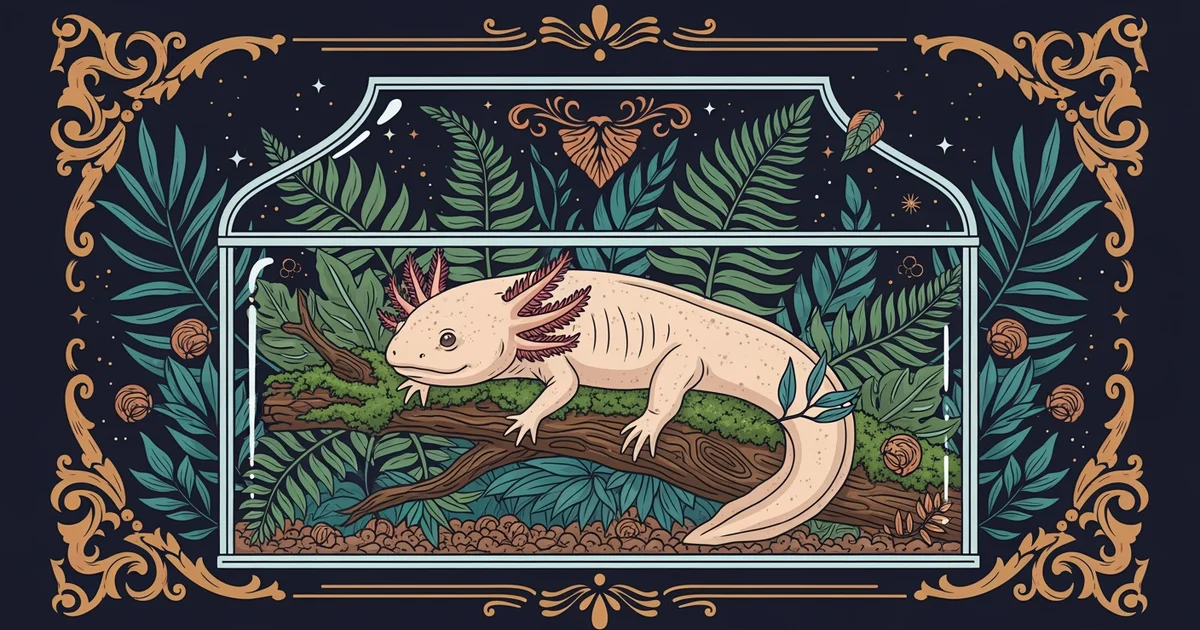
Welcome to Zone 3. Having mastered the basic husbandry principles and the broader ecosystem of the exotic pet trade, you are now ready to tackle one of the most complex challenges in biological sciences and exotic animal care: microhabitat engineering.
For bizarre and highly specialized pets—such as Poison Dart Frogs (Dendrobatidae), exotic mantises, or specialized arboreal geckos—a standard pet enclosure is a death sentence. These organisms have evolved in highly specific, stable microclimates. To keep them successfully in captivity, we must move beyond simply putting an animal in a glass box and instead engineer a closed-system microclimate. This practice, often realized through the creation of a "bioactive vivarium," requires a deep understanding of thermodynamics, psychrometrics (the study of moist air), hydrology, and soil microbiology.
The Bioactive Paradigm
A bioactive vivarium is a miniature, self-sustaining ecosystem. Unlike traditional husbandry, which relies on frequent manual cleaning and sterile substrates (like paper towels or artificial turf), a bioactive setup utilizes a biological "cleanup crew" (CUC) and live flora to process waste.
The core of this system is the nitrogen cycle. When your specialized pet produces waste, detritivores—primarily springtails (Collembola) and isopods (Isopoda)—consume the decaying organic matter and fungi. Their biological processes break down complex organic compounds into simpler forms. Naturally occurring beneficial bacteria in the soil then convert the resulting ammonia into nitrites, and subsequently into nitrates. Finally, the live plants anchored in the substrate absorb these nitrates as fertilizer. This closed-loop system mimics the forest floor, drastically reducing the need for manual intervention while providing a psychologically and physically enriching environment for the primary species.
Substrate Mechanics and The ABG Mix
The foundation of any functional microhabitat is its substrate. A poorly engineered substrate will either dry out, killing the microfauna, or become anaerobic and waterlogged, leading to fatal bacterial blooms and root rot.
In the late 20th century, the Atlanta Botanical Garden developed a revolutionary substrate recipe known as the ABG mix, which remains the gold standard for high-humidity microhabitats. The engineering brilliance of the ABG mix lies in its physical and chemical properties:
- Tree Fern Fiber and Orchid Bark: These coarse materials provide structural integrity and maintain soil porosity, ensuring that oxygen can penetrate deep into the substrate layer. This prevents the environment from becoming anaerobic.
- Sphagnum Moss and Peat Moss: These components have a high cation exchange capacity (CEC) and exceptional water retention capabilities. They hold moisture like a sponge, slowly releasing it into the air to maintain ambient humidity.
- Horticultural Charcoal: Charcoal is highly porous and acts as a biological filter. It provides massive surface area for beneficial nitrifying bacteria to colonize and helps filter out impurities and heavy metals that might otherwise accumulate in a closed system.
Hydrology: The Drainage Layer and Water Table
Even with the perfect substrate, a high-humidity vivarium requires frequent misting. Without proper hydrological engineering, water would pool at the bottom of the enclosure, turning the substrate into toxic sludge.
To solve this, engineers utilize a "false bottom" or drainage layer. This is typically constructed using Lightweight Expanded Clay Aggregate (LECA) or a plastic egg-crate grid elevated on PVC pipes. This layer sits at the very bottom of the enclosure, creating a void where excess water can drain.
Crucially, a substrate barrier—usually a non-biodegradable fiberglass mesh—must be placed between the drainage layer and the ABG mix. This barrier allows water to pass through via gravity but prevents the soil matrix from falling into the drainage layer and wicking water back up through capillary action. The water collected in the drainage layer effectively becomes a miniature water table, which can be siphoned out if it gets too high, or left to slowly evaporate, contributing to the enclosure's base humidity.
Psychrometrics, Humidity, and Ventilation
Maintaining a specific humidity level (often 80-100% for tropical amphibians) is not just about spraying water; it is an exercise in psychrometrics.
A common mistake in microhabitat engineering is completely sealing the enclosure to trap moisture. While this achieves high relative humidity, it results in stagnant air. Stagnant air allows fungal spores and pathogenic bacteria to proliferate, inevitably leading to respiratory infections in the primary pet species.
To combat this, engineers utilize the "chimney effect" to create passive cross-ventilation. By placing a ventilation strip low on the front of the enclosure and another on the top rear, a natural airflow is generated. As the lights or heating elements warm the air inside the enclosure, the warm air rises and exits through the top vent. This creates a slight negative pressure, drawing fresh, cooler air in through the bottom vent.
Balancing this airflow with humidity requirements is the ultimate checkpoint of microhabitat engineering. If the airflow is too strong, the vapor pressure deficit (VPD)—the difference between the amount of moisture in the air and how much moisture the air can hold when saturated—becomes too high, and the enclosure dries out. Engineers use automated misting systems and ultrasonic foggers, regulated by digital hygrometers, to inject moisture at precise intervals, counteracting the drying effect of the ventilation while maintaining fresh air exchange.
Applied Practice: Constructing the Microclimate
When you construct your bioactive vivarium, you will follow a strict order of operations:
- Establish the Drainage Layer: Pour a 2-inch layer of LECA into the base of the glass enclosure.
- Install the Barrier: Cut the fiberglass mesh to the exact internal dimensions of the tank and lay it flat over the LECA.
- Add the Substrate: Pour a 3 to 4-inch layer of pre-moistened ABG mix over the mesh.
- Inoculate: Introduce your cultures of springtails and isopods into the soil. Add a layer of leaf litter (like oak or magnolia leaves) on top; this acts as the primary food source for the cleanup crew and provides hiding spots for the pet.
- Hardscaping and Planting: Integrate sterilized cork bark and live tropical plants (like Bromeliads and Pothos). The plants will root into the ABG mix, stabilizing the soil and transpiring water vapor into the air.
- Automate and Monitor: Install digital thermometers and hygrometers at both the top and bottom of the tank to monitor the thermal and humidity gradients.
By mastering these steps, you are not just keeping a pet; you are orchestrating a complex, balanced biological machine.
Sources
- Pough, F. H. (2015). Herpetology. Sinauer Associates.
- McWilliams, D. A. (2010). Applied Zoo Animal Nutrition and Husbandry. CRC Press.
- Atlanta Botanical Garden. (2005). Amphibian Conservation and Vivarium Management. ABG Publications.
⚠ Citations are AI-suggested references. Always verify independently.
Want this with sources you can check?
Premium Learning Paths for Biological Sciences are researched against open-access libraries — PubMed, arXiv, government databases, and more — with their distinctive claims cited to real sources and independently checked.
See what Premium includes