
Basic Husbandry Principles
Basic Husbandry Principles for Non-Domesticated Species
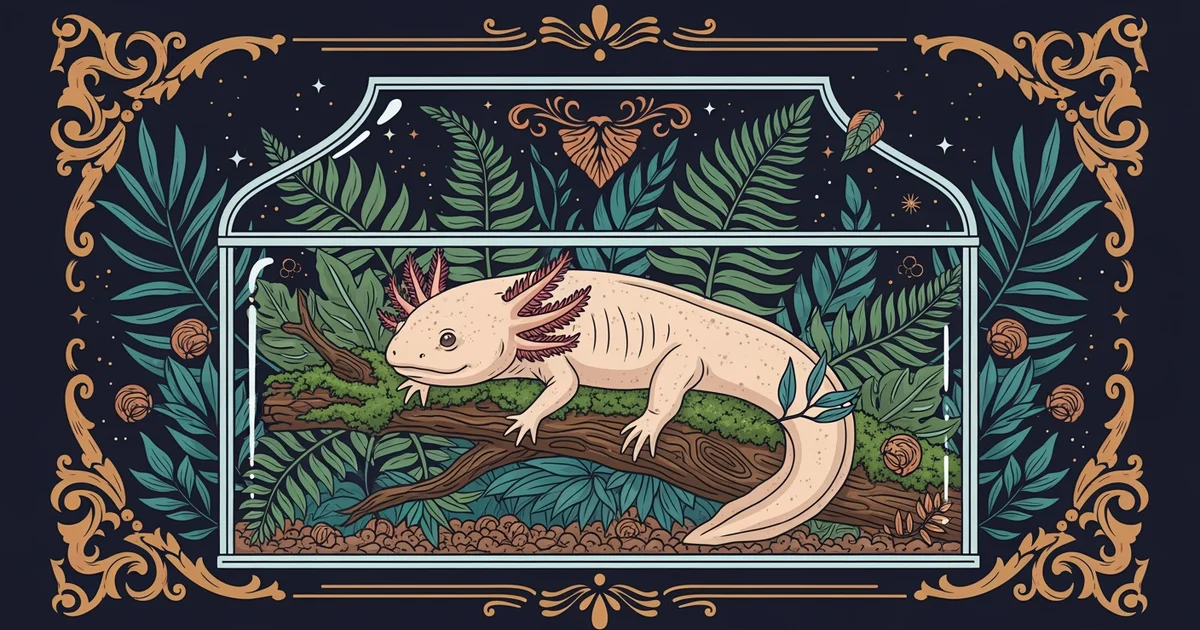
When we discuss the care of domesticated animals like dogs or cats, we are talking about species that have undergone thousands of years of selective breeding. These animals have adapted biologically and psychologically to thrive in human environments. In stark contrast, "bizarre pets"—a colloquial term for non-domesticated or exotic animals kept in captivity—have not undergone this evolutionary shift. They are essentially wild animals living in our living rooms. Therefore, the fundamental principle of exotic animal husbandry is not adaptation, but replication. We must meticulously recreate their specific wild ecological niches to ensure their physiological and psychological well-being.
The Five Domains of Animal Welfare
Modern zoological and veterinary sciences evaluate captive animal care through the framework of the Five Domains: Nutrition, Environment, Health, Behavior, and Mental State. Unlike traditional welfare models that merely focused on the absence of suffering (e.g., freedom from hunger or pain), the Five Domains emphasize the presence of positive experiences. For a non-domesticated species, this means providing an environment where the animal can express natural behaviors, make choices, and experience positive mental states.
Environmental Parameters: Microclimates and Gradients
One of the most critical errors in exotic husbandry is treating an enclosure as a uniform space. Most non-domesticated pets, particularly reptiles, amphibians, and invertebrates, are poikilothermic (their internal temperature varies with the environment) and ectothermic (they rely on external heat sources). They do not require a single "perfect" temperature; they require a thermal gradient.
A thermal gradient provides a spectrum of temperatures within a single enclosure, typically ranging from a concentrated basking spot (the hottest area) to a cool ambient zone. This allows the animal to engage in behavioral thermoregulation—physically moving between zones to raise or lower their core body temperature as needed for digestion, immune function, and resting. Similarly, humidity gradients are essential. A tropical amphibian might need an ambient humidity of 60%, but also requires access to a saturated microclimate (like a moss-filled hide) at 90% humidity to prevent dehydration and facilitate shedding (ecdysis).
Calculating Baseline Spatial Requirements
Providing adequate space is a fundamental biological requirement. Space dictates an animal's ability to exercise, forage, escape stressors, and utilize environmental gradients. For non-domesticated species, spatial requirements are often calculated using allometric scaling—mathematical formulas based on the animal's physical dimensions.
For terrestrial reptiles and amphibians, a widely accepted baseline formula utilizes the animal's Snout-to-Vent Length (SVL). The SVL is the measurement from the tip of the nose to the cloaca (vent), excluding the tail, which can vary greatly or be dropped.
The baseline spatial formula for a terrestrial species is:
- Minimum Enclosure Length = 3 × SVL
- Minimum Enclosure Width = 1.5 × SVL
- Minimum Enclosure Height = 1.5 × SVL
Calculation Checkpoint:
Imagine you are designing an enclosure for a terrestrial lizard with an SVL of 25 centimeters.
- Length: 3 × 25 cm = 75 cm
- Width: 1.5 × 25 cm = 37.5 cm
- Height: 1.5 × 25 cm = 37.5 cm
Therefore, the absolute minimum baseline footprint for this individual is 75 cm by 37.5 cm. It is crucial to understand that these formulas represent the minimum baseline for survival, not the optimal space for thriving. For arboreal (tree-dwelling) species, the formula is inverted to prioritize vertical space, typically requiring a Minimum Height of 3 × SVL and a Minimum Length/Width of 1.5 × SVL.
Nutritional Complexity and Biological Needs
The nutritional requirements of exotic pets extend far beyond the convenience of commercial kibble. Replicating a wild diet involves understanding the specific macro- and micronutrient profiles of the species' natural prey or forage.
A prime example of nutritional complexity in captive husbandry is the Calcium-to-Phosphorus (Ca:P) ratio. Most insectivorous and herbivorous reptiles require a dietary Ca:P ratio of approximately 2:1. However, common captive feeder insects, like crickets and mealworms, have inverse ratios (often 1:3 or worse), meaning they are highly deficient in calcium and overly rich in phosphorus. If an animal consumes this unbalanced diet over time, the body will begin extracting calcium from its own skeleton to maintain blood serum levels, leading to Metabolic Bone Disease (MBD). To counteract this, keepers must employ techniques like "gut-loading" (feeding the insects a highly nutritious, calcium-rich diet 24 hours before they are fed to the pet) and "dusting" (coating the prey in a synthesized calcium powder).
Behavioral Husbandry and Enrichment
The final pillar of basic husbandry is behavioral management. Captive environments can be chronically under-stimulating. When a non-domesticated animal cannot perform its natural behaviors—such as burrowing, climbing, or hunting—it may develop stereotypic behaviors. These are repetitive, functionless actions, such as pacing continuously or "glass surfing" (frantically scratching at the enclosure walls).
Environmental enrichment is the process of enhancing the captive habitat to stimulate natural behaviors. For a fossorial (burrowing) tarantula, enrichment means providing deep, structurally sound substrate that holds a tunnel. For an arboreal snake, it means providing a complex network of branches of varying thicknesses to promote muscle tone and proprioception. Ultimately, successful husbandry requires the keeper to act as an ecologist, continuously assessing and refining the artificial habitat to meet the profound biological complexities of the wild organism within.