
Bacterial Defense Systems
Imagine a digital security guard standing at your front door, holding a list of every intruder who ever tried to break into your house. Bacteria face a similar threat every single day from tiny viral invaders known as bacteriophages that seek to hijack their machinery. To survive these relentless attacks, bacteria evolved a clever way to recognize and destroy viral genetic material before it can cause any real damage. This biological surveillance system is the foundation for the gene-editing tools that now allow scientists to rewrite the code of life itself.
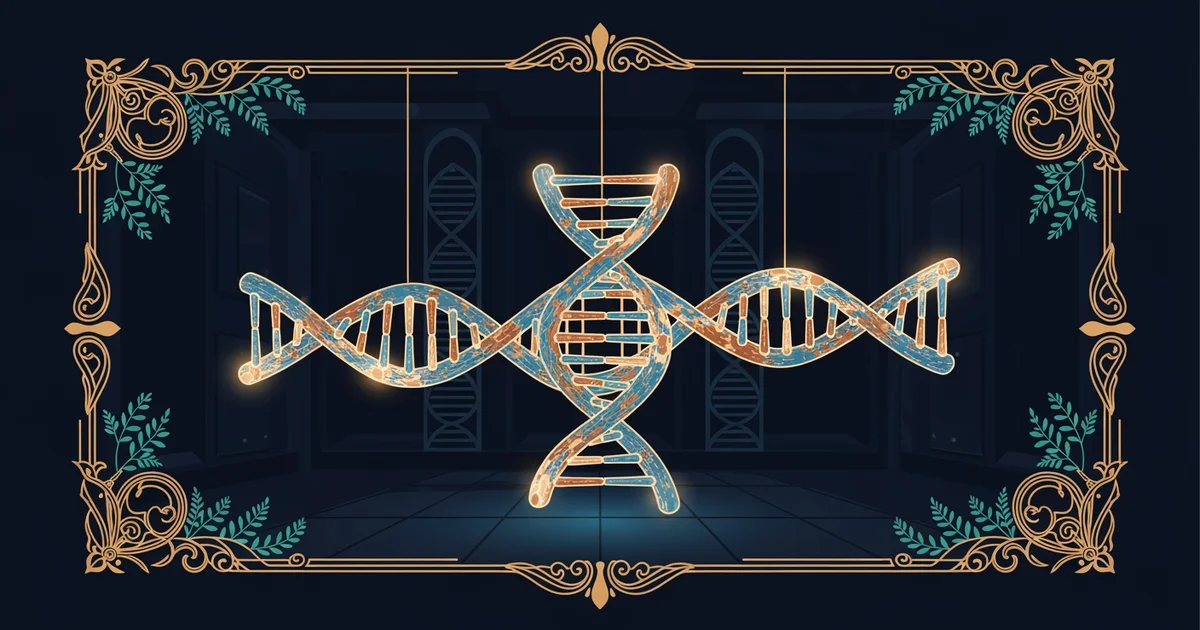
The Mechanism of Bacterial Immunity
When a virus first infects a bacterium, the cell does not always die immediately from the encounter. Instead, the bacterium captures a small piece of the virus's DNA and saves it within its own genome for future reference. This archive acts like a "most wanted" poster that the cell keeps on file to identify the same invader if it ever returns. The bacterium then uses this stored sequence to produce a specialized guide molecule that patrols the cell for matching viral threats. If the guide molecule finds a match, it activates a pair of molecular scissors to slice the invader's DNA into useless fragments.
Key term: CRISPR — a specialized region of bacterial DNA that stores fragments of viral genetic code to help the cell recognize and destroy future invaders.
This process functions much like a high-tech security camera system that compares incoming faces against a database of known criminals. If the system detects a known criminal, it automatically locks the door to prevent entry and keeps the building safe from harm. By keeping these records, the bacterium builds a memory of past infections that it passes down to its offspring. This inherited library of viral mugshots ensures that the entire bacterial population stays protected against recurring viral threats over many generations.
Evolutionary History and Defense
Evolution has refined this defense mechanism over billions of years, making it an incredibly efficient way to maintain cellular integrity. Bacteria that successfully integrated these viral sequences into their own genomes gained a significant survival advantage over those that did not. These survivors could quickly neutralize viruses that would otherwise destroy them, allowing their lineage to flourish in harsh environments filled with microscopic predators. The system is so effective that it remains a primary method for bacterial survival in almost every corner of the planet today.
| Feature | Role in Defense | Function |
|---|---|---|
| Archive | Storage | Keeps viral DNA records |
| Guide | Search | Finds matching viral DNA |
| Scissors | Action | Cuts and destroys viruses |
This three-part defense structure demonstrates how simple biological components can perform complex tasks through coordinated chemical interactions. The archive provides the memory, the guide provides the navigation, and the scissors provide the physical enforcement needed to stop an infection. Because these components are modular, scientists can potentially swap the guide molecule to target any specific piece of DNA they wish to change. This versatility transformed a simple survival tactic into a powerful tool for modern medicine and biological research.
Understanding this system requires us to view the cell as an active participant in its own preservation rather than a passive victim. The constant arms race between bacteria and viruses has driven the development of these sophisticated tools, which now sit at the center of our ability to treat genetic conditions. By learning how these tiny organisms defend their borders, we have unlocked the secret to editing the blueprints of life. This shift in perspective allows us to move from observing nature to actively participating in the evolution of our own biological future.
Bacteria survive viral attacks by storing snippets of invader DNA to recognize and destroy future threats with precision.
Next, we will explore how these specific genetic sequences function as an alphabet for biological instructions.