
Defining Biomimetic Engineering
Imagine you are watching a kingfisher dive into a pond without making a single splash. This bird evolved a unique beak shape that slices through water with extreme efficiency and speed. Humans struggle to design high-speed trains that do not create loud sonic booms when entering tunnels. By studying the kingfisher, engineers reshaped the train nose to mimic that specific beak. This simple change allowed the train to move faster while using less power than previous models. Nature has spent billions of years solving complex survival problems through constant trial and error. We call this process of learning from living systems biomimetic engineering to solve human challenges.
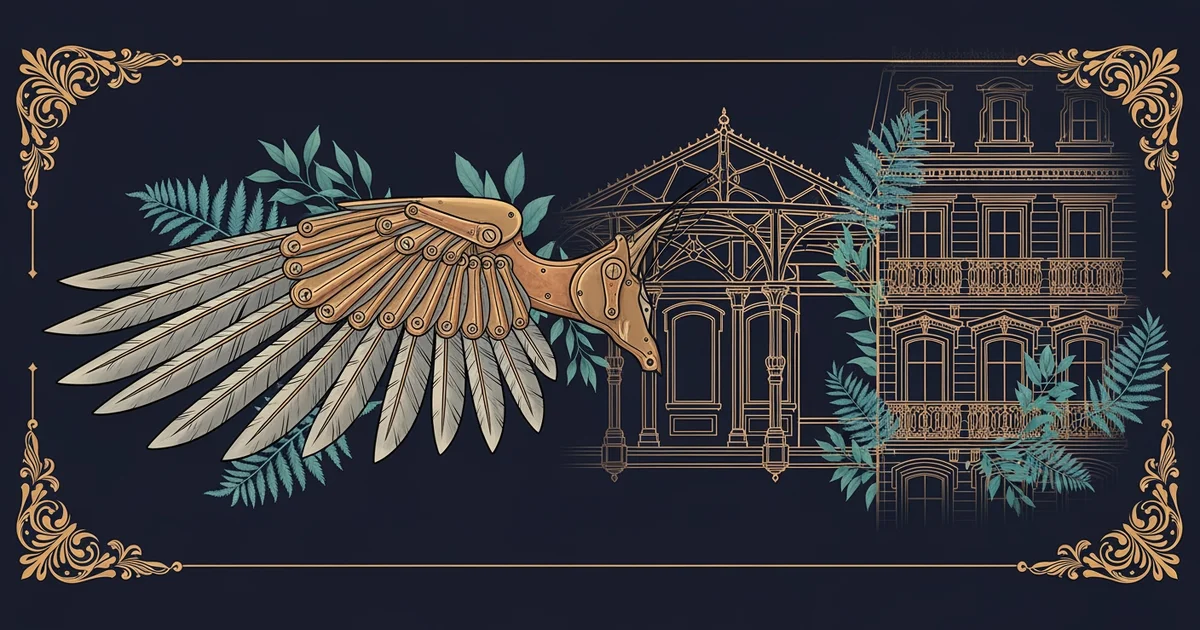
The Laboratory of Natural Selection
Nature serves as the ultimate design laboratory because every organism must survive or eventually disappear. Evolution acts as a filter that keeps only the most efficient and effective biological traits. When we examine a shark, we see skin that reduces drag and prevents bacteria from growing on it. A spider web shows us how to create materials that are stronger than steel but light as air. These designs are not accidents of history but results of intense pressure to perform perfectly. Scientists treat these biological features as blueprints that we can translate into our own technology. By observing how plants and animals adapt to their environments, we gain access to millions of years of research. This approach allows us to skip the trial phase and jump straight to proven structural solutions.
Key term: Biomimetic engineering — the practice of studying natural structures and biological processes to inspire innovative designs for human technology.
When we look at a lotus leaf, we notice how water beads up and rolls off the surface instantly. This happens because the surface has microscopic bumps that prevent water from sticking to the plant. Engineers use this concept to create self-cleaning windows and paints that stay dry in heavy rain. The analogy here is like borrowing a master key from a neighbor who already solved the lock. We do not need to invent the key ourselves when we can observe how nature opens the door.
Applying Biological Principles to Design
Transitioning from observation to application requires a deep understanding of how specific forms create specific functions. We must identify which part of an organism provides the advantage we want to replicate for ourselves. Sometimes the secret lies in the internal structure of a bone or the way a leaf captures sunlight. Other times, the solution comes from the way a colony of ants manages traffic flow. We categorize these successful biological strategies into three distinct levels of design innovation:
- Form mimicry involves copying the physical shape of a natural object to improve how a machine interacts with air or water flow.
- Process mimicry requires us to observe how a living system performs a chemical reaction or a complex task without creating waste.
- System mimicry looks at how entire groups of plants or animals work together to manage resources or protect their living space.
By following these categories, we can systematically approach any engineering problem with a clear plan. We move from identifying the challenge to finding the biological counterpart that overcame a similar obstacle. This method ensures that we are not just copying nature blindly but applying logic to solve real problems. We learn to see the world as a library of blueprints that are waiting for us to read them. This path gives you the tools to analyze complex human design challenges through the lens of biological success.
Biomimetic engineering transforms our approach to technology by using the refined survival strategies of nature as blueprints for human innovation.
By learning how to read these biological blueprints, we can begin to apply evolutionary problem solving to our own designs.