
The Marine Environment
Imagine you are wandering through a forest at night without a single flashlight to guide you. You would likely stumble over roots or walk directly into low hanging tree branches constantly. Deep ocean creatures face this exact challenge every single day as they navigate the dark. They do not have the luxury of sunlight to help them find food or mates. Instead, these animals have evolved to create their own light to survive the crushing, pitch black depths. This biological ability allows them to function in an environment that would be impossible for us. By producing light, they turn the vast ocean into a map they can read.
The Mechanics of Living Light
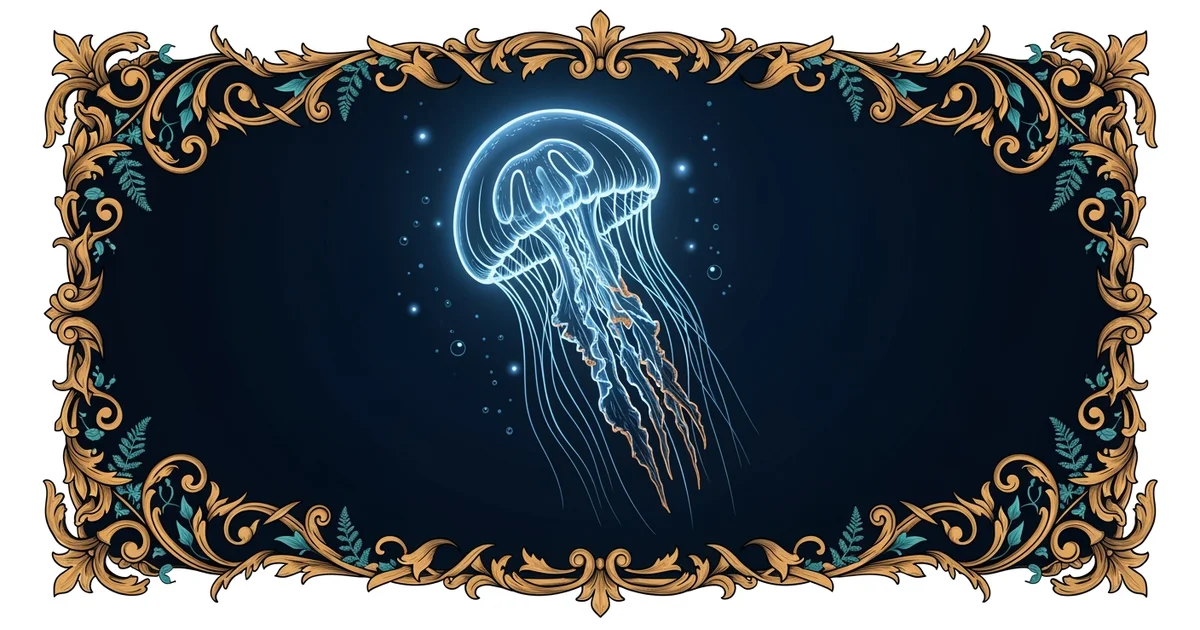
Nature provides a clever solution for life in the deep through a process called bioluminescence. This reaction happens when a specific molecule reacts with oxygen to release energy as light. It is similar to how a glow stick works when you snap the plastic tube. Inside the tube, two chemicals mix to create a bright, steady, and cool glow. The ocean animals do not need batteries or heat to keep their lights shining bright. They simply use their internal chemistry to generate a signal in the dark water. This light serves as a vital tool for communication, defense, and hunting in the deep.
Key term: Bioluminescence — the chemical process where living organisms produce light as a byproduct of internal reactions.
Deep sea creatures use these light signals for several essential tasks that keep them alive. Without these visual cues, the deep ocean would remain a silent and empty void for them. The light helps them identify members of their own species in a vast space. It also acts as a lure to attract smaller prey toward their hungry mouths. Some animals even use light as a defensive flash to distract predators. This flash acts like a sudden strobe light, blinding the attacker for a brief moment. These strategies ensure that life continues to thrive despite the lack of any solar energy.
Survival Strategies in the Abyss
To understand how these creatures thrive, we must examine the specific ways they use light. The following list details the most common functions of this natural light in the ocean:
- Counter-illumination allows animals to blend in with the faint light from the surface above them. By matching the brightness of the water, they hide their silhouettes from predators swimming below them.
- Luring prey involves using a glowing appendage to mimic the movement of small food sources. Curious fish approach the light, only to be caught by the predator waiting nearby.
- Signaling mates helps individuals find each other across large distances in the dark. Each species has a unique pattern of flashes, ensuring they connect with the right partner.
These functions demonstrate that light is not just a luxury for deep sea inhabitants. It is a necessary component for their daily survival and overall success in the ecosystem. The ocean floor is a harsh place, yet these creatures master it with light. They do not need the sun to thrive because they are their own source of energy. This adaptation proves that life finds a way to persist in the most extreme zones. We see that light serves as both a shield and a weapon for them. Each flash is a testament to the power of evolution in the dark.
Bioluminescence enables deep sea creatures to navigate, hunt, and reproduce by turning their own bodies into functional light sources.
Exploring how these internal chemical reactions produce light without heat will reveal the secrets of the next station.