
Telescopes as Time Machines
Imagine you are looking at a flickering light from a very distant lighthouse across the dark sea. You know that the light you see now actually left the bulb several minutes ago because light takes time to travel through space. Telescopes function exactly like this lighthouse scenario by capturing photons that have traveled across the vast emptiness of the universe for millions of years. When we point a telescope at a distant galaxy, we are not seeing it as it exists today, but rather as it appeared long ago. This process turns every large telescope into a powerful time machine that allows us to peer deep into the history of our cosmos.
The Mechanism of Light Collection
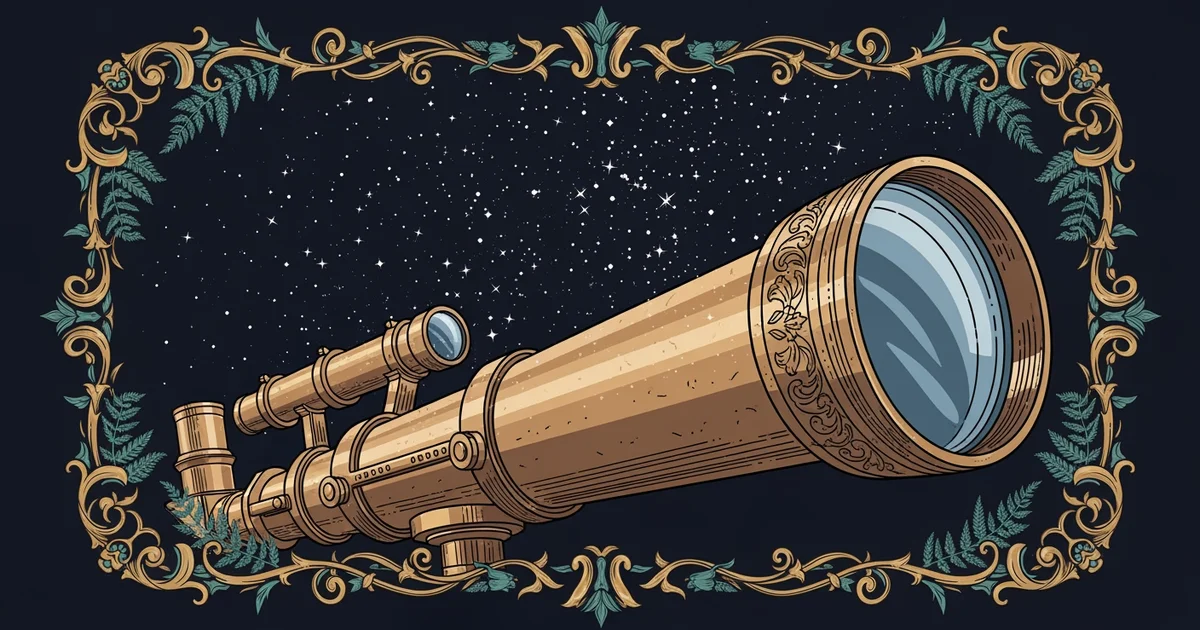
The primary job of any telescope is to gather as much light as possible from faint, distant sources. Most stars and galaxies are incredibly dim because they are located at extreme distances from our home planet. To see these objects, astronomers use a large aperture, which is the opening that allows light to enter the optical system. A larger aperture acts like a wide bucket collecting rain during a storm. The wider the bucket, the more raindrops it can catch in a single minute. Similarly, a larger mirror or lens collects more light particles, allowing us to detect objects that are far too faint for the human eye to perceive.
Key term: Aperture — the diameter of the primary mirror or lens that determines how much light a telescope can collect.
Once the light enters the aperture, it is focused onto a small point or a digital sensor. This concentration of light is vital because the signals from the early universe are incredibly weak and spread out. By focusing this ancient light, the telescope creates a clear image of objects that would otherwise remain invisible to us. The size of the aperture dictates the resolution and clarity of these images. A larger aperture provides more detail, which helps scientists understand the structure and composition of galaxies that existed billions of years ago. This light collection process is the foundational step in our ability to map the timeline of the universe.
Aperture Size and Ancient Light
Beyond just gathering light, the size of the aperture directly influences our ability to look further back into time. We can think of the aperture as a financial investment in observation power. Just as a larger bank account allows for more significant purchases, a larger telescope aperture allows for the purchase of more distant views. Smaller telescopes might only see nearby stars, while massive observatories can detect light from the very first stars that formed after the dawn of the universe. This capacity to see deeper into space is synonymous with seeing further back into the history of time itself.
| Telescope Aperture | Light Gathering Power | Depth of Time View |
|---|---|---|
| Small Lens | Low | Nearby Stars |
| Medium Mirror | Moderate | Local Galaxies |
| Large Mirror | High | Early Universe |
This table shows how the physical size of the instrument limits or expands our historical reach. When we build larger telescopes, we are effectively upgrading our time machine to travel even further into the past. Every increase in aperture diameter brings more ancient light into focus. This helps us piece together the story of how galaxies grew and evolved over billions of years. Without these massive light-gathering tools, the history of our universe would remain a dark and unreadable mystery. We rely on these technological giants to bridge the gap between our present day and the origin of everything we see in the night sky.
Telescopes function as time machines by using large apertures to collect faint, ancient light that has traveled through space for billions of years.
The next Station introduces the electromagnetic spectrum, which determines how different wavelengths of light provide unique information about the history of the stars.