
Site Design Synthesis
Designing a property requires more than planting trees or digging ponds in random locations. Imagine you are building a complex financial portfolio where every single asset must support the growth of the others. Without a clear plan, your resources will scatter and fail to produce the desired long-term yields. This synthesis phase brings together every lesson from your journey to create a functional, self-sustaining human habitat. You must now look at your site as a living system that requires careful integration of all its moving parts.
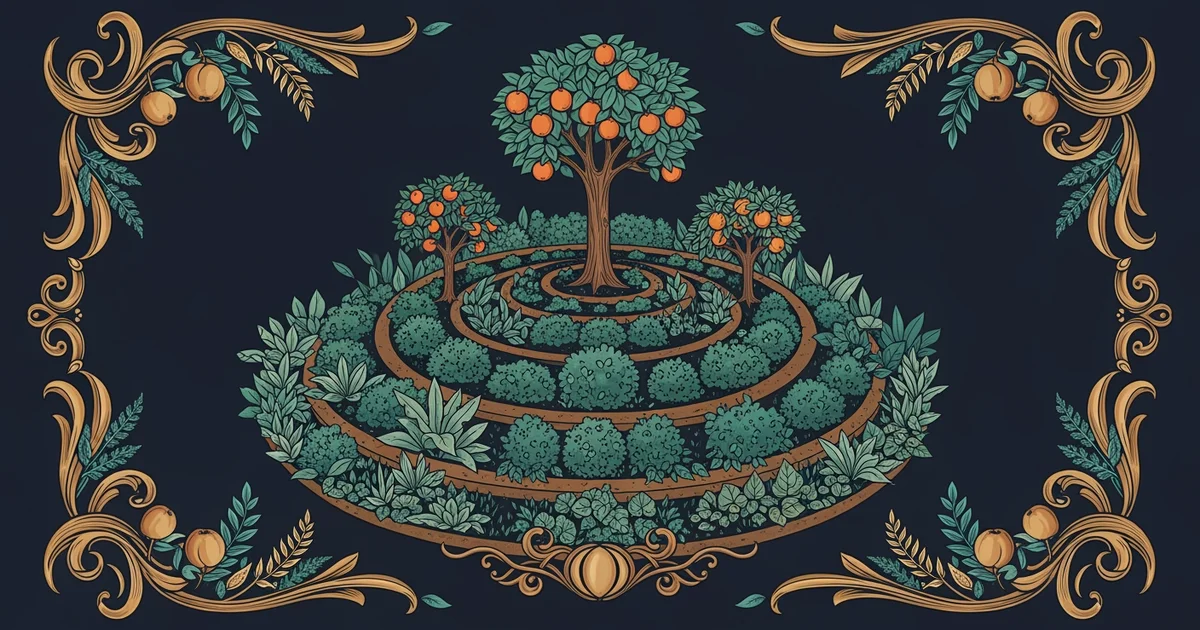
Integrating Diverse Ecosystem Functions
Your site design must start by mapping the invisible flows of energy across your land. We previously explored Sector Analysis, which tracks how wind, sun, and water move through your space. Now, you must combine those patterns with the physical infrastructure of your site. Think of your land like a house where the kitchen needs to be near the dining room to save steps. By placing high-energy zones near your home, you reduce the physical effort needed to maintain your garden systems. This strategy creates a feedback loop where your daily presence helps the landscape thrive while the land provides for your basic needs.
Key term: Site Synthesis — the deliberate process of layering human needs over natural energy patterns to create a productive and balanced ecosystem.
When you align your human activities with the natural rhythms of the land, you stop fighting against the environment. You might place a water collection system at the highest point to use gravity for irrigation. This simple act turns a potential waste problem into a reliable resource for your food crops. Every element you add should serve at least three distinct functions to maximize your overall efficiency. If a fence only keeps animals out, it is underperforming compared to a hedge that provides food, shelter, and security.
Developing a Master Plan for Resilience
Creating a master plan requires a structured approach to ensure that no single element disrupts the rest of the system. You must balance your immediate desires with the long-term health of the soil and water tables. Consider the following steps to build a robust and functional design plan for your specific property:
- Mapping your baseline resources allows you to identify exactly where the sun hits and where water pools during heavy storms.
- Establishing your zone priorities helps you decide which areas need daily attention and which areas can exist as wilder, low-maintenance zones.
- Selecting your biological components ensures that you choose plants and animals that thrive in your specific climate and soil conditions.
- Monitoring your system performance over several seasons lets you adjust your original plan to account for unexpected weather or growth patterns.
| Design Element | Primary Function | Secondary Benefit | Maintenance Level |
|---|---|---|---|
| Rain Garden | Water filtration | Wildlife habitat | Low |
| Food Forest | Food production | Carbon storage | Medium |
| Solar Array | Energy generation | Shade provision | Very Low |
| Compost Pile | Soil enrichment | Waste reduction | Medium |
This table illustrates how a single element provides multiple benefits, which is the hallmark of a mature permaculture design. By stacking these functions, you create a system that is far more resilient than a traditional garden or yard. If one part of your design fails due to a harsh winter, the other parts continue to support the overall health of the property. This redundancy is the secret to creating a habitat that functions like a natural forest or meadow. You are essentially acting as the architect of a tiny, controlled wilderness that feeds your family and improves the local environment.
How do we balance our desire for control with the unpredictable nature of biological systems? This question remains the central tension in professional land design today. We seek to guide the land toward productivity while respecting the inherent autonomy of natural processes. By synthesizing these concepts, you transform your property from a static space into a dynamic, living asset. Your design acts as a bridge between human necessity and the wild world that sustains us all.
True site synthesis occurs when your design choices allow the natural landscape to perform the heavy lifting of maintenance and resource production for you.
This final design plan prepares you to explore how these same principles apply when we organize people into healthy, cooperative social structures.