
Natural Pattern Recognition
Look at the veins on a leaf or the jagged path of a river. These shapes repeat across the wild world with strange and beautiful consistency. You see the same branching curves in your own lungs and in the vast networks of city roads. Nature does not choose these forms by chance or random luck. It builds these structures to move energy and resources with the least possible effort. By learning to see these recurring patterns, you can begin to design spaces that work with natural forces rather than fighting against them.
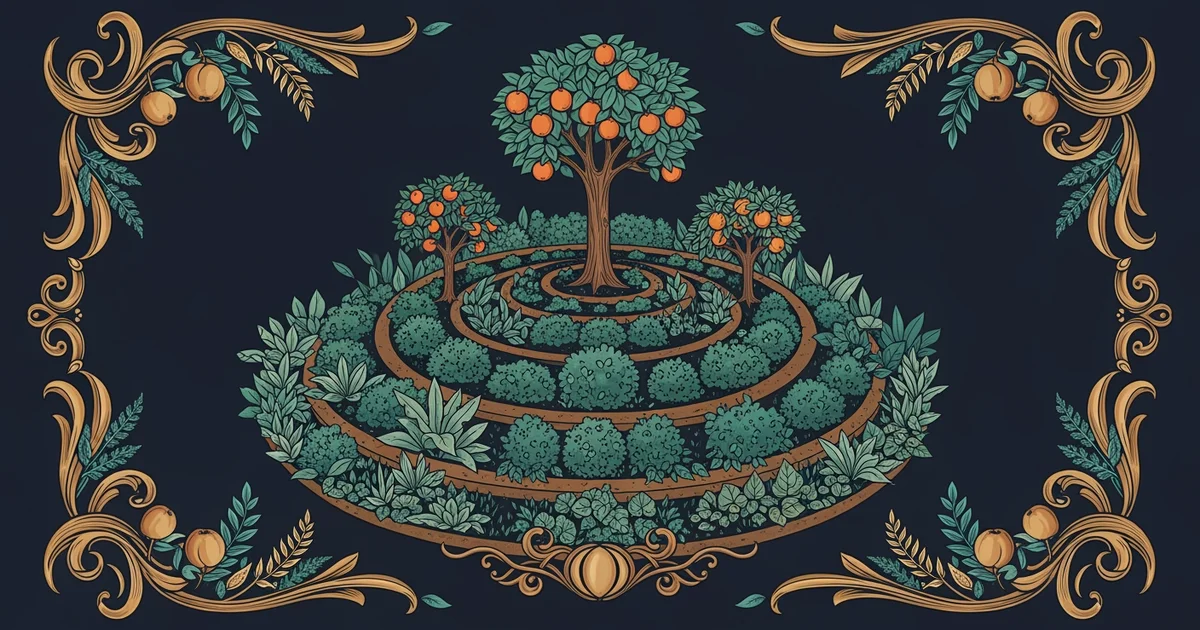
Understanding Natural Patterns
Nature relies on efficiency to keep systems running without external power sources. When a tree grows, it must move water from the soil to the highest leaves using the shortest path. This creates a branching pattern that minimizes the distance while maximizing the surface area for light. You can compare this to a well-planned delivery route for a busy local bakery. The driver chooses the most direct path to every shop to save on gas and time. If the route is inefficient, the bakery loses profit and customers. Similarly, plants and landscapes that use efficient patterns survive longer and thrive in their environments.
Key term: Fractals — complex, repeating geometric shapes that look the same at every scale of observation.
These structures are everywhere if you know how to look for them. A mountain range looks like a jagged line from far away. When you walk up close to a single rock, the tiny cracks follow that same jagged shape. This repetition happens because the same forces of erosion and pressure act on the land at every size. Designers study these shapes to create better irrigation systems or building layouts. By mimicking the way a river branches out to water the land, you can design a garden that distributes water naturally. This saves you from building expensive pumps or complex pipes that break over time.
Identifying Edges and Boundaries
Beyond simple shapes, nature creates zones where two different environments meet. These areas are called edges and they often hold the most life in any ecosystem. Think of the space where a dark forest meets a sunny meadow. This border area supports plants from the forest and animals from the field. It is a place of high activity because it offers more variety than either single zone. In your own design work, you can create these edges to boost the health of your site. A garden bed placed next to a stone path creates a useful edge that helps you manage weeds and harvest crops easily.
To better understand how these patterns function, consider the following common shapes found in nature:
- Branching patterns distribute resources like water or nutrients across a wide area by using a main trunk that splits into smaller limbs.
- Spiral patterns allow for compact storage or growth, helping plants pack seeds tightly into a flower head or shells grow larger without losing their shape.
- Net patterns create strong, flexible structures that hold weight evenly, much like how a spider web catches prey while resisting the force of the wind.
These patterns are not just pretty to look at. They are functional blueprints for survival. When you start to spot these designs in your local park or backyard, you are learning the language of the earth. You can use this language to build human habitats that are just as resilient as a forest. If you design a house that follows the sun like a sunflower, you save energy. If you build a garden that catches water like a leaf, you reduce waste. These simple observations form the foundation for all sustainable architecture and land management.
Observing recurring patterns in nature allows us to design human habitats that mirror the efficiency and resilience of wild ecosystems.
Next, we will explore how these patterns fit together into larger, interconnected systems.