
Future Trends in DfD
Imagine your favorite smartphone suddenly stops working because one tiny internal battery fails to hold a charge. You want to fix it, but the entire device is glued shut, making the repair impossible for anyone without expensive factory tools. This frustration highlights why designers are shifting toward Design for Disassembly as a standard for future electronic and furniture production. Future trends focus on making products act like modular building blocks rather than permanent, inseparable monoliths. By shifting our perspective, we can ensure that every single part of a product finds a new home after its first life ends.
Advancements in Material Connectivity and Modular Logic
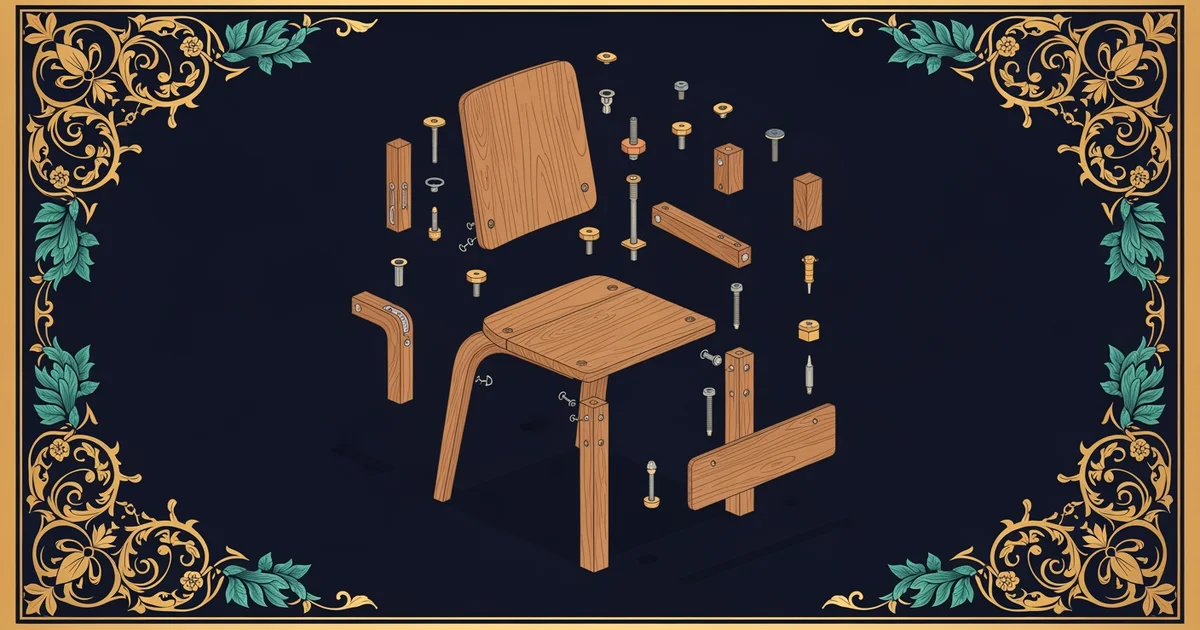
Designers now explore how to use reversible fasteners instead of permanent industrial adhesives or chemical welds. Think of this like moving from a house built with permanent concrete blocks to one constructed with high-quality interlocking wooden beams. If you need to change a room layout, the beams come apart without damage, allowing you to build something new and useful. This shift requires engineers to think about the entire life cycle before the first prototype even leaves the drawing board. By prioritizing these reversible connections, companies reduce the energy needed to recycle materials while keeping valuable components out of landfills.
Key term: Modular Design — a production approach where complex systems are subdivided into smaller, independent parts that can be easily replaced or upgraded.
Future systems will rely on standardized parts that fit across different product lines to simplify the repair process. If a screen from one model fits another, the repair ecosystem becomes much more efficient for independent shops. This standardization acts as a universal language for parts, ensuring that a single screw or connector type can serve many different functions. When we simplify the variety of parts, we lower the barrier for recycling facilities to process large volumes of waste. This logistical improvement turns the daunting challenge of sorting millions of items into a manageable and profitable industrial operation.
Digital Integration and Circular Lifecycle Management
Digital passports for products will soon track exactly what materials exist inside every consumer good we purchase today. These digital records provide clear instructions for automated robots to disassemble devices without human error or physical damage to parts. Imagine a scanner reading a code on a laptop and instantly guiding a robotic arm to remove the battery safely. This level of precision removes the guesswork from recycling and ensures that high-value materials like gold or copper are recovered perfectly. Without these digital guides, the process of recovering raw elements remains inefficient and often dangerous for human workers involved in the sorting process.
| Technology | Primary Benefit | Impact on DfD |
|---|---|---|
| Digital Passports | Material Tracking | High precision sorting |
| Robotic Sorting | Speed and Safety | Lower labor costs |
| Modular Parts | Easy Upgrades | Less total waste |
These technologies represent a massive leap forward in how we manage our global resource consumption patterns. When we integrate these systems, we move away from a linear model of take-make-waste toward a circular economy. This evolution requires collaboration between manufacturers, software developers, and recycling centers to ensure that every product has a clear, documented path to its next life. As these trends mature, the goal of creating products that are easy to take apart will become the default standard for all global manufacturing industries.
Future sustainable design relies on modular connectivity and digital tracking to ensure products become resources for future manufacturing cycles.
Designing for disassembly transforms the end of a product's life from a waste management crisis into a reliable source of high-quality raw materials.