
Modular Component Strategy
Imagine trying to fix a broken smartphone where every single part is glued together inside a sealed metal case. You would likely destroy the entire device just to reach the one tiny component that actually stopped working. This frustration highlights why engineers now focus on Modular Component Strategy as a way to build complex machines that last much longer. By breaking a product into independent, functional units, designers allow users to swap out specific parts without needing to replace the whole system. This approach transforms a fragile, permanent object into a flexible assembly that can evolve or be repaired over time.
The Logic of Independent Assemblies
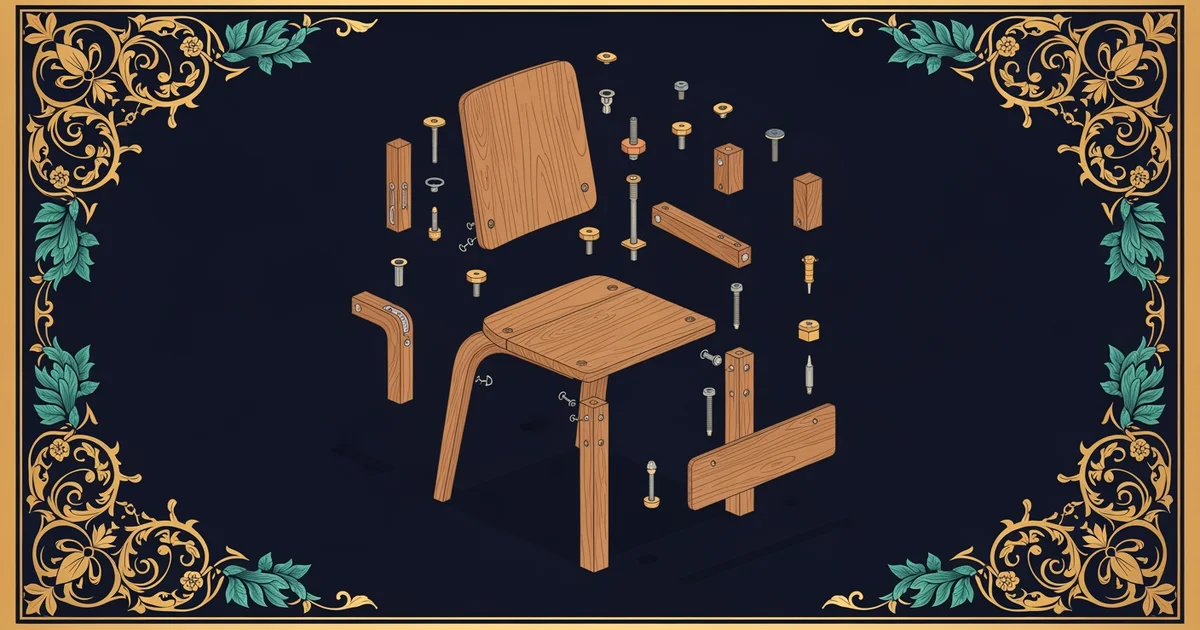
When we apply modularity to design, we treat every product like a set of building blocks that snap together. Each block performs one specific job, such as processing data, storing power, or providing structural support for the rest of the unit. Because these modules remain independent, a failure in the power module does not force the owner to discard the data processing module. Think of this like a professional kitchen where every tool has a single purpose, such as a whisk for blending or a knife for cutting. If the whisk breaks, you simply buy a new whisk rather than throwing away the entire kitchen set. This separation ensures that the lifespan of the machine is not limited by its weakest or most fragile individual part.
Key term: Modular Component Strategy — the intentional design of a product as a collection of independent, interchangeable parts that function together as a unified system.
Designers must ensure that these modules communicate through standardized interfaces, which act like universal plug sockets for different parts. If a module cannot connect to the rest of the system easily, the entire modular benefit disappears. Engineers create these interfaces to maintain consistent dimensions and electrical connections across every version of a product. This consistency allows for future upgrades because you can replace an old module with a newer, faster version without changing the other parts. By prioritizing these connections, designers keep the product relevant even as technology improves or user needs shift over many years.
Managing Complexity Through Design
Structuring a product this way requires careful planning to balance the number of parts with the overall stability of the build. If you have too many tiny modules, the connections become weak and the product might fall apart during normal use. If you have too few modules, the product becomes too difficult to repair when a specific section eventually fails. Designers must find the perfect middle ground where the product is easy to open but remains sturdy enough for daily tasks. This balance is the core challenge of modern industrial design, as it requires thinking about the product not just as a finished object, but as a long-term project for the user.
| Design Approach | Primary Benefit | Main Challenge | Result for User |
|---|---|---|---|
| Integrated | Low production cost | Impossible repair | Full replacement |
| Modular | Easy repair access | Complex assembly | Part replacement |
| Hybrid | Balanced durability | Higher complexity | Selective upgrades |
This table shows how different design choices affect the life cycle of a typical consumer product. While integrated designs might seem cheaper at first, they create massive waste because they force users to replace perfectly good parts alongside the broken ones. Modular designs save the user money in the long run by allowing for targeted repairs and affordable upgrades. As you can see, the choice of strategy determines whether an object becomes a piece of future trash or a tool that stays in service for many years.
Designing products as independent modules allows for simpler repairs and easier upgrades by ensuring that the failure of one part does not require the replacement of the entire system.
The next Station introduces Standardization of Fasteners, which determines how these modules stay connected while remaining easy to remove.