
Furniture Manufacturing Methods
When a customer at a Swedish warehouse buys a large bookshelf, they expect to fit the entire unit into the back of a standard family sedan. This reliance on flat pack logistics requires precise engineering, yet the current design process often ignores what happens after the product reaches the end of its life. Designers must shift their focus toward Design for Disassembly, which prioritizes structural patterns that allow for easy separation of materials. By treating the furniture as a temporary collection of parts rather than a permanent object, we can ensure that wood, metal, and plastic components are recovered rather than discarded in a landfill.
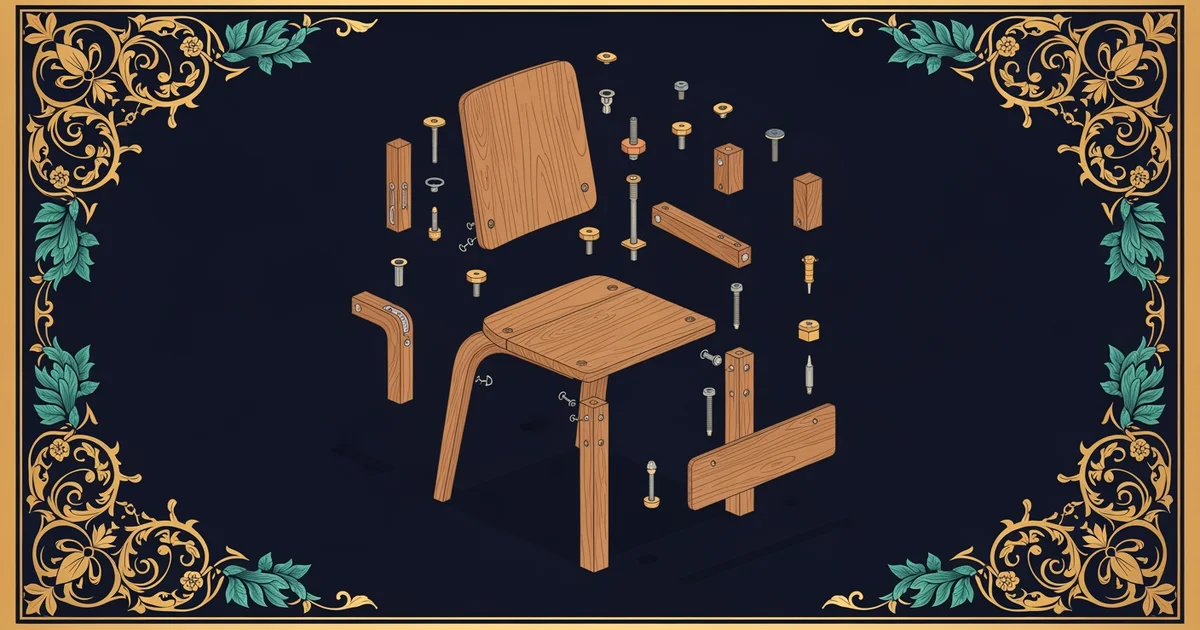
Rethinking Manufacturing Assembly
Traditional furniture manufacturing often uses permanent adhesives or hidden fasteners to create a sleek, seamless look for the consumer. While these methods provide stability and visual appeal, they create a significant barrier when someone attempts to dismantle the item for repair or recycling. Imagine trying to take apart a puzzle that has been glued together permanently; you cannot separate the pieces without destroying the material itself. We must move away from irreversible bonding agents and toward mechanical connectors that remain accessible throughout the life of the product.
Key term: Design for Disassembly — a manufacturing strategy that ensures products can be easily taken apart at the end of their life cycle.
When designers prioritize modularity, they select materials that can be separated without specialized tools or heavy machinery. This approach simplifies the logistics of recycling because workers do not need to cut, grind, or burn the structure to reach valuable sub-components. By using standardized screws or snap-fit joints, manufacturers enable users to replace broken pieces instead of discarding the whole unit. This is the application of the modular principles we explored in Station 11, working here in a physical context to extend the lifespan of household goods.
Structural Strategies for Material Recovery
To achieve true efficiency in furniture manufacturing, designers must evaluate every connection point based on its impact on the recovery process. The table below outlines how different assembly methods influence the ability to reclaim materials at the end of a product's life.
| Connection Method | Ease of Removal | Recovery Potential | Tool Requirement |
|---|---|---|---|
| Permanent Glue | Very Difficult | Low | High (Destructive) |
| Steel Fasteners | Moderate | High | Low (Standard) |
| Snap-Fit Joints | Very Easy | Very High | None (Manual) |
| Tension Dowels | Easy | Medium | Minimal |
Selecting the right connection method allows for a circular flow of resources where components move back into the supply chain. If a chair uses metal bolts instead of industrial adhesives, the metal can be recycled and the wood can be repurposed or composted. This choice does not necessarily reduce the quality of the furniture, but it does require a change in how we perceive the permanence of our interior spaces.
Consider the analogy of a child building a structure with plastic bricks versus a model glued together with cement. The bricks allow for endless reconfiguration and repair, while the cement model ends up in the trash as soon as one piece breaks. Furniture manufacturing must adopt the brick model to ensure that every wooden panel and metal bracket remains a valuable resource. When we design with the end in mind, we turn every piece of furniture into a bank of materials rather than a future waste product. This shift requires designers to move past aesthetics and embrace the functional reality of material recovery as a core design metric.
Designing furniture for easy disassembly ensures that valuable materials remain in the production cycle rather than becoming permanent waste.
But this model breaks down when consumers lack the simple tools or basic knowledge required to perform these repairs at home.