
The Future of Human Beauty
Imagine a future where our physical appearance changes as easily as we update a digital profile picture. While humans have long used makeup and fashion to signal status, we are now approaching a time when biological modification and digital augmentation merge. This shift forces us to reconsider the evolutionary roots of beauty that we explored in our journey through facial symmetry and golden ratios. As technology advances, we must ask if our innate preferences for specific features will remain, or if they will dissolve into a landscape of endless, customizable design choices.
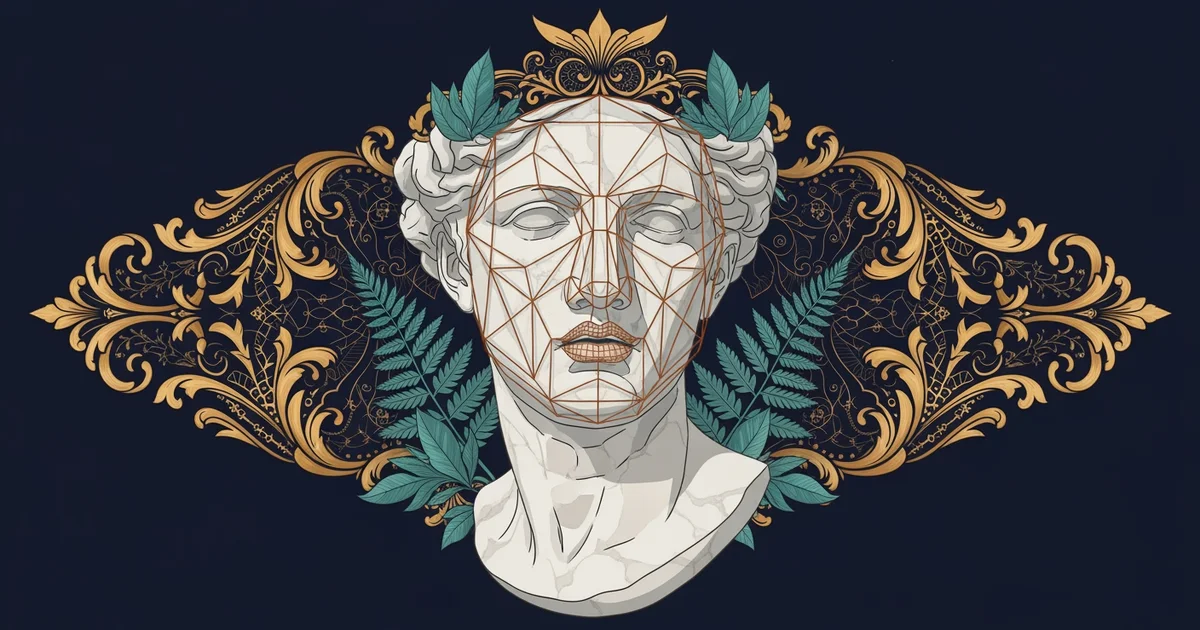
The Evolution of Artificial Enhancement
Historically, beauty standards functioned as biological shortcuts that helped our ancestors identify healthy mates with strong genetic fitness. We previously discussed how sexual selection drove the development of clear skin and balanced features to signal reproductive health. Today, these signals are becoming increasingly detached from actual biology. Just as a bank uses algorithms to detect fraud by spotting patterns that do not match a user's history, we now use digital filters to create a "perfect" version of ourselves that masks our true genetic markers. This process creates a tension between our ancient brain, which seeks natural health cues, and our modern eyes, which are trained to appreciate high-definition, edited perfection.
As we move toward a future of widespread aesthetic modification, we must consider how these tools change our perception of the human form. The following table outlines how traditional beauty markers are being replaced by technological alternatives:
| Traditional Marker | Modern Digital Equivalent | Impact on Perception |
|---|---|---|
| Natural Symmetry | Algorithmic Alignment | Standardized expectations |
| Youthful Texture | Real-time Skin Smoothing | Erasure of life experience |
| Healthy Glow | Augmented Reality Filters | Constant visual perfection |
Designing the Future Human Aesthetic
When we look at the trajectory of human beauty, we see a shift from passive observation to active engineering. We are no longer limited by the genetic lottery that determined our facial structure in the past. Instead, we are entering an era of biometric customization, where individuals can refine their appearance to match shifting cultural trends. This is similar to how a homeowner renovates a house; we are treating our faces like property that requires regular updates to maintain its market value. However, this raises a profound question about the stability of human attraction. If beauty is no longer tied to biological health, does it lose its evolutionary purpose entirely?
This transition creates a unique challenge for our species because our brains are still wired to value traits that suggest longevity and vitality. When every person can achieve a perfect face through digital or surgical means, the rarity of those features disappears. In economic terms, when the supply of "perfect" faces becomes infinite, the perceived value of those traits drops significantly. We may soon find that the most attractive features are those that appear uniquely human or intentionally flawed. This would be a complete reversal of our evolutionary history, where we once prioritized the most symmetrical and "standard" faces as a way to ensure the survival of our offspring.
Ultimately, the future of human beauty lies in the balance between our technological capabilities and our biological instincts. We are currently in a transition phase where we test the limits of what we can change about our faces. Researchers remain divided on whether this will lead to a uniform global beauty standard or a celebration of radical, non-traditional aesthetics. The mystery of why we find certain faces attractive remains unresolved, even as we gain the power to reshape those very faces to our liking. We are essentially rewriting the code of human attraction without knowing if the new version will be compatible with the old, biological software in our minds.
The future of beauty involves a shift from celebrating biological fitness to prioritizing curated, technological perfection, which fundamentally challenges our evolutionary instincts.
Understanding how we modify our appearance allows us to see that beauty is a dynamic, evolving language rather than a static set of rules.