
The Evolutionary Roots of Beauty
Understanding Biological Attraction
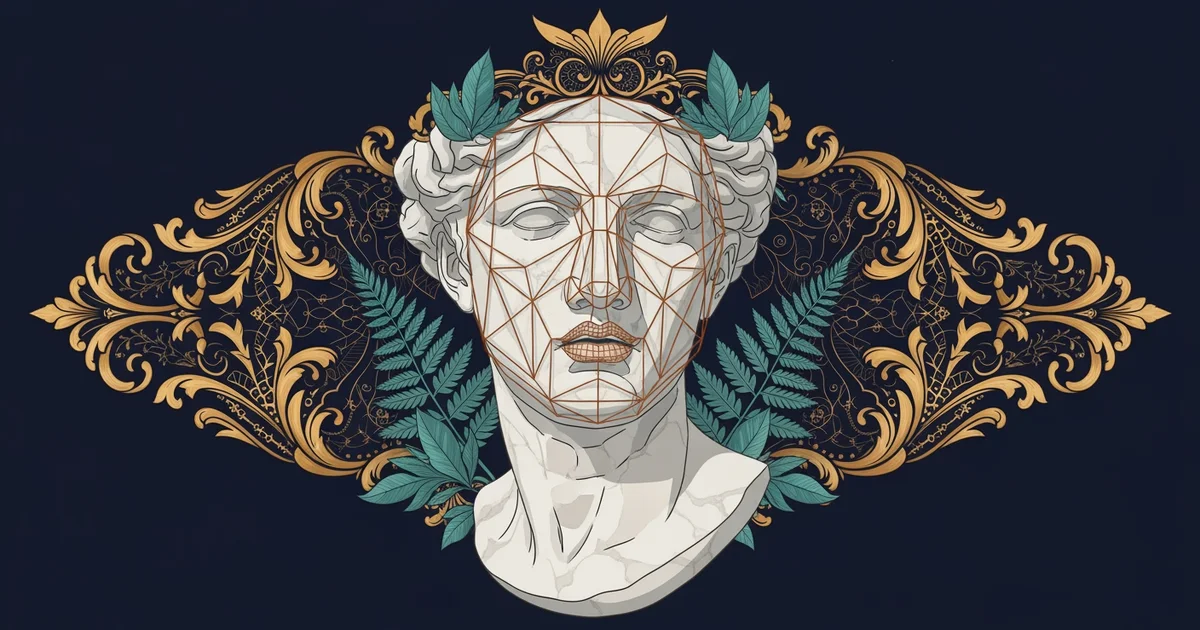
Human attraction is a complex process rooted in deep evolutionary history. We find certain faces attractive because they signal health and fertility to our brains. This survival mechanism helps us identify potential mates who are likely to be healthy. When we look at a face, our minds perform rapid calculations. We search for markers that suggest a strong immune system and good genes. These preferences are not random choices made by our conscious minds. Instead, they are ancient impulses shaped by thousands of years of survival. Understanding these roots helps us see why beauty standards often remain consistent.
The Role of Symmetry
Symmetry is a primary indicator of biological quality in all living species. Perfectly balanced faces suggest that an individual developed without major health struggles. Many researchers argue that our brains are hardwired to notice small facial imbalances. If a face is highly symmetric, we perceive it as more attractive. This preference is consistent across many different cultures and geographic regions. We often associate symmetry with the absence of harmful genetic mutations or diseases. While no human face is perfectly symmetric, we find those closest to it appealing.
The Concept of Averageness
Interestingly, the human brain also favors faces that are considered average. Averageness does not mean plain or boring in a biological, evolutionary context. It means that the facial features are close to the population mean. These faces lack extreme traits that might signal genetic issues or poor health. By preferring average faces, we essentially select for a diverse and stable gene pool. This ensures that offspring are likely to carry healthy, functional traits. Computer models have confirmed this by blending many faces into one.
Visualizing Facial Data
To understand how these traits manifest, we can look at data representations of facial structures. The following diagram illustrates the relationship between feature distribution and perceived attractiveness levels.
As shown in the diagram, multiple factors converge to create a sense of beauty. Each path represents a biological signal that our brains process during social interaction. We rely on these signals to navigate our social world and form connections. By studying these patterns, we gain insight into the hidden mechanics of human perception. This knowledge bridges the gap between biology and our appreciation of art.
Evolutionary Psychology Foundations
Evolutionary psychology provides the framework for why we find certain faces attractive. This field examines how our behaviors and preferences are linked to survival. We are essentially machines built to pass on our genetic information successfully. Attraction is the primary tool that guides our mating choices over time. When we find someone beautiful, we are responding to a set of biological prompts. These prompts tell us that the person is a viable partner for reproduction. While modern society has changed, these ancient signals still influence our daily lives.
The Intersection of Art and Biology
Artists have long understood that certain proportions create a pleasing visual effect. They often use the same principles that biology identifies as markers of health. For example, painters emphasize symmetry and clear skin to make portraits stand out. By using these techniques, artists tap into our deep, instinctual responses to beauty. This creates a bridge between scientific understanding and the practice of visual art. We can see this in classical paintings as well as modern photography. The goal is to capture the essence of what we naturally find appealing.
Addressing Common Misconceptions
Many people believe that beauty is entirely subjective and culturally constructed. While culture certainly plays a role, there is a strong universal baseline. Certain traits are found attractive globally, regardless of where people live. This suggests that the roots of beauty are biological rather than purely social. By acknowledging this, we can move past the idea that beauty is random. We can instead view it as a sophisticated system of biological communication. This system is designed to help us navigate the world of human relationships.
Future Directions for Research
As technology advances, we continue to learn more about the mechanics of attraction. New tools allow us to map facial structures with incredible precision and detail. We can analyze how light, shadow, and texture influence our perception. This research helps us understand the nuance of human beauty in new ways. It also raises questions about how we might alter our appearance in the future. As we move forward, we must balance these scientific insights with our ethics. The study of beauty remains a fascinating intersection of science and art.