
Rhythm and Repetition
Imagine you are walking down a long street lined with identical trees spaced perfectly apart. Your eyes naturally follow the path forward because your brain craves the steady predictability of the scene. This visual experience relies on the way artists use rhythm to guide a viewer through a piece. Just like the trees on that street, repeating elements provide a heartbeat for your composition. When you place shapes or colors at regular intervals, you create a sense of movement that leads the eye across the canvas. Without this structure, the viewer might feel lost or confused about where to look first. Effective design uses these patterns to establish a clear visual journey for anyone observing your work.
Creating Flow Through Consistent Patterns
To build a strong rhythm, you must consider how your chosen elements interact with one another. Think of this process like managing a budget where you distribute funds across various needs at specific times. If you spend all your money at once, you lack the stability to make it through the month. Similarly, if you cluster all your visual elements in one corner, the rest of the canvas feels empty and disconnected. By spreading your shapes across the frame, you ensure the viewer remains engaged from start to finish. You can achieve this by varying the size, orientation, or spacing of your objects to keep the pattern dynamic.
Key term: Repetition — the act of using the same visual element multiple times within a composition to create consistency.
When you use repetition, you establish a familiar visual language that the viewer quickly learns to understand. This consistency builds a bridge between different parts of your artwork, linking separate objects into a unified whole. If you repeat a specific blue triangle throughout a scene, the eye will naturally jump from one triangle to the next. This creates a path of motion that forces the viewer to scan the entire image. You should carefully choose which elements to repeat so that you do not overwhelm the observer with too much information. A simple, well-placed pattern often holds more power than a cluttered collection of random shapes.
Organizing Visual Elements for Movement
Once you establish a basic pattern, you can adjust the spacing to control the speed of the viewer's eye. If you place elements very close together, the eye moves rapidly across the surface like a fast-paced song. If you increase the distance between them, the viewer slows down to appreciate the negative space between the objects. This technique allows you to highlight specific areas of interest by changing the tempo of the design. You can use the following methods to organize your elements effectively:
- Alternating patterns involve switching between two different shapes or colors to create a more complex, rhythmic visual beat that keeps the viewer guessing.
- Graduated patterns change the size or intensity of a shape as it moves across the space, which adds depth and a sense of natural progression.
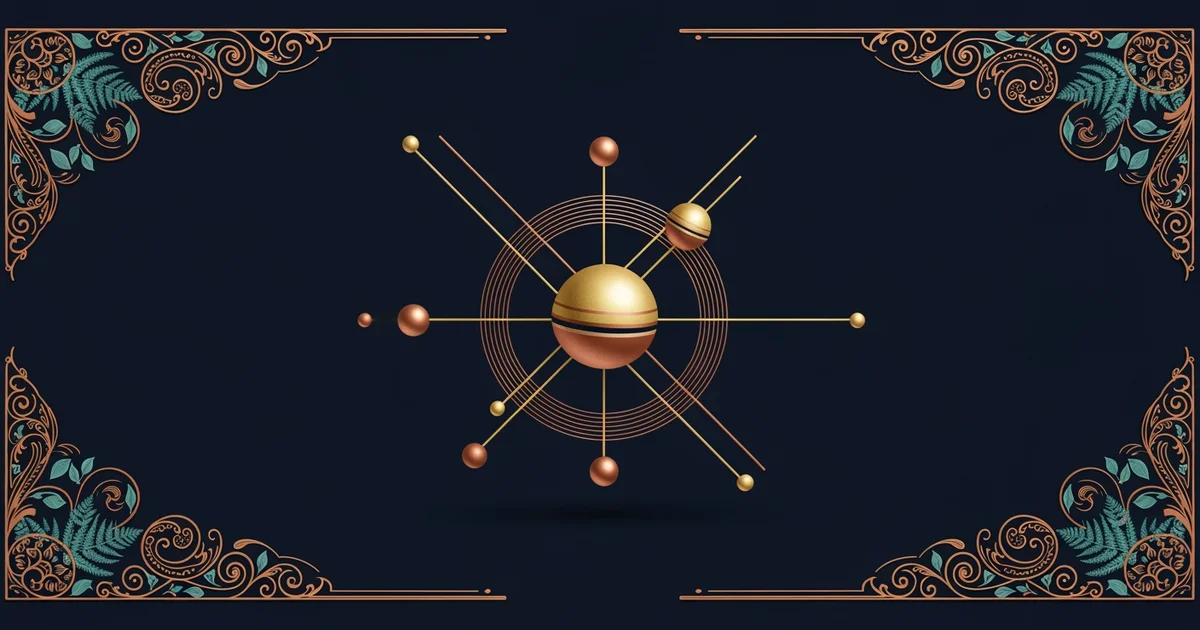
- Radial patterns arrange elements around a central point, drawing the eye toward the middle of the composition before pushing it back out to the edges.
These strategies allow you to manipulate how someone interacts with your work by controlling the pace of their gaze. You must always remember that the goal is to guide the viewer, not to force them into a rigid path. By balancing consistency with subtle changes, you create a composition that feels alive and intentional. The best rhythm is one that feels natural, as if the eye is simply following a path that was meant to be there all along.
Rhythm and repetition work together to transform static images into dynamic experiences by organizing elements into a predictable yet engaging visual path.
Now that you understand how to create movement, how does the mathematical harmony found in the golden ratio further refine these compositions?