
Symmetry and Neural Reward
Imagine you are walking through a dense forest and see a perfectly balanced, symmetrical butterfly resting on a leaf. Your brain instantly identifies the creature as healthy and stable, providing you with a quick surge of visual satisfaction. This immediate response is not just an accident of nature, as our minds are wired to seek out patterns that suggest order. When we view objects that possess bilateral symmetry, the brain processes the information with minimal effort. This efficiency creates a positive internal feedback loop that we interpret as aesthetic pleasure. By understanding why our brains crave this balance, we can better appreciate why art and design often rely on these specific geometric arrangements.
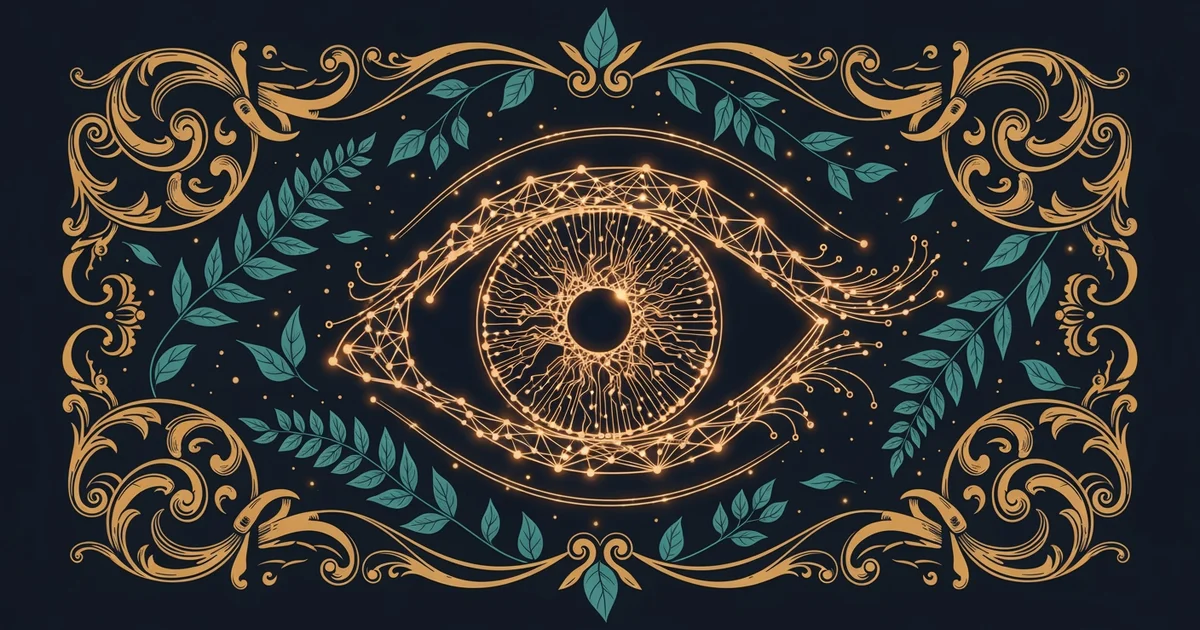
The Efficiency of Neural Processing
Our visual systems evolved to navigate complex environments where identifying objects quickly was a matter of survival. When the brain encounters a symmetrical shape, it only needs to process one half of the image to understand the entire form. This shortcut reduces the cognitive load required to make sense of the world around us. Think of it like a shortcut on your computer desktop that lets you open a heavy file instantly. Instead of loading every single piece of data, your brain uses the mirroring effect to predict the other side. This predictive capability saves energy, and the brain rewards this efficiency by releasing small amounts of dopamine, which we perceive as a feeling of beauty or harmony.
Key term: Neural reward — the biological process where the brain releases chemicals like dopamine to reinforce behaviors or perceptions that are beneficial for survival.
Because the brain prefers low-energy processing, it naturally gravitates toward forms that do not require intense mental strain. In the world of visual arts, this explains why humans have used symmetry in architecture and painting for thousands of years. We find these patterns predictable, and predictability in a chaotic world feels safe. When an artist creates a composition that is perfectly balanced, they are essentially giving the viewer a gift of cognitive ease. The brain does not have to work hard to reconcile conflicting visual information, so it settles into a state of relaxed enjoyment.
Symmetry as a Biological Signal
Beyond simple efficiency, our attraction to symmetry acts as a biological indicator of health and genetic stability. In nature, many living things that are symmetrical signal strength, vitality, and the absence of harmful mutations or diseases. We are hardwired to notice these signals because they helped our ancestors choose healthy mates and identify safe food sources. When we look at a photograph of a face or a flower, our brains unconsciously scan for this balance to determine if the subject is high-quality. This deep-seated instinct persists even when we look at abstract art or modern photography, as our ancient neural pathways still govern our aesthetic preferences.
To see how different levels of visual balance affect our perception, consider the following ways we categorize symmetry in art:
- Perfect Mirror Symmetry: This occurs when two halves of an image are identical, providing the strongest sense of order and triggering the most immediate reward signals in the brain.
- Approximate Symmetry: This uses similar shapes and weights on both sides of a center line, which maintains a sense of stability while allowing for more dynamic, interesting artistic expressions.
- Asymmetrical Balance: This relies on complex arrangements of visual weight that do not mirror each other, requiring more cognitive effort but offering a higher level of long-term engagement.
Each of these approaches changes how the brain interacts with the piece, moving from simple comfort to complex problem-solving. While perfect symmetry is the most efficient for the brain to process, it can become boring if it lacks variation. Artists often use approximate symmetry to keep the brain interested while still providing the comfort of a balanced structure. By balancing these needs, creators can keep the viewer engaged for longer periods without causing mental fatigue. This delicate dance between order and complexity is the secret to creating visual experiences that feel both satisfying and meaningful to the human observer.
Symmetrical patterns provide a shortcut for the brain to process visual information, which generates a feeling of pleasure through efficient neural reward.
The next Station introduces Color Theory and Emotion, which determines how specific hues influence our mood and neural response.